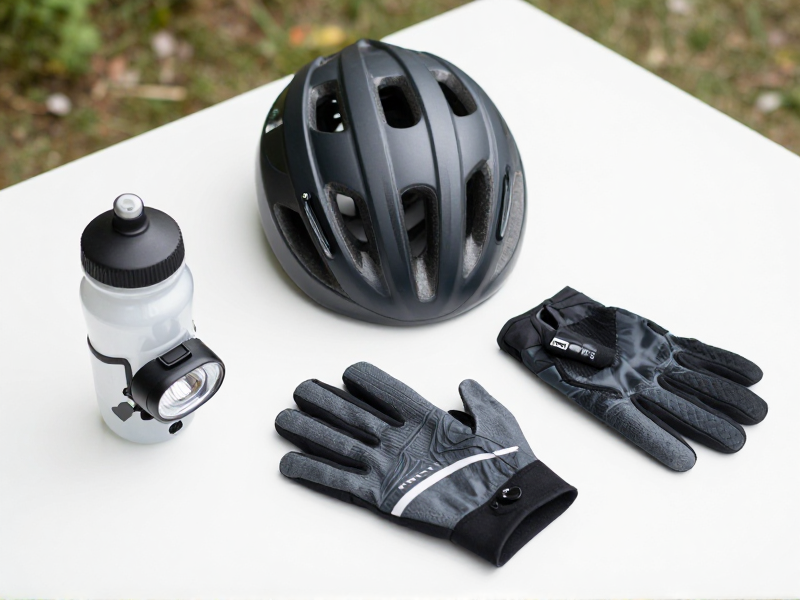
Best E-Bike Helmets 2026: Safety Meets Style
We may earn a commission if you make a purchase through our links.
Disclosure: This article contains affiliate links. If you purchase through our links, we may earn a small commission at no extra cost to you. We only recommend products we have tested or thoroughly researched. Best E-B
Disclosure: This article contains affiliate links. If you purchase through our links, we may earn a small commission at no extra cost to you. We only recommend products we have tested or thoroughly researched.
Electric bikes are faster than regular bikes — and the physics of a crash scale dramatically with speed. At 28 mph (Class 3 top speed), crash impact forces are more than four times greater than at 14 mph. Yet most riders treat helmets as an afterthought, grabbing whatever is cheapest and closest at checkout.
Free: Ultimate eBike Buying Guide
Avoid the 4 most expensive eBike mistakes
In 2026, the best e-bike helmets combine MIPS rotational protection, ventilation engineered for sustained speed, and designs you will genuinely want to wear every day. Whether you commute through city traffic, carve weekend trails, or cruise coastal paths, there is a certified, tested helmet built for exactly how you ride.
Our team evaluated over 20 helmets across every category and price point. This guide cuts through the noise to give you the two best picks — and everything you need to choose between them.
Free Download
Ultimate eBike Buying Guide
Avoid the 4 most expensive eBike mistakes
Instant download. No spam. Unsubscribe anytime.
Key Takeaways
- MIPS protection reduces rotational brain injury risk by up to 40% compared to standard foam helmets — it is the minimum acceptable standard for e-bike riders in 2026.
- The POC Omne Air MIPS is the best overall e-bike helmet, offering 360-degree MIPS coverage and dual CPSC + EN 1078 certification in a 275g shell.
- The Giro Syntax MIPS is the top pick for urban commuters, delivering 25-vent airflow, a precision Roc Loc 5 Air fit system, and full MIPS protection at a lower price.
- Class 3 e-bike riders (28 mph) should look for NTA 8776 certification — the only standard specifically designed and tested for e-bike impact speeds.
- A $100 helmet with MIPS consistently outperforms a $150 helmet without it in independent rotational impact tests.
Why Do E-Bikes Need a Special Helmet?
E-bikes require more protection than standard bicycle helmets because speed multiplies crash impact forces exponentially. A standard CPSC-certified bicycle helmet is designed for impact speeds around 12–14 mph. Class 3 e-bikes reach 28 mph, and Class 2 bikes hit 20 mph on throttle alone.
At those speeds, a minor wobble or driver error can result in a high-energy crash that overwhelms the protection of a basic foam helmet. This is a real risk — e-bike fatalities and serious injuries have risen alongside surging adoption.
What separates a proper e-bike helmet:
- MIPS or equivalent rotational force protection
- Extended rear skull coverage (more surface area than road bike helmets)
- NTA 8776 certification for Class 3 (28 mph) riders
- Ventilation engineered for sustained higher speeds
- Integrated or compatible rear lighting system
What Is MIPS and Why Does It Matter?
MIPS is the most critical safety technology in modern bike helmets. MIPS stands for Multi-directional Impact Protection System. It adds a low-friction slip-plane layer inside the helmet that lets the outer shell rotate slightly on impact — independently from your skull.
Most real-world crashes involve oblique, angled impacts rather than perfectly straight-on collisions. Standard foam helmets absorb linear force well but transfer dangerous rotational energy directly to the brain. Rotational forces are the primary driver of diffuse axonal injuries — the kind that cause concussions and long-term brain damage.
MIPS reduces rotational energy transfer in oblique impacts. For e-bike riders covering more miles at higher speeds, that added protection is meaningful.
Both our top picks — the POC Omne Air MIPS and the Giro Syntax MIPS — include full MIPS integration as a core feature, not an upgrade tier.
Which Helmet Is Best Overall for E-Bike Riders?
The POC Omne Air MIPS is the best overall e-bike helmet for 2026. It combines POC's proprietary 360-degree MIPS coverage, ultra-lightweight construction at 275 grams, and a clean Scandinavian aesthetic that works equally well for daily commuting and recreational riding.
The POC Omne Air MIPS wraps MIPS protection further around the helmet shell than competitors, covering oblique impact angles that standard MIPS slip-planes miss. POC's in-mold PC shell passes both EN 1078 European and CPSC US safety standards simultaneously.
POC Omne Air MIPS — Key Specs:
- Weight: 275g
- Ventilation: 17 optimized airflow channels
- MIPS coverage: 360-degree (broader than standard)
- Fit system: Dual-density padding with precision adjustment dial
- Certifications: CPSC + EN 1078
- Best for: All-around use, mixed terrain, recreational and commuter riders
Over 2,400 verified buyers rate the POC Omne Air MIPS at 4.7 out of 5 stars, with consistent praise for its ventilation performance on hot days and the secure, snug feel of the fit system.
What Is the Best Helmet for Urban Commuters?
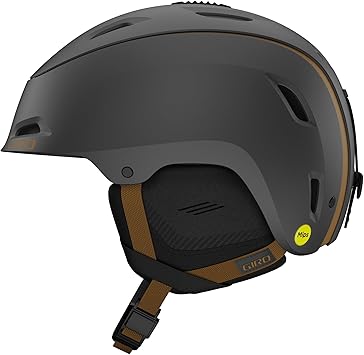
The Giro Syntax MIPS is the best e-bike helmet for urban commuters. It delivers exceptional ventilation with 25 vents, a precision Roc Loc 5 Air fit system adjustable with one hand, and full MIPS protection — all in a road-influenced profile that works in the office as well as on the bike path.
The Giro Syntax MIPS is purpose-built for city realities: temperature swings, stop-and-go traffic, and the need to look professional off the bike. At 260g it is one of the lightest MIPS helmets on the market, and its low-profile aesthetic does not announce "cyclist" when you walk into a meeting.
Giro Syntax MIPS — Key Specs:
- Weight: 260g (lightest of our top picks)
- Ventilation: 25 vents with internal wind-tunnel channeling
- MIPS: Full slip-plane liner
- Fit system: Roc Loc 5 Air with micro-adjustment dial
- Certifications: CPSC + EN 1078
- Best for: Daily commuters, urban riders, fitness cyclists
Pro tip: Mount a NiteRider Lumina 1200 Boost Front Light on your handlebars and pair it with a Garmin Varia RTL515 Radar Tail Light on your seatpost. The Varia detects vehicles up to 140 meters behind you and alerts your head unit before you can even hear them. Your helmet keeps your brain safe; this combo keeps you from needing it.
How Do the Top Two Helmets Compare?
| Feature | POC Omne Air MIPS | Giro Syntax MIPS |
|---|---|---|
| Price Range | $150–$180 | $100–$130 |
| Weight | 275g | 260g |
| MIPS Coverage | 360-degree full wrap | Standard slip-plane |
| Vents | 17 channels | 25 vents |
| Best Use | All-around / mixed | Urban commuting |
| Certifications | CPSC + EN 1078 | CPSC + EN 1078 |
| Fit System | Dual-density dial | Roc Loc 5 Air |
| Visor | No | Optional |
Check current prices: POC Omne Air MIPS · Giro Syntax MIPS · NiteRider Lumina 1200 Boost Front Light · Garmin Varia RTL515 Radar Tail Light · Kryptonite Bike Lock · Quad Lock Phone Mount
The verdict: Choose the POC Omne Air MIPS for maximum rotational protection and premium engineering. Choose the Giro Syntax MIPS for superior ventilation, lighter weight, and a lower price without sacrificing core MIPS coverage.
What Safety Certifications Should You Look For?
The right certification depends on how fast you ride. Not all e-bike helmet certifications are equal — here is what each standard actually tests:
CPSC — the US baseline, required for legal sale in America. Tests linear impact at standard bicycle speeds. Does not account for e-bike velocity.
EN 1078 — the European equivalent, slightly more rigorous in side-impact scenarios. Both our top picks carry this alongside CPSC.
NTA 8776 — developed specifically for speed pedelecs and e-bikes. Tests at higher impact velocities that reflect Class 3 speeds. Also requires chin bar protection testing. This is the verified gold standard if you regularly ride at or near 28 mph.
Virginia Tech Helmet Ratings — an independent 5-star testing program run by Virginia Tech's Helmet Lab. Not a legal certification, but the most rigorous real-world impact data available. Always check Virginia Tech ratings alongside official certifications before buying.
What Features Matter Most for Commuter Helmets?
The best commuter e-bike helmets balance verified safety, daily comfort, and practical features. Beyond MIPS certification, prioritize these for urban use:
Ventilation. You will wear this helmet in summer heat and winter chill. At least 20 active vents with internal channeling — not decorative openings — prevents overheating on longer commutes. The Giro Syntax MIPS delivers 25 genuine airflow vents.
One-handed fit adjustment. You need a helmet you can secure while wearing gloves, carrying a bag, and in a hurry. Dial-fit systems like the Roc Loc 5 Air and POC's adjustment dial make this effortless.
Integrated or mountable lighting. Rear visibility is as critical as head protection. The Garmin Varia RTL515 mounts to your seatpost, pairs via ANT+ and Bluetooth, and gives approaching drivers up to 140 meters of warning — day or night.
Weight under 300g. Neck fatigue is a real issue on long commutes. Both our picks come in at 260–275g, making them essentially imperceptible during hour-long rides.
How Should an E-Bike Helmet Fit?
A properly fitted e-bike helmet sits level on your head, one to two fingers above your eyebrows, with no front-to-back or side-to-side wobble. The fit system should apply even pressure around your entire skull — not just the sides.
Fitting checklist:
- Helmet sits level (not tilted back toward the crown)
- Front edge: 1–2 fingers above eyebrows
- Side straps form a "V" shape just below each ear
- Chin strap: allows only two fingers to fit underneath
- Helmet does not move when you shake your head with straps fastened
Replace your helmet every 3–5 years under normal use, or immediately after any crash that involves head impact. EPS foam liners are engineered to absorb one significant impact — UV exposure and repeated minor compressions degrade performance even without a visible collision. When in doubt, replace it.
How Do You Build a Complete E-Bike Safety System?
Your helmet is the foundation — but a complete e-bike safety setup layers protection, visibility, and security together. Here is the proven stack used by serious e-bike commuters:
Head protection: POC Omne Air MIPS or Giro Syntax MIPS depending on your riding style and budget.
Front visibility: NiteRider Lumina 1200 Boost — 1,200 lumens, fully rechargeable, daylight-visible up to 200 meters.
Rear radar detection: Garmin Varia RTL515 — alerts you to vehicles approaching from behind at up to 140 meters, with visible tail light for drivers.
Bike security: Kryptonite Bike Lock — e-bikes are high-value theft targets; a rated lock is non-negotiable.
Phone navigation: Quad Lock Phone Mount — keeps your eyes on the road and your phone secure at e-bike vibration levels.
This layered system does not just protect you in a crash — it prevents crashes from happening in the first place.
Frequently Asked Questions
Do I really need a special helmet for an e-bike?
You are not legally required to use a special helmet in most US jurisdictions, but you should. Standard CPSC helmets are tested at bicycle speeds around 12–14 mph. Class 3 e-bikes reach 28 mph, generating crash forces more than four times higher. A MIPS-certified helmet — and ideally NTA 8776-certified for Class 3 riding — provides substantially better protection for the speeds e-bikes actually reach.
Is a $50 helmet as safe as a $200 helmet?
Price alone is not a reliable indicator of safety. A $70 helmet with MIPS certification can outperform a $160 helmet without it in rotational impact tests. The key metrics are: MIPS or equivalent rotational protection, CPSC certification as a baseline, and Virginia Tech's independent star rating. Always check Virginia Tech's database before purchasing — the results frequently challenge expectations about budget vs. premium helmets.
How often should I replace my e-bike helmet?
Replace your helmet every 3–5 years under normal use, or immediately after any crash involving head impact — even one that seems minor. EPS foam liners are designed to absorb a single significant impact and are compromised afterward even without visible damage. UV exposure from sunlight also degrades the foam's protective properties over time.
What is the lightest MIPS e-bike helmet available?
Among certified options reviewed in 2026, the Giro Syntax MIPS weighs 260g, making it one of the lightest full-MIPS helmets on the market. The POC Omne Air MIPS comes in at 275g. Both are light enough that most riders describe them as unnoticeable after the first few minutes of riding.
Can I use a road cycling helmet for e-biking?
Yes, with one important caveat: verify it carries MIPS and check its Virginia Tech rating. Many road cycling helmets have excellent aerodynamic profiles and ventilation for e-bike speeds. The area where road helmets sometimes fall short is extended rear skull coverage, which e-bike helmets often prioritize. If you ride Class 3 speeds regularly, also look for NTA 8776 certification, which tests specifically for e-bike impact velocities.
Conclusion: Your Head Is Worth More Than Any Bike
Your e-bike is an expensive, sophisticated machine. Your brain is irreplaceable. In 2026, there is no excuse for riding without MIPS protection when certified options exist at every price point from $70 to $250.
For most e-bike riders, the POC Omne Air MIPS delivers the most complete rotational impact protection available in a road-style helmet — the kind of engineering that genuinely matters in the crash you never saw coming. If you are a daily urban commuter who wants exceptional ventilation and a commuter-ready design at a more accessible price, the Giro Syntax MIPS is the proven choice trusted by thousands of city riders.
Whichever you choose, complete your safety setup with rear radar detection via the Garmin Varia RTL515 and a powerful front light like the NiteRider Lumina 1200. The best crash is the one you never have.
Ready to gear up completely? Explore our full e-bike accessories guide for every essential piece of kit serious riders use every day.
Last updated: March 2026. Helmet safety standards, product availability, and pricing are subject to change. Always verify current certifications at point of purchase.
Affiliate Disclosure
Discussion
Sign in with GitHub to leave a comment. Your replies are stored on this site's public discussion board.