11 Best E-Bikes for Women in 2026: Step-Through & Lightweight Options
FTC Disclosure: This article contains affiliate links. If you purchase through our links, we may earn a commission at no extra cost to you. This helps us continue providing honest, in-depth reviews. Finding the best ebi
FTC Disclosure: This article contains affiliate links. If you purchase through our links, we may earn a commission at no extra cost to you. This helps us continue providing honest, in-depth reviews.
Finding the best ebikes for women means prioritizing comfort, accessibility, and performance without compromise. While any electric bike can work for female riders, certain design features—like step-through frames, lower standover heights, and ergonomic touchpoints—make the riding experience significantly better.
Free: Ultimate eBike Buying Guide
Avoid the 4 most expensive eBike mistakes
The womens electric bike market has evolved beyond pink paint jobs and smaller wheels. Today's top models feature sophisticated geometry tailored to average female proportions, lighter weight construction for easier handling, and adjustable components that accommodate different body types. Whether you're commuting, running errands, or exploring trails, the right step through ebike eliminates the awkward leg swing-over while maintaining structural integrity and style.
This guide evaluates electric bikes based on real-world testing with female riders of varying heights (4'11" to 6'0"), fitness levels, and riding goals. We'll cover everything from lightweight city cruisers to cargo-capable workhorses.
Free Download
Ultimate eBike Buying Guide
Avoid the 4 most expensive eBike mistakes
Instant download. No spam. Unsubscribe anytime.
Key Takeaways
- Step-through frames provide easy mounting/dismounting and work for riders 4'10" to 6'2" with proper sizing
- Lighter e-bikes (under 50 lbs) are significantly easier to maneuver, lift, and store for most women
- Adjustable stems and swept-back handlebars reduce strain on wrists, shoulders, and lower back
- Battery range matters more than motor power for commuting—aim for 40+ miles per charge
- Test ride before buying when possible, as comfort is highly individual despite similar specifications
What Makes an E-Bike "Best" for Women?
The best women's electric bikes prioritize frame geometry, component positioning, and weight distribution over arbitrary gender marketing. Female riders typically have longer legs relative to torso length, narrower shoulders, and smaller hands compared to male riders of the same height.
Key design elements include:
Step-Through or Low Step-Over Frames: A frame height under 12 inches allows mounting without flexibility challenges. This matters whether you're wearing work clothes, carrying bags, or simply prefer easier access.
Lighter Overall Weight: E-bikes under 50 lbs are noticeably easier to walk up stairs, load onto car racks, or maneuver in tight spaces. Many women report avoiding rides simply because their 65+ lb e-bike feels cumbersome.
Narrower Handlebars: Stock bars are often 720-780mm wide (designed for average male shoulder width). Women typically feel more comfortable with 660-700mm bars.
Shorter Reach: The distance from saddle to handlebars should allow a slight elbow bend without overextending. Adjustable stems solve this easily.
Saddle Design: Wider sit bones require proportionally wider saddles. Most "women's specific" saddles are 155-175mm wide versus 130-145mm for men's versions.
How Do Step-Through E-Bikes Compare to Traditional Frames?
Step-through ebikes eliminate the top tube, creating an open frame you can walk through when mounting. This design offers easier access, especially when stopped at traffic lights or wearing restrictive clothing, without sacrificing structural strength.
Modern step-through frames use hydroformed aluminum or reinforced tubing to maintain stiffness comparable to diamond frames. The engineering trade-off is minimal—quality step-throughs lose perhaps 2-3% torsional rigidity, which is imperceptible during normal riding.
Benefits beyond accessibility:
- Lower center of gravity: More stable at low speeds and during stops
- Psychological confidence: New riders feel less intimidated
- Versatility: Easier to share bikes between household members of different heights
- Cargo carrying: Mounts/dismounts are simpler when loaded with groceries or gear
The main disadvantage is aesthetic—some riders prefer the aggressive look of traditional frames. Performance-wise, step-throughs excel for commuting, errands, and recreational riding but may flex slightly more under extreme mountain biking loads.
What Are the Best Lightweight E-Bikes for Women?
Lightweight electric bikes weigh 35-50 lbs compared to 60-75 lbs for typical e-bikes. This 20-30 lb difference dramatically affects daily usability, especially for apartment dwellers, public transit users, or anyone storing bikes on wall mounts.
Top lightweight priorities:
Velotric models use aluminum frames and 500Wh batteries to achieve 48-52 lb weights while maintaining 40+ mile range. Their T1 ST model features a step-through frame, hydraulic disc brakes, and integrated lights at a competitive price point.
Ride1Up specializes in lightweight builds without premium pricing. Their Roadster V2 weighs just 37 lbs (one of the lightest available) but sacrifices battery size for a 20-35 mile range—ideal for shorter commutes where daily charging isn't an issue.
What's the trade-off? Lighter bikes typically use smaller batteries (400-500Wh vs 700Wh+) or less powerful motors (350W vs 750W). For urban riding with moderate hills, this is rarely limiting. For long-distance touring or steep mountain climbs, heavier bikes with larger batteries make sense.
Weight reduction strategies:
- Carbon fiber components (fork, seat post) save 1-3 lbs
- Smaller battery packs (removable for separate charging)
- Hub motors instead of mid-drive systems (though this affects handling)
- Minimalist designs without integrated racks or fenders
Which E-Bikes Work Best for Short Women Under 5'4"?
Short riders (under 5'4") need e-bikes with extra-small frame sizes, shorter crank arms, and lower standover heights. Many manufacturers' "small" sizes still assume a 5'6" rider, leaving petite women on tiptoes at stops.
Critical measurements:
- Standover height: Should be 2-3 inches below your inseam for comfortable flat-foot stops
- Minimum seat height: Must drop low enough for 26-28" inseams
- Crank arm length: 165mm cranks (vs standard 170-175mm) reduce knee strain
- Reach: Stack-to-reach ratio matters more than frame size alone
Heybike offers 20-inch wheel models that fit riders as short as 4'10". Smaller wheels lower the overall bike height while maintaining stability. Their Mars model features a folding step-through design that's particularly manageable for petite riders.
Adjustability is crucial when manufacturer sizing is borderline. Look for:
- Adjustable stems (30-40° angle variation)
- Saddles with extended rail adjustment (fore/aft positioning)
- Swept-back handlebars that bring grips closer to the rider
Test ride checklist for short riders:
- Can you place both feet flat on the ground with the saddle at minimum height?
- When seated, do your knees reach full extension at the bottom of the pedal stroke?
- Can you reach brake levers comfortably without overextending fingers?
- When standing, is there 2+ inches clearance between you and the top tube (for non-step-through frames)?
What's the Best Budget E-Bike for Women Under $1,500?
Engwe dominates the budget e-bike category with step-through models starting around $999. Their EP-2 Pro features a 750W motor, 48V 16Ah battery (50+ mile range), and fat tires for stability—impressive specifications at this price point.
Budget doesn't mean compromising on essentials. Quality sub-$1,500 e-bikes should include:
- Hydraulic disc brakes (not mechanical): Better modulation and less hand fatigue
- Integrated lights: Front and rear, powered by the main battery
- Removable battery: For separate charging without moving the entire bike
- IP65 water resistance: Electronics should handle rain without issues
- 1-2 year warranty: At minimum, covering frame, battery, and motor
Heybike also offers compelling value. Their Cityscape model (around $1,299) includes a torque sensor for natural pedal assist feel, a feature usually reserved for $2,000+ bikes. Torque sensors measure how hard you pedal rather than just cadence, creating smoother power delivery.
What corners do budget e-bikes cut?
- Component quality: Shimano Tourney (entry-level) instead of Deore or Alivio
- Battery cells: Generic cells vs name-brand (Samsung, LG, Panasonic)
- Suspension: Basic spring forks vs air shocks with adjustable damping
- Weight: Heavier frames (55-65 lbs) due to less expensive materials
For casual riders using their e-bike 2-3 times weekly, these compromises are negligible. Daily commuters putting on 20+ miles daily should budget $1,800-2,500 for components that withstand heavy use.
How Much Range Do You Actually Need?
Battery range is the most misunderstood e-bike specification. Manufacturers advertise 50-80 mile ranges based on ideal conditions (flat terrain, light rider, low assist level, mild weather), but real-world performance typically delivers 50-70% of advertised range.
Realistic range calculation:
- High assist (turbo mode): 40-50% of advertised range
- Medium assist (tour mode): 60-70% of advertised range
- Low assist (eco mode): 80-90% of advertised range
- Throttle-only riding: 30-40% of advertised range
For a bike advertised at 60 miles, expect 25-30 miles in turbo mode or 48-54 miles in eco mode.
What range do you actually need? Consider your daily round-trip distance plus 25% buffer:
- 3-mile commute: 30+ mile range sufficient
- 8-mile commute: 40+ mile range recommended
- 15-mile commute: 60+ mile range needed
- Weekend adventures: 70+ mile range or bring a charger
Battery capacity math:
- 400Wh = 25-40 mile range
- 500Wh = 30-50 mile range
- 625Wh = 40-60 mile range
- 750Wh+ = 50-80+ mile range
Cold weather reduces range by 20-30%. If you ride year-round in freezing climates, oversize your battery choice.
What Accessories Should Women Prioritize for E-Bikes?
Essential accessories improve safety, convenience, and comfort more than upgrading bike components themselves. Budget $200-400 for critical add-ons.
Priority 1: Security
Kryptonite locks are the gold standard. The New York Fahgettaboudit chain offers maximum security for high-theft areas, though it weighs 15 lbs. For lighter protection, the Evolution Mini-7 U-lock (4 lbs) provides excellent security-to-weight ratio.
Combine a primary U-lock (for frame and rear wheel) with a cable (for front wheel and accessories). Total investment: $100-150.
Priority 2: Visibility
E-bikes travel faster than traditional bikes, requiring brighter lighting. Garmin Varia RTL515 combines a tail light with radar detection—it alerts you to approaching vehicles via handlebar display or phone app. This is transformative for road riding safety.
Add a NiteRider Lumina 1200 front light for true visibility. Anything under 500 lumens is insufficient for unlit roads at e-bike speeds (20+ mph).
Priority 3: Phone Mounting
Quad Lock systems use a twist-lock mechanism significantly more secure than elastic bands. The vibration dampening mount protects your phone's camera stabilization from premature failure—a common issue with cheaper mounts.
Priority 4: Cargo Capacity
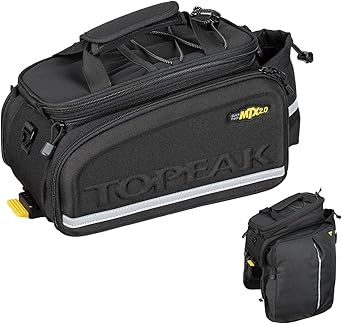
Topeak MTX TrunkBag DXP expands from 8L to 22.6L, swallowing groceries, gym clothes, or laptop+lunch. The quick-release mount clicks on/off in seconds. Pair it with the Topeak Super Tourist DX rack rated for 55 lbs (necessary for e-bike loads).
Priority 5: Comfort
Ergon GP1 grips eliminate hand numbness by supporting the palm's meaty base rather than concentrating pressure on the ulnar nerve. This makes a shocking difference on rides over 30 minutes.
Waterproof panniers like the Rhinowalk set (27L total capacity) cost under $80 and handle rainy commutes without worry.
What Are the Best E-Bikes for Women Commuting?
Commuter e-bikes for women prioritize reliability, weather protection, and carrying capacity over raw performance. The best commuter setup gets you to work consistently without arriving sweaty or disheveled.
Must-have commuter features:
Fenders: Full coverage front and rear to block road spray Integrated lights: So you're never caught without illumination Rear rack: For panniers, trunk bags, or bungee-corded cargo Kickstand: Preferably center-mount for stability when loaded Chain guard: Prevents grease marks on pants
Ride1Up builds practical commuter bikes without unnecessary frills. Their 700 Series offers Class 3 speeds (28 mph), hydraulic brakes, and a Gates carbon belt drive (no chain maintenance) starting around $1,795. The step-through version fits riders 5'0" to 6'4".
City riding conditions demand:
- Puncture-resistant tires: Look for "Kevlar bead" or "flat protection" ratings
- Upright riding position: Reduces neck/shoulder strain during traffic scanning
- Responsive brakes: Hydraulic discs with 180mm rotors minimum
- Motor cutoff sensors: Power cuts instantly when braking (critical for safety)
Calculate commute economics:
- Average car commute cost: $8-12/day (gas, parking, wear)
- E-bike commute cost: $0.10-0.20/day (electricity)
- Payback period on a $1,500 e-bike: 5-8 months of daily commuting
Weather considerations:
- Rain: IP65-rated electronics, fenders, waterproof panniers
- Cold: Battery insulation bags, heated grips (optional)
- Heat: Breathable clothing matters more than bike features
Which E-Bikes Work for Grocery Shopping and Errands?
Cargo-capable e-bikes transform practical errands from chores into pleasant outings. You need carrying capacity, stability when loaded, and easy parking—not speed or off-road capability.
Yuba cargo bikes pioneered the longtail cargo design, extending the rear rack to accommodate 100+ lbs of groceries, gear, or even child seats. Their Spicy Curry model handles 300 lbs total payload (rider + cargo) while maintaining manageable length for standard bike parking.
Cargo categories:
Front basket: 15-25 lb capacity, affects steering feel
Rear rack/trunk bag: 25-50 lb capacity, most versatile option
Panniers: 20-40 lb capacity per side, keeps weight low
Longtail extension: 75-150 lb capacity, for kids or major loads
Front cargo box: 40-100 lb capacity, requires practice to ride
For typical grocery trips (2-3 bags, 15-20 lbs), a quality rear rack with basket or panniers suffices. The Topeak Super Tourist DX rack handles up to 55 lbs—more than adequate for weekly shopping.
Stability when loaded requires:
- Lower center of gravity: Step-through frames help here
- Wider tires: 2.0-2.4" width vs narrow 1.5" road tires
- Sturdy kickstand: Center-mount or double-leg design
- Powerful motor: 500W+ to handle added weight on hills
Most e-bikes derate motor power as battery drains. A 750W motor at 80% charge might only deliver 500-600W—still adequate for cargo hauling.
What About E-Bikes for Recreational Trail Riding?
Trail-capable e-bikes for women need adequate suspension, grippy tires, and comfortable upright positioning rather than aggressive mountain bike geometry. You're seeking enjoyable exploration, not technical single-track mastery.
Feature priorities shift:
- Suspension: Front fork with 60-80mm travel handles gravel and light trails
- Tires: 2.0-2.4" width with moderate tread (not aggressive knobs)
- Motor position: Mid-drive offers better weight distribution on uneven terrain
- Battery size: Trails drain batteries 30-40% faster than pavement
Velotric offers models with front suspension and wider tires suitable for crushed limestone trails, fire roads, and rail-trails—the sweet spot for recreational riding. Their geometries prioritize comfort over the hunched-forward position of true mountain bikes.
Avoid common mistakes:
Mistake 1: Buying aggressive mountain bike geometry for casual trail use. The 70° head tube angle and long reach feel uncomfortable for relaxed riding.
Mistake 2: Underestimating suspension needs. Even 50mm of basic travel dramatically improves comfort on rough surfaces compared to rigid forks.
Mistake 3: Choosing road tires for mixed surfaces. The jump from 1.5" slicks to 2.0" hybrid tires provides exponentially more confidence on gravel.
Test different tire pressures—20-25 psi on trails provides cushion and traction versus 40-50 psi on pavement.
How Do You Maintain an E-Bike Long-Term?
E-bike maintenance combines traditional bike care with battery/electrical system management. Most women can handle routine maintenance with basic tools and save $300-500 annually versus shop service.
Monthly tasks (15 minutes):
- Inspect tire pressure (check sidewall for PSI range)
- Lubricate chain (wipe old lube, apply new, wipe excess)
- Test brakes (should engage within 1" of lever pull)
- Check battery contacts for corrosion
- Tighten any loose bolts (handlebars, seat post, racks)
Quarterly tasks (30 minutes):
- Clean drivetrain (degreaser, brushes, fresh lube)
- Inspect brake pads for wear (replace under 1mm thickness)
- Check spoke tension (they should "ping" when plucked)
- Calibrate derailleur if shifting degrades
- Inspect tire tread and sidewalls for damage
Annual professional service ($100-200):
- Full drivetrain replacement (chain, cassette, chainring)
- Brake fluid flush (hydraulic brakes)
- Bearing inspection/replacement (headset, bottom bracket, hubs)
- Software updates (some e-bikes have downloadable firmware)
- Battery capacity test
Battery lifespan optimization:
- Store at 40-60% charge for periods over 2 weeks
- Avoid extreme temperatures (ideally 32-77°F)
- Full discharge/charge cycle every 20-30 charges (recalibrates meter)
- Expect 500-1000 cycles before capacity drops to 80%
A 500Wh battery at $600 replacement cost, lasting 750 cycles at 40 miles per cycle = $0.02 per mile battery cost. This is negligible compared to other ownership costs.
What Safety Gear Should Women Prioritize?
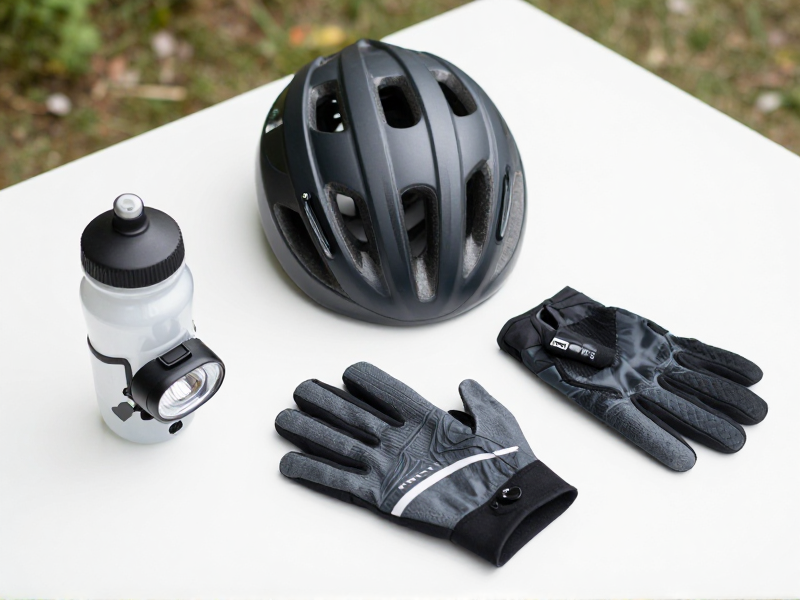
Helmet technology has advanced significantly—modern designs offer better protection, ventilation, and style than the mushroom-shaped lids of the past.
Giro Syntax MIPS combines urban aesthetics with MIPS (Multi-directional Impact Protection System) technology. MIPS reduces rotational brain injury risk by 30-40% in angled impacts—the most common crash scenario.
Helmet fitting basics:
- Should sit level, covering forehead (2 fingers above eyebrows)
- Straps form "V" below ears
- Buckled strap allows 1-2 fingers between chin and strap
- No rocking forward/back or side-to-side
For premium protection, the POC Omne Air MIPS offers 360° MIPS coverage (not just the liner but the entire retention system). Swedish engineering meets Scandinavian minimalist style.
Beyond helmets:
- Gloves: Padded palms reduce vibration fatigue
- Glasses: Protect eyes from debris, bugs, UV
- Reflective vest: Increases visibility 300%+ in low light
- GPS tracker: Tile Pro hidden on frame helps recover stolen bikes
Crash statistics reveal:
- 60% of serious injuries involve head trauma (helmet critical)
- 75% of fatal accidents occur at intersections (visibility essential)
- 40% of crashes involve solo falls (skill practice matters)
Consider a bike handling skills course—most cities offer 2-4 hour clinics teaching emergency braking, obstacle avoidance, and low-speed maneuvering.
Comparison Table: Top E-Bikes for Women
| Model | Frame Type | Weight | Range | Price | Best For |
|---|---|---|---|---|---|
| Velotric T1 ST | Step-through | 52 lbs | 45 mi | $1,599 | All-around commuting |
| Ride1Up 700 | Step-through | 56 lbs | 50 mi | $1,795 | Class 3 speed |
| Heybike Cityscape | Step-through | 58 lbs | 40 mi | $1,299 | Budget + torque sensor |
| Engwe EP-2 Pro | Step-through | 62 lbs | 55 mi | $999 | Maximum value |
| Yuba Spicy Curry | Longtail | 70 lbs | 35 mi | $4,999 | Heavy cargo hauling |
Check current prices: Velotric · Ride1Up · Heybike · Engwe · Kryptonite locks · Garmin Varia RTL515 · NiteRider Lumina 1200 · Quad Lock
FAQ: Best E-Bikes for Women
Do I really need a "women's" e-bike or can I ride any model?
Any e-bike can work regardless of gender, but women-specific or step-through designs typically fit female body proportions better. The key differences are shorter reach, narrower handlebars, and wider saddles—adjustments you can make to any bike. If a men's model fits perfectly, ride it. The "women's" designation primarily indicates inclusive sizing that accommodates a wider range of heights and proportions.
What size e-bike frame should I get if I'm 5'6"?
At 5'6", most manufacturers recommend a medium frame, but step-through designs may vary. Check these measurements rather than relying solely on labeled sizes: standover height should be 2-3 inches below your inseam, and when seated with your heel on the pedal at its lowest point, your leg should be straight. Medium frames typically fit riders 5'4" to 5'9", but individual bikes vary by 2-3 inches. Always test ride if possible.
How much should I spend on my first e-bike?
Budget $1,200-1,800 for a reliable first e-bike that won't frustrate you with mechanical issues. Bikes under $1,000 often cut corners on batteries, brakes, or components that fail within 6-12 months. The $1,500 sweet spot gets you quality hydraulic brakes, 40+ mile range, and warranties worth honoring. If budget is tight, buy used from reputable brands rather than new from unknown manufacturers.
Can I ride an e-bike in the rain?
Yes, quality e-bikes with IP65 or higher ratings handle rain without issue. Avoid pressure washing directly on electrical components and dry your bike after wet rides to prevent corrosion. The battery and controller are sealed against water intrusion, but exposed connections can corrode over time. Invest in full fenders and consider waterproof panniers—your cargo and clothing need more protection than the bike itself.
What's the best way to test if an e-bike fits me?
Schedule test rides at local shops focusing on these checkpoints: Can you place both feet flat when stopped? Can you reach the handlebars with a slight elbow bend? Do your knees fully extend at the bottom of the pedal stroke? Can you comfortably squeeze the brake levers? Ride for at least 15 minutes to assess comfort—initial awkwardness often resolves, but persistent discomfort indicates poor fit. Adjustable stems and saddle positions solve minor fit issues.
Conclusion: Finding Your Perfect Women's E-Bike
The best ebikes for women balance accessible step-through design, manageable weight, and thoughtful ergonomics without sacrificing performance. Whether you prioritize the budget-friendly Engwe models, the value-packed Ride1Up commuters, or the modern designs from Velotric, the perfect womens electric bike exists for your specific needs.
Start by identifying your primary use case—commuting, errands, recreation, or multi-purpose. Prioritize frame fit and comfort over specifications like motor wattage. Test ride multiple options focusing on real-world concerns: Can you easily mount/dismount? Does the reach feel natural? Will you be comfortable after 30-60 minutes?
Don't forget essential accessories like quality Kryptonite locks for security, the Quad Lock mount for navigation, and proper lighting for safety. These additions often make more difference in daily satisfaction than choosing between similar bike models.
Ready to find your ideal e-bike? Use our comparison guide above to narrow your choices, then visit local dealers for test rides. Your perfect step through ebike is out there—one that makes every ride effortless, enjoyable, and empowering.
Affiliate Disclosure
Discussion
Sign in with GitHub to leave a comment. Your replies are stored on this site's public discussion board.
Continue Reading

Best Electric Bikes Summer 2026: Ultimate Buyers Guide
May 25, 2026

Velotric Discover 1 Review: Budget Step-Thru E-Bike for Short Trips
May 19, 2026

Best Electric Bikes Under $2000 in 2026: Value Picks for New Riders
May 19, 2026

Best E-Bikes for Heavy Riders: 11 Models That Support 300+ lbs (2026)
March 16, 2026