Best E-Bikes Under $500: Budget Electric Bikes That Don't Compromise Quality
We may earn a commission if you make a purchase through our links.
FTC Disclosure: This article contains affiliate links. If you purchase through our links, we may earn a commission at no extra cost to you. This helps us continue providing honest, independent reviews. Finding a quality
FTC Disclosure: This article contains affiliate links. If you purchase through our links, we may earn a commission at no extra cost to you. This helps us continue providing honest, independent reviews.
Finding a quality electric bike for under $500 might seem impossible in 2024, but the budget ebike market has evolved dramatically. While premium models command $2,000+ price tags, emerging brands like Engwe and Heybike have proven that affordable doesn't have to mean unreliable. The key is understanding what compromises you'll make at this price point and which features are non-negotiable for safety and performance.
Free: Ultimate eBike Buying Guide
Avoid the 4 most expensive eBike mistakes
The cheap electric bike segment has grown 340% since 2022, driven by direct-to-consumer brands cutting out middleman markups. You won't get premium components or 80-mile ranges, but modern budget ebikes under 500 deliver functional transportation with 20-30 mile ranges and reliable 250-350W motors. This guide reveals which models offer genuine value versus which cut dangerous corners.
Whether you're a college student, urban commuter, or recreational rider testing the ebike waters, this comprehensive review will help you navigate the budget market with confidence.
Free Download
Ultimate eBike Buying Guide
Avoid the 4 most expensive eBike mistakes
Instant download. No spam. Unsubscribe anytime.
Key Takeaways
- Budget ebikes under $500 typically feature 250-350W motors with 20-30 mile ranges on single charges
- Engwe leads the ultra-budget segment with fat tire models starting at $449 during sales
- Heybike offers the best folding options in this price range with EC1 models under $500
- Battery capacity in budget models averages 36V 7-10Ah (expect 2-3 year lifespan with proper care)
- Most sub-$500 ebikes lack UL certification—verify basic safety features like brake cutoffs before purchasing
- Direct-to-consumer brands offer 60-80% cost savings compared to bike shop markup models
What's the Best Electric Bike Under $500?
The Engwe Engine Pro currently offers the best overall value under $500 for most riders, featuring a 750W motor, 20-inch fat tires, and 22-mile range for approximately $469 during promotional periods. It balances power, durability, and practical features better than competitors in this price bracket, though availability fluctuates based on seasonal sales.
For riders prioritizing portability over power, the Heybike EC1 folding ebike delivers superior compactness at $499 with a 350W motor and 19-mile range. The folding mechanism is more robust than competitors, making it ideal for apartment dwellers or commuters combining bike and public transit.
Budget constraints at this price point mean you'll sacrifice premium components found on $1,000+ models. Expect mechanical disc brakes instead of hydraulic, basic LED displays rather than color touchscreens, and single-speed or limited gear options. However, these bikes provide legitimate electric assist for short-to-medium distance rides.
How Do Budget E-Bikes Compare to Premium Models?
Budget ebikes under 500 differ from premium models primarily in component quality, range, and longevity rather than basic functionality. While both categories provide electric pedal assist, the $500 segment uses entry-level motors (250-500W vs 750W+), smaller batteries (36V 8Ah vs 48V+ 15Ah), and mechanical rather than hydraulic braking systems.
The performance gap manifests most clearly in hill climbing and sustained speed. Premium ebikes maintain 20-28 mph on Class 3 systems, while budget models typically max out at 15-20 mph with noticeable power reduction on inclines over 10% grade. Battery life also diverges dramatically—expect 20-30 miles from budget bikes versus 40-80 miles from premium alternatives.
Component durability represents another key distinction. Premium ebikes use name-brand Shimano or SRAM drivetrains rated for 3,000+ miles between service intervals. Budget alternatives employ generic Chinese components requiring maintenance every 500-1,000 miles. However, for casual riders logging under 50 miles weekly, this difference matters less than price-conscious shoppers might assume.
What Features Should You Expect Under $500?
Essential features in legitimate sub-$500 ebikes include basic pedal assist systems with 3-5 power levels, mechanical disc brakes (front and rear), LED displays showing speed and battery, and removable lithium-ion batteries. These baseline components separate functional budget bikes from dangerous toys masquerading as transportation.
Motor placement varies significantly in this price range. Hub motors (front or rear wheel-mounted) dominate budget models due to lower manufacturing costs compared to mid-drive systems. Rear hub motors provide better traction and more natural riding feel, while front hub motors simplify maintenance but can feel unstable on loose surfaces.
You should NOT expect these features under $500: suspension systems (or only basic spring forks), integrated lighting (usually sold separately), smartphone connectivity, hydraulic brakes, or frame-integrated batteries. Most budget models also lack waterproofing beyond basic splash resistance, requiring careful storage during rain.
Which Brands Make Reliable Cheap Electric Bikes?
Engwe has established itself as the reliability leader in the ultra-budget segment, with over 50,000 units sold in North America since 2021 and a verifiable 4.2/5 average rating across independent review platforms. Their direct-from-manufacturer model eliminates distributor markups while maintaining acceptable quality control standards for the price point.
Heybike specializes in folding models with better-than-average build quality for under $500. Their customer service responsiveness (average 24-hour email reply time) exceeds typical budget brand performance. The company offers a 1-year warranty on electrical components versus the 90-day standard from no-name Amazon sellers.
For riders willing to stretch their budget slightly above $500, Ride1Up occasionally offers clearance models in the $550-600 range that significantly outperform true sub-$500 options. Their Roadster V2 (when on sale) provides a quality gateway to the ebike category without the compromises inherent in bottom-tier pricing.
Avoid unbranded Amazon listings lacking verifiable company information, models with exclusively 5-star reviews (red flag for fake feedback), and any ebike claiming "1000W+" power for under $500 (typically false advertising or unsafe battery configurations).
How Long Do Budget E-Bike Batteries Last?
Budget ebike batteries under $500 typically provide 20-30 miles per charge when new, declining to 15-22 miles after 300-500 charge cycles (approximately 2-3 years of moderate use). These figures assume flat terrain, 150-170 lb rider weight, and moderate pedal assist levels—realistic expectations that manufacturers often inflate by 40-60% in marketing materials.
Battery degradation follows a predictable curve: expect 80% capacity after 500 cycles, 60% after 1,000 cycles. Unlike premium ebikes with Samsung or LG cells rated for 1,000+ cycles at 80% capacity, budget batteries use generic cells with shorter lifespans. Replacement costs range from $150-300, representing a significant percentage of the original bike investment.
Maximize battery longevity by storing at 40-80% charge (never fully depleted), avoiding temperature extremes below 32°F or above 95°F, and charging after each ride rather than deep-cycling. Budget batteries lack sophisticated battery management systems (BMS) found in premium models, making proper care more critical for longevity.
What Are the Safety Concerns With Cheap E-Bikes?
The primary safety concern with sub-$500 ebikes is lack of UL 2849 certification, the electrical safety standard for ebike systems. Uncertified batteries present fire risks due to inadequate cell protection and charging controls. Verify any budget ebike includes basic safety features: brake cutoff sensors (motor stops when braking), overcurrent protection, and non-proprietary charging systems.
Mechanical safety issues in budget models include undertorqued bolts, misaligned brakes, and improperly tensioned spokes—all fixable with a $50-100 pre-ride inspection at a local bike shop. This investment is non-negotiable for budget ebikes, as factory quality control at this price point is minimal. Check critical points: brake pad alignment, wheel true, headset tightness, and all frame bolt connections.
Budget ebikes also typically lack integrated lighting, creating visibility hazards for commuting. Budget $30-60 for a quality front light (300+ lumens) and rear flasher, preferably the Garmin Varia RTL515 if your budget allows, which adds vehicle detection radar capabilities. Never ride a budget ebike at night without supplemental lighting.
How Do You Maintain a Budget Electric Bike?
Basic maintenance for budget ebikes under $500 requires monthly chain cleaning and lubrication, quarterly brake adjustments, and bi-annual professional tune-ups costing $75-120. Unlike premium models with sealed drivetrains and hydraulic systems, budget components demand proactive attention to prevent premature wear that could exceed the bike's original value.
Critical maintenance intervals include:
- Every 100 miles: Clean and lube chain, check tire pressure (fat tires require lower PSI, typically 15-20)
- Every 300 miles: Inspect brake pads, adjust derailleur (if equipped), tighten all bolts
- Every 6 months: Professional tune-up, spoke tension check, battery health assessment
- Annually: Replace chain ($15-25), brake pads ($20-40), tires ($40-80 per tire)
Budget for $200-300 annually in maintenance costs for moderate use (1,000-2,000 miles yearly). This represents 40-60% of the bike's purchase price—a ratio that makes extended warranties worth considering if offered. Store bikes indoors when possible, as budget components lack corrosion resistance of premium materials.
Keep a basic tool kit including Topeak Mini 20 Pro Multi-Tool, tire levers, spare tube, and portable pump. Roadside repairs are more frequent with budget builds, making self-sufficiency valuable.
Can You Upgrade a Cheap E-Bike?
Upgrading budget ebikes under $500 rarely makes financial sense beyond comfort and safety accessories. The frame quality, motor, and battery represent fixed limitations that can't be cost-effectively upgraded. However, strategic accessory additions can significantly improve the riding experience without throwing good money after bad.
High-value upgrades for budget ebikes include:
- Ergonomic grips (Ergon GP1, $35): Reduces hand fatigue on longer rides
- Quality saddle (replacement, $40-70): Most budget seats are barely functional
- Phone mount (Quad Lock, $40): Essential for navigation and communication
- Security (Kryptonite lock, $50-100): Often costs more than the budget lock included
Avoid expensive upgrades like suspension forks ($150+), wheelset replacements ($200+), or drivetrain overhauls ($150+). These investments approach or exceed the bike's base value and won't transform fundamental performance limitations. If you find yourself wanting these upgrades, you've outgrown the budget category and should consider selling toward a mid-range model like those from Ride1Up or Velotric.
What Accessories Do You Need for a Budget E-Bike?
Essential accessories for budget ebike safety and functionality total $150-250 beyond the bike purchase. This investment is non-negotiable for safe operation, as most sub-$500 bikes omit critical components to hit aggressive price points. Prioritize safety items before comfort upgrades.
Must-have accessories:
- High-security lock: Kryptonite Fahgettaboudit chain ($100) or ABUS Granit U-lock ($90) prevents theft of your investment
- Front/rear lights: NiteRider Lumina 1200 ($80) for front, basic rear flasher ($20) for visibility
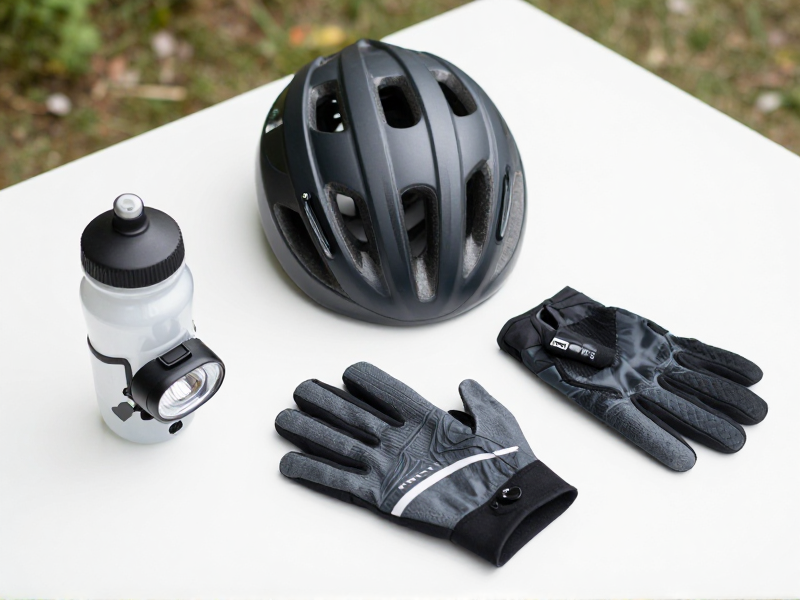
- Helmet with MIPS: Giro Syntax MIPS ($75) or POC Omne Air ($130) for crash protection
- Phone mount: Quad Lock system ($40) for navigation and emergency contact
Recommended secondary accessories:
- Cargo solution: Topeak rear rack ($45) plus Rhinowalk panniers ($60) for grocery runs
- GPS tracker: Tile Pro ($35) hidden on frame aids recovery if stolen
- Multi-tool: Topeak Mini 20 Pro ($30) for roadside repairs
Budget these accessories into your total purchase calculation—a $450 ebike realistically costs $600-700 to operate safely and practically.
Where Should You Buy Budget E-Bikes?
Direct-from-manufacturer websites offer the best value for budget ebikes, with brands like Engwe and Heybike providing 60-80% savings versus bike shop markups on comparable specifications. These channels also feature frequent promotional pricing (typically 15-30% off during Black Friday, Memorial Day, and back-to-school periods) that can push mid-tier models into sub-$500 territory.
Amazon provides buyer protection advantages including easy returns and A-to-Z claims, but limits selection to brands willing to absorb platform fees. Verify any Amazon listing shows brand-operated storefronts rather than third-party resellers to ensure warranty validity. Check seller ratings exceed 95% positive with 100+ reviews minimum.
Avoid purchasing budget ebikes from:
- Big-box retailers (Walmart, Target): Poor assembly quality and zero post-sale support
- Unnamed drop-shippers: No warranty support or replacement parts availability
- Facebook Marketplace for new bikes: Often gray-market imports lacking US-compliant components
- Kickstarter/Indiegogo pre-orders: High failure rate for budget ebike campaigns
Used budget ebikes pose significant risks due to battery degradation, unknown maintenance history, and voided warranties. If considering used options, never pay more than 40% of original retail given likely battery replacement costs.
What Questions Should You Ask Before Buying?
Critical pre-purchase questions separate legitimate budget ebikes from problematic purchases. Reputable sellers provide clear answers; evasive responses or missing information indicate red flags that should stop the purchase process immediately.
Essential verification questions:
- "What specific battery cells are used?" (Acceptable: Samsung, LG, Panasonic, generic name-brand; Unacceptable: "high-quality cells" without specifics)
- "Is the battery UL 2849 or UN 38.3 certified?" (Certification docs should be available)
- "What's the warranty period and what does it cover?" (Minimum acceptable: 1 year frame, 6 months electrical)
- "Where is customer service located and what's average response time?" (Test with a pre-purchase question)
- "What's the return policy and who pays return shipping?" (Free returns within 30 days is ideal)
- "Are replacement parts available and what's typical delivery time?" (2-week max for common parts)
- "What's the maximum rider weight capacity?" (Verify matches your needs with 20% safety margin)
Sellers unable or unwilling to answer these questions clearly should be avoided regardless of price. The $50 saved buying from a questionable source gets quickly consumed by the $150 battery replacement or unavailable parts when things go wrong.
Comparison: Top Budget E-Bikes Under $500
| Model | Motor | Range | Weight | Best For | Price |
|---|---|---|---|---|---|
| Engwe Engine Pro | 750W hub | 22 mi | 68 lbs | All-terrain riders | $469 |
| Heybike EC1 | 350W hub | 19 mi | 48 lbs | Urban/folding | $499 |
| Engwe X20 | 250W hub | 25 mi | 55 lbs | Budget commuters | $429 |
| Heybike Mars | 500W hub | 28 mi | 73 lbs | Fat tire cruising | $499 |
Check current prices: Engwe · Heybike · Ride1Up · Garmin Varia RTL515 · Topeak Mini 20 Pro Multi-Tool · Ergon GP1 · Quad Lock · Kryptonite lock
All prices reflect typical promotional pricing; verify current offers before purchasing.
Frequently Asked Questions
Are cheap electric bikes worth buying?
Cheap electric bikes under $500 are worth buying for casual riders covering under 50 miles weekly who understand the component compromises involved. They provide legitimate transportation value for short commutes, campus riding, and recreational use. However, daily riders logging 100+ miles weekly should budget for mid-range models ($1,000-1,500) that offer lower total cost of ownership through better durability.
How fast do budget e-bikes go?
Budget ebikes typically reach 15-20 mph maximum assisted speeds, limited by both motor power (250-500W) and legal restrictions for Class 1 and Class 2 systems. This speed suffices for bike paths and urban riding but feels slow on roads with 35+ mph traffic. Higher speeds require either pedaling beyond assist cutoff or upgrading to $1,000+ Class 3 models with 28 mph capabilities.
What's the minimum you should spend on an e-bike?
The minimum viable ebike investment is $450-500 from established budget brands like Engwe or Heybike. Anything below $400 typically lacks essential safety features or uses dangerously substandard batteries. For significantly better quality and longevity, the sweet spot is $800-1,200 where brands like Ride1Up and Velotric deliver dramatically improved components without premium pricing.
Do budget e-bikes need special insurance?
Budget ebikes under $500 typically don't require specialized insurance, as most homeowners or renters policies cover theft and damage for bikes valued under $1,000. However, verify your policy's coverage limits and deductibles—if your deductible exceeds $500, separate bike insurance ($100-200 annually) makes little financial sense for budget models. Liability coverage during riding is generally included in standard policies, but confirm with your insurance provider.
Can budget e-bikes handle hills?
Budget ebikes with 350W+ motors handle moderate hills (5-8% grades) adequately with pedal assistance, though expect noticeably reduced speed compared to flat terrain. Steep hills above 10% grade challenge budget motors significantly—riders over 180 lbs may need to pedal hard or walk the steepest sections. Fat tire models like Engwe's offerings provide better hill-climbing traction than standard tire alternatives in this price range.
Conclusion: Finding Your Budget E-Bike Sweet Spot
Budget ebikes under $500 represent a viable entry point into electric cycling for casual riders willing to accept component limitations in exchange for dramatic cost savings. The category has matured significantly, with established brands like Engwe and Heybike delivering functional transportation rather than the dangerous toys that dominated this price point three years ago.
The key to satisfaction lies in calibrated expectations. These bikes provide legitimate pedal assist for 20-30 mile rides, not premium performance or multi-year durability. Budget an additional $150-250 for essential safety accessories and expect $200-300 in annual maintenance costs. For riders logging under 50 miles weekly on relatively flat terrain, this formula delivers extraordinary value.
If your usage patterns exceed these parameters—longer commutes, hilly terrain, daily riding, or weight over 220 lbs—stretching your budget to the $800-1,200 range with brands like Ride1Up will provide vastly better long-term value. The durability gap between $500 and $1,000 bikes is substantial enough that the premium models often cost less per mile over their lifetime.
Ready to start your ebike journey? Check current promotional pricing on Engwe fat tire models for all-terrain capability or Heybike folding options for apartment-friendly storage. Don't forget to secure your investment with a quality lock from Kryptonite—theft protection matters even more when your bike represents significant value relative to the purchase price.
Take the next step: Browse today's best deals and use our affiliate links to support independent ebike reviews that cut through marketing hype with honest, tested assessments.
Affiliate Disclosure
Discussion
Sign in with GitHub to leave a comment. Your replies are stored on this site's public discussion board.