E-Bike Range FAQ: How Far Can Your Electric Bike Really Go?
FTC Disclosure: This article contains affiliate links. If you purchase through our links, we may earn a commission at no additional cost to you. This helps us continue providing valuable content to our readers. If you'r
FTC Disclosure: This article contains affiliate links. If you purchase through our links, we may earn a commission at no additional cost to you. This helps us continue providing valuable content to our readers.
If you're considering an electric bike, the most important question you'll ask is: "How far can this ebike go?" The answer determines whether you can complete your commute, finish your weekend ride, or confidently explore new routes without range anxiety. Understanding ebike range isn't just about reading manufacturer specs—it's about knowing real-world performance under your specific riding conditions.
Free: Ultimate eBike Buying Guide
Avoid the 4 most expensive eBike mistakes
Most riders discover that advertised ranges can differ significantly from actual performance. A manufacturer might claim 60 miles, but you might only achieve 35 miles depending on terrain, rider weight, and assist level. This guide answers the most common questions about ebike range, helping you set realistic expectations and maximize your battery's potential.
Whether you're shopping for your first electric bike or trying to extend your current ebike's range, this comprehensive FAQ covers everything from range calculators to practical riding strategies.
Free Download
Ultimate eBike Buying Guide
Avoid the 4 most expensive eBike mistakes
Instant download. No spam. Unsubscribe anytime.
Key Takeaways
- Average ebike range is 20-60 miles per charge, with most quality models delivering 30-50 miles under typical riding conditions
- Five major factors affect range: battery capacity (Wh), rider weight, terrain, assist level, and riding speed
- Real-world range is typically 60-70% of advertised range due to hills, headwinds, and higher assist modes
- Battery capacity matters most: A 500Wh battery typically provides 30-40 miles, while 750Wh batteries deliver 45-60 miles
- You can extend range by 30-50% using eco mode, maintaining proper tire pressure, and pedaling consistently
- Range anxiety is manageable with proper planning, understanding your bike's capabilities, and adopting efficient riding habits
How Far Can an E-Bike Go on a Single Charge?
Most electric bikes travel between 20 and 60 miles on a single charge, with the average quality ebike delivering 30-50 miles under normal conditions. Your actual range depends on battery capacity, terrain, rider weight, and how much pedal assist you use.
Entry-level models with 300-400Wh batteries typically provide 20-30 miles. Mid-range ebikes with 500-600Wh batteries deliver 30-45 miles. Premium models with 750-1000Wh batteries can achieve 50-80+ miles in optimal conditions.
However, these are optimal scenario estimates. Real-world riding often yields 60-70% of the advertised maximum range due to hills, wind resistance, and higher assist levels.
Battery Capacity and Range Relationship
Battery capacity, measured in watt-hours (Wh), directly determines your potential range. Here's the general relationship:
- 300-400Wh: 20-30 miles (budget models)
- 500Wh: 30-40 miles (most common capacity)
- 625Wh: 40-50 miles (mid-premium range)
- 750Wh: 50-65 miles (high-capacity models)
- 1000Wh+: 65-100 miles (long-range specialists)
Brands like Ride1Up offer excellent value with 500-750Wh batteries that balance range and affordability, while Velotric models feature efficient battery management for extended real-world performance.
What Factors Affect E-Bike Range the Most?
Five primary factors determine your ebike range: battery capacity, rider weight, terrain elevation, assist level selection, and average speed. Battery capacity sets your baseline potential, but the other four factors determine how quickly you drain that capacity during actual riding.
The most impactful factor after battery size is assist level. Riding in turbo mode can reduce your range by 50% compared to eco mode. A 200-pound rider climbing hills in high assist mode might see only 20 miles from a 500Wh battery, while a 150-pound rider on flat terrain in eco mode could achieve 45+ miles from the same battery.
The Five Range Killers
- Assist Level: High/turbo mode uses 2-3x more power than eco mode
- Rider Weight: Every 25 pounds reduces range by approximately 5-8%
- Terrain: Climbing 500 feet of elevation can consume 10-15% of battery capacity
- Wind Resistance: Headwinds above 10 mph reduce range by 15-20%
- Speed: Riding at 25 mph uses 40% more power than riding at 15 mph
Temperature also impacts range. Cold weather (below 40°F) reduces lithium battery efficiency by 10-20%, while extreme heat (above 95°F) can trigger thermal protection systems that limit power output.
How Do I Calculate My E-Bike's Real-World Range?
To estimate your real-world ebike range, use this simple formula: (Battery Wh ÷ Average Wh per mile) × Efficiency Factor. Most ebikes consume 10-20 Wh per mile depending on conditions, and the efficiency factor typically ranges from 0.6 to 0.8 (60-80% of theoretical maximum).
For a practical example: A 500Wh battery consuming 15 Wh per mile with a 0.7 efficiency factor would provide approximately 23 miles of real-world range: (500 ÷ 15) × 0.7 = 23.3 miles.
Using an E-Bike Range Calculator
Most online ebike range calculators require these inputs:
- Battery capacity (Wh)
- Your total weight (rider + cargo + bike)
- Terrain type (flat, hilly, mountainous)
- Average assist level (eco, normal, high)
- Expected average speed
The most accurate calculators also factor in temperature, wind conditions, and tire pressure. However, the best way to understand your ebike's range is real-world testing on your actual routes.
For commuters, test your route at different assist levels during a weekend. Track your battery percentage drop and calculate your Wh per mile consumption. This gives you a personalized range estimate more accurate than any calculator.
Can I Extend My E-Bike's Range?
Yes, you can extend your ebike range by 30-50% through smart riding techniques and proper maintenance. The most effective strategy is using lower assist levels and maintaining consistent pedaling effort rather than relying solely on motor power.
Start by riding in eco or low assist mode on flat sections, saving higher assist for hills and headwinds. Maintain proper tire pressure (check weekly), reduce cargo weight, and pedal smoothly without sudden starts and stops. These simple changes can add 10-15 miles to your typical range.
Ten Range-Extension Techniques
- Use eco mode on flats: Save high assist for hills only
- Maintain 40+ PSI tire pressure: Under-inflated tires waste 10-15% of range
- Pedal consistently: Smooth pedaling is more efficient than throttle bursts
- Anticipate stops: Coast to red lights instead of braking hard
- Reduce speed: Riding 18 mph vs. 24 mph adds 25% more range
- Minimize cargo weight: Every 20 pounds costs 5-7% of range
- Keep battery 20-80% charged: Avoid full discharge cycles
- Ride in warmer weather: Cold weather reduces range by 10-20%
- Service your drivetrain: Clean, lubed chains improve efficiency by 5-8%
- Use aerodynamic positioning: Upright riding increases wind resistance
Accessories like Quad Lock Phone Mounts help you monitor your battery consumption in real-time, letting you adjust your riding style mid-journey to ensure you reach your destination.
What's Considered Good Range for an E-Bike?
A good ebike range for most riders is 40-50 miles per charge, which covers typical commuting needs and recreational rides with a comfortable safety margin. This range allows a 15-mile round-trip commute with battery to spare, or a full-day recreational ride without range anxiety.
For commuters, calculate your needs by doubling your one-way distance and adding 25% for contingency. A 10-mile commute requires an ebike with at least 25-mile real-world range (not advertised maximum). For weekend riders and touring cyclists, 50+ miles provides all-day capability without charging.
Range Requirements by Rider Type
Urban Commuters (5-15 mile commutes)
- Minimum acceptable: 25-30 miles
- Ideal range: 40-50 miles
- Recommended battery: 500Wh
Suburban Commuters (15-25 mile commutes)
- Minimum acceptable: 40-50 miles
- Ideal range: 60-70 miles
- Recommended battery: 625-750Wh
Recreational Riders
- Minimum acceptable: 30-40 miles
- Ideal range: 50-60 miles
- Recommended battery: 500-625Wh
Touring/Adventure Riders
- Minimum acceptable: 60-80 miles
- Ideal range: 80-100+ miles
- Recommended battery: 750-1000Wh
Budget-conscious riders should consider brands like Engwe and Heybike, which offer 40+ mile range at accessible price points.
How Does Terrain Impact E-Bike Range?
Terrain is the second-most impactful factor affecting ebike range after assist level selection. Climbing just 500 feet of elevation can consume 15-20% of your battery capacity compared to flat riding, while descents allow you to recover minimal energy through regenerative braking (if equipped).
A rider who averages 40 miles on flat terrain might achieve only 25-30 miles on hilly routes with 1,000 feet of climbing. Steep grades above 8% force the motor to work at maximum output, dramatically accelerating battery drain. Headwinds function similarly to climbing, adding invisible resistance that reduces range by 10-20%.
Terrain-Based Range Adjustments
- Flat terrain (0-100 ft elevation): 100% of rated range
- Rolling hills (100-500 ft): 80-90% of rated range
- Hilly terrain (500-1500 ft): 65-75% of rated range
- Mountainous (1500+ ft): 50-60% of rated range
For cargo riders hauling kids or groceries on hilly routes, consider high-capacity models like Yuba Cargo Bikes with 750Wh+ batteries specifically designed for demanding terrain with heavy loads.
What Role Does Rider Weight Play in Range?
Rider weight significantly impacts ebike range, with every 25 pounds of additional weight reducing range by approximately 5-8%. The total system weight (rider + bike + cargo) determines how much energy the motor expends maintaining speed and climbing hills.
A 150-pound rider might achieve 45 miles from a 500Wh battery, while a 225-pound rider using the same bike in identical conditions might see only 35-38 miles. This isn't just about rider body weight—cargo, accessories, and even heavy locks add to the total system weight affecting range.
Weight Impact Examples
500Wh Battery on Flat Terrain (Eco Mode)
- 130-pound rider: ~48 miles
- 170-pound rider: ~42 miles
- 210-pound rider: ~36 miles
- 250-pound rider: ~31 miles
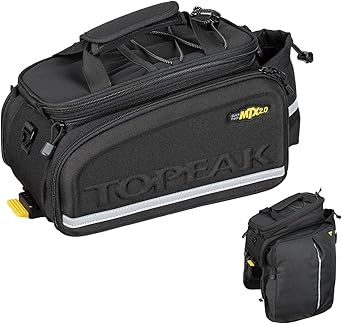
This is why many riders invest in lightweight accessories. Swapping a heavy chain lock for a lighter U-lock like the ABUS Granit X-Plus 540 or using lightweight bags like the Topeak MTX TrunkBag DXP helps preserve range without compromising functionality.
Does Speed Affect E-Bike Battery Range?
Yes, speed dramatically affects ebike range because wind resistance increases exponentially with velocity. Riding at 25 mph consumes approximately 40-50% more battery power than riding at 15 mph, even on flat terrain, due to aerodynamic drag.
Most ebikes achieve optimal efficiency at 12-16 mph, where motor efficiency peaks and wind resistance remains manageable. Pushing speeds above 20 mph forces the motor to work harder while simultaneously increasing aerodynamic drag, creating a double penalty that rapidly depletes your battery.
Speed vs. Range Relationship
At constant speeds on flat terrain:
- 12 mph: Maximum efficiency, 100% of optimal range
- 15 mph: Excellent efficiency, 95% of optimal range
- 18 mph: Good efficiency, 85% of optimal range
- 20 mph: Moderate efficiency, 75% of optimal range
- 25 mph: Poor efficiency, 55-60% of optimal range
- 28 mph: Minimum efficiency, 45-50% of optimal range
For commuters who need to maintain higher speeds, choosing an efficient Class 3 ebike like those from Ride1Up helps maximize range at 25-28 mph speeds compared to less efficient models.
How Can I Monitor My E-Bike's Range While Riding?
Most ebikes display remaining range on their handlebar console, typically showing miles or battery percentage remaining. However, these estimates fluctuate based on current power consumption, so treating them as approximate guidance rather than precise measurements is essential.
The most accurate monitoring method combines battery percentage with your personal Wh per mile consumption data. If you know your typical consumption is 15 Wh per mile and your 500Wh battery shows 60% remaining, you can calculate approximately 20 miles of range: (500 × 0.6) ÷ 15 = 20 miles.
Understanding Display Metrics
Battery Percentage: Simple but doesn't account for changing conditions Range Estimate: Adjusts based on recent consumption patterns Voltage Display: Technical metric showing battery state of charge Wh Remaining: Most accurate metric if your display provides it
Advanced displays show real-time power consumption (watts) and average Wh per mile, letting you adjust riding style dynamically. Using a Quad Lock Phone Mount with ebike apps provides detailed consumption analytics and GPS-based range predictions.
What's the Difference Between Advertised and Real Range?
Advertised ebike range typically represents ideal laboratory conditions: 150-pound rider, flat terrain, eco mode, 15 mph speed, perfect temperature, and no wind. Real-world conditions rarely match these parameters, resulting in actual ranges 60-70% of advertised maximums.
A manufacturer advertising "60-mile range" likely tested with minimal pedaling effort, perfect conditions, and the lowest assist setting. In typical use with moderate assist, varied terrain, and average rider weight, expect 35-45 miles. This gap isn't deceptive marketing—it reflects the extreme variability of real-world riding conditions.
Interpreting Range Claims
When you see advertised range:
- Economy range (highest number): Subtract 40% for realistic estimate
- Mid-range estimate: Subtract 25-30% for typical conditions
- Performance range (lowest number): Usually closest to real-world experience
Reading professional reviews from actual riders provides more realistic range expectations than manufacturer specifications alone. Look for reviews that specify testing conditions matching your intended use.
Can I Carry a Spare Battery for Longer Rides?
Yes, carrying a spare battery doubles your range but adds 5-8 pounds of weight and requires a compatible ebike design. Some manufacturers offer dual-battery configurations or accessory battery mounts, while others require DIY solutions or backpack carrying.
Before investing in a spare battery (typically $400-800), calculate whether the weight penalty justifies the range extension. The spare battery itself consumes energy to transport, reducing the net range gain to roughly 85-90% of a full battery's capacity rather than 100%.
Spare Battery Considerations
Advantages:
- Doubles your effective range
- Eliminates range anxiety for long tours
- Swaps in minutes when first battery depletes
Disadvantages:
- Expensive investment ($400-800)
- Adds 5-8 pounds to your system weight
- Requires secure mounting or backpack storage
- Not all ebike models support dual batteries
For riders needing extended range without spare batteries, consider bikes with removable batteries that can charge at your destination. Many commuters charge at work, effectively doubling their daily range without carrying spare batteries.
How Does Temperature Affect E-Bike Range?
Cold temperatures reduce ebike range by 10-20% as lithium batteries lose efficiency below 40°F. The chemical reactions inside lithium cells slow in cold weather, reducing available capacity and increasing internal resistance. Extreme cold (below 20°F) can reduce range by 25-30%.
Hot weather above 90°F also impacts range, though less dramatically than cold. Extreme heat can trigger thermal management systems that limit motor output to prevent overheating, indirectly affecting range by forcing higher assist levels to maintain desired speeds.
Temperature Range Impact
- Below 20°F: 25-30% range reduction
- 20-40°F: 15-20% range reduction
- 40-60°F: 5-10% range reduction
- 60-80°F: Optimal performance, minimal impact
- 80-95°F: 0-5% range reduction
- Above 95°F: 5-10% range reduction (thermal limiting)
Store and charge your battery at room temperature when possible. In winter, keep the battery indoors overnight and install it just before riding. In summer, avoid leaving your ebike in direct sunlight for extended periods.
What Assist Level Should I Use for Maximum Range?
Use eco or low assist mode for maximum range, which can extend your distance by 50-100% compared to turbo mode. Eco mode typically provides 30-50% motor assistance, requiring more pedaling effort but consuming 8-12 Wh per mile compared to 18-25 Wh per mile in turbo mode.
The most efficient strategy uses variable assist: eco mode on flats, normal mode on gentle hills, and high mode only on steep climbs or when fighting strong headwinds. This adaptive approach balances range preservation with comfortable riding effort.
Assist Mode Comparison
Eco/Low Mode
- Motor assistance: 30-50%
- Typical consumption: 8-12 Wh/mile
- Range: Maximum (100% baseline)
- Best for: Flat terrain, range maximization
Normal/Mid Mode
- Motor assistance: 60-80%
- Typical consumption: 12-16 Wh/mile
- Range: 70-80% of eco mode
- Best for: Balanced riding, gentle hills
High/Sport Mode
- Motor assistance: 100-150%
- Typical consumption: 16-20 Wh/mile
- Range: 50-60% of eco mode
- Best for: Moderate hills, headwinds
Turbo/Max Mode
- Motor assistance: 200-300%
- Typical consumption: 20-30 Wh/mile
- Range: 35-45% of eco mode
- Best for: Steep climbs, maximum speed
Most experienced riders develop an intuitive feel for assist management, automatically adjusting based on terrain and remaining battery percentage.
How Important Is Tire Pressure for E-Bike Range?
Proper tire pressure is critical for ebike range, with under-inflated tires reducing range by 10-15% due to increased rolling resistance. Every 10 PSI below optimal pressure adds noticeable drag, forcing your motor to work harder and drain your battery faster.
Check tire pressure weekly and maintain manufacturer-recommended PSI (typically 40-65 PSI depending on tire type). Fat tire ebikes from Engwe or Heybike require lower pressure (15-30 PSI) but still suffer range loss if under-inflated by 5+ PSI.
Tire Pressure Impact
- 20% under-inflated: 12-15% range reduction
- 10% under-inflated: 6-8% range reduction
- Optimal pressure: Maximum efficiency
- 10% over-inflated: Minimal range benefit, harsh ride quality
- 20% over-inflated: Risk of tire damage, safety concern
Invest in a quality floor pump with pressure gauge and check your tires before long rides. This simple two-minute task can add 4-7 miles to a typical 40-mile range.
Does Pedaling More Increase E-Bike Range?
Yes, active pedaling significantly increases ebike range by reducing motor load. Contributing consistent pedaling effort—even in higher assist modes—reduces battery consumption by 15-25% compared to throttle-only riding or minimal pedaling.
Think of assist modes as amplifiers of your effort rather than replacements for pedaling. A rider contributing 100 watts of pedaling power in eco mode travels much farther than a rider contributing 20 watts in the same mode, because the motor compensates for the difference.
Pedaling Efficiency Strategies
- Maintain consistent cadence: 60-80 RPM is most efficient
- Use appropriate gears: Don't force the motor to compensate for wrong gearing
- Anticipate terrain changes: Shift before hills, not during climbs
- Pedal through stops: Coast to stops but keep light pressure on pedals
- Match motor rhythm: Smooth pedaling syncs better with motor assistance
Ergonomic grips like Ergon GP1 Comfort Grips reduce hand fatigue on longer rides, making consistent pedaling more comfortable and sustainable throughout your journey.
Should I Charge My E-Bike Battery After Every Ride?
No, you don't need to charge after every ride—lithium batteries last longer when kept between 20-80% charge. Frequent full charge cycles (0-100%) can reduce long-term battery capacity, while maintaining mid-range charging extends overall battery lifespan.
For daily commuters, charge every 2-3 rides or whenever the battery drops below 30%. For weekend riders, charge as needed but avoid storing the battery fully charged for extended periods. If storing your ebike for weeks or months, maintain the battery at 50-60% charge.
Battery Charging Best Practices
Do:
- Charge to 80-90% for daily use (if your charger allows it)
- Charge when battery reaches 20-30%
- Store at room temperature (60-75°F)
- Let battery cool after rides before charging
- Use manufacturer-provided charger
Don't:
- Fully discharge to 0% repeatedly
- Leave plugged in at 100% for days
- Charge in extreme temperatures
- Use third-party chargers without verification
- Store fully charged for months
Following these practices can extend your battery's useful life from 3-4 years to 5-7 years, saving hundreds of dollars in replacement costs.
What Range Do I Need for Bike Commuting?
For bike commuting, calculate your required range by doubling your one-way distance and adding 25-30% for contingency. A 10-mile commute requires an ebike with minimum 25-mile real-world range, while a 15-mile commute needs 38-40 miles of range.
This buffer accounts for detours, headwinds, temperature variations, and battery degradation over time. Having excess range also means you can use higher assist levels without anxiety, making your commute more enjoyable and less sweaty.
Commute Distance Guidelines
Short Commute (Under 5 miles each way)
- Minimum required range: 15-20 miles
- Ideal range: 25-35 miles
- Can charge once or twice weekly
Medium Commute (5-10 miles each way)
- Minimum required range: 25-35 miles
- Ideal range: 40-50 miles
- Charge every 2-3 days
Long Commute (10-15 miles each way)
- Minimum required range: 40-50 miles
- Ideal range: 60-70 miles
- Daily or every-other-day charging
Extended Commute (15-25 miles each way)
- Minimum required range: 60-80 miles
- Ideal range: 80-100+ miles
- Daily charging or workplace charging
For commuters, models from Velotric offer excellent range-to-price ratios with efficient battery management, while Ride1Up provides higher-capacity options for longer commutes.
Can Regenerative Braking Extend E-Bike Range?
Regenerative braking adds only 5-10% range extension on most ebikes, far less than many riders expect. Unlike electric cars that recover significant energy from braking, ebikes have limited regenerative capacity due to smaller motors and batteries, lower speeds, and less frequent hard braking.
Some ebikes don't offer regenerative braking at all. Those that do recover minimal energy—perhaps 1-2 Wh per significant braking event. Over a 30-mile ride with moderate braking, you might recover enough energy for an extra 1-3 miles.
Why Regen Is Limited on E-Bikes
- Low kinetic energy: Bikes have much less momentum than cars
- Motor design: Most ebike motors aren't optimized for regeneration
- Battery charging limits: Batteries can't accept energy quickly enough during braking
- Infrequent heavy braking: Most riding involves gentle speed adjustments, not hard stops
Don't select an ebike primarily for regenerative braking capability. Focus instead on battery capacity, motor efficiency, and riding technique for meaningful range improvements.
How Does Cargo Weight Impact E-Bike Range?
Cargo weight reduces ebike range proportionally to total system weight increase. Adding 40 pounds of cargo to a system weighing 200 pounds (bike + rider) increases total weight by 20%, reducing range by approximately 15-18%.
For cargo bikes hauling kids, groceries, or work equipment, this impact is significant. A Yuba Cargo Bike with a 750Wh battery might achieve 55 miles unloaded but only 35-40 miles when carrying 60 pounds of cargo plus a child passenger.
Cargo Weight Strategies
Minimize Unnecessary Weight:
- Remove accessories not needed for the trip
- Use lightweight bags like Rhinowalk Waterproof Panniers
- Choose aluminum racks over steel (Topeak Super Tourist DX)
Distribute Weight Properly:
- Keep heavy items low and centered
- Balance loads between front and rear
- Use frame-mounted bags for heavy items
Adjust Riding Style:
- Lower assist levels when possible
- Maintain momentum to avoid constant stop/start cycles
- Plan routes that minimize climbing with heavy loads
For regular cargo hauling, invest in a high-capacity battery (750Wh+) rather than constantly worrying about range with a smaller battery.
What's the Best Way to Plan Long-Distance E-Bike Routes?
Plan long-distance ebike routes by identifying charging opportunities every 30-40 miles, mapping elevation profiles, and building 20% range buffer into your estimates. Use apps that show bike-friendly routes with amenities and avoid planning routes that require 100% of your battery capacity.
Research restaurants, coffee shops, and public facilities along your route where you can charge during breaks. A 1-hour lunch stop at a cafe willing to let you charge can add 15-25 miles to your range, effectively extending your daily distance without carrying spare batteries.
Long-Distance Planning Checklist
Route Planning:
- Map elevation gain (every 1,000 ft costs ~10-15% battery)
- Identify charging stops every 30-40 miles
- Check weather forecast (wind direction impacts range significantly)
- Plan for 80% of estimated range, not 100%
Pre-Ride Preparation:
- Fully charge battery night before
- Check tire pressure and add 5 PSI for long distances
- Pack essential tools (Topeak Mini 20 Pro Multi-Tool)
- Bring portable charger or battery pack for phone
During the Ride:
- Monitor battery percentage every 10 miles
- Adjust assist levels based on remaining distance
- Take advantage of charging opportunities
- Track actual consumption for future planning
GPS computers like the Garmin Varia RTL515 (which includes radar tail light functionality) help you navigate efficiently and track battery consumption in real-time.
How Does Wind Resistance Affect E-Bike Range?
Wind resistance significantly impacts ebike range, with strong headwinds (15+ mph) reducing range by 20-30%. Every 10 mph of headwind is roughly equivalent to climbing a 3-4% grade, forcing your motor to work substantially harder to maintain speed.
Conversely, tailwinds provide free assistance, potentially extending range by 15-20%. Crosswinds have minimal impact on flat terrain but increase control effort, leading to slightly higher energy consumption through steering corrections.
Wind Impact by Speed
At 15 mph riding speed:
- 5 mph headwind: 8-10% range reduction
- 10 mph headwind: 15-18% range reduction
- 15 mph headwind: 22-28% range reduction
- 20 mph headwind: 30-35% range reduction
At 20 mph riding speed:
- Wind impacts increase by 1.5-2x compared to 15 mph speeds
- Combined aerodynamic penalty of higher speed + headwind
Strategies for Windy Conditions:
- Check wind forecasts before long rides
- Plan outbound legs into headwinds (ride home with tailwind assistance)
- Lower assist levels in tailwinds, increase in headwinds
- Reduce speed to minimize wind resistance penalty
Aerodynamic positioning helps but is limited on upright ebikes. Focus instead on route planning and assist management when facing strong winds.
Do I Need Range Anxiety with an E-Bike?
Range anxiety is largely avoidable with proper planning, realistic range expectations, and understanding your ebike's capabilities. Unlike early electric cars, ebikes are lightweight enough to pedal home without assistance if the battery dies, making "stranding" scenarios nearly impossible.
Most range anxiety comes from unrealistic expectations based on advertised maximum ranges. Once you understand your ebike's real-world range under your typical conditions, you can plan confidently without constant battery-level monitoring.
Eliminating Range Anxiety
Know Your Numbers:
- Test your actual consumption on typical routes
- Calculate your personal Wh per mile average
- Understand how different conditions affect your specific bike
Build in Buffers:
- Plan for 70-80% of your expected range
- Never intentionally drain below 20% battery
- Know charging locations along regular routes
Develop Backup Strategies:
- Practice riding in zero-assist mode (surprisingly easy on flats)
- Identify public transit options along routes
- Keep emergency contact number saved
Use Technology:
- Mount phone securely (Quad Lock)
- Use ebike apps that track real-time consumption
- Set battery percentage alerts (30%, 20%, 10%)
After 2-3 weeks of regular riding, you'll develop intuitive understanding of your ebike's range that eliminates anxiety entirely.
Comparison: Range by E-Bike Category
| Category | Typical Battery | Real Range | Best For | Example Brands |
|---|---|---|---|---|
| Budget E-Bikes | 300-500Wh | 20-35 miles | Short commutes | Engwe, Heybike |
| Commuter E-Bikes | 500-625Wh | 30-50 miles | Daily commuting | Velotric, Ride1Up |
| Cargo E-Bikes | 750-1000Wh | 35-60 miles | Family hauling | Yuba |
| Mountain E-Bikes | 500-750Wh | 25-45 miles | Trail riding | Various |
| Folding E-Bikes | 300-500Wh | 20-40 miles | Multi-modal trips | Heybike |
| Long-Range E-Bikes | 750-1400Wh | 60-100+ miles | Touring | Various |
Check current prices: Ride1Up · Velotric · Quad Lock Phone Mounts · Engwe · Heybike · Yuba Cargo Bikes · ABUS Granit X-Plus 540 · Topeak MTX TrunkBag DXP
FAQ: Quick Answers About E-Bike Range
How accurate are e-bike range displays?
Range displays are moderately accurate for immediate conditions but fluctuate significantly as terrain and assist levels change. They typically estimate based on recent consumption patterns, making them reliable for the next 5-10 miles but less accurate for full-range predictions. Battery percentage is more reliable than range estimates.
Can I increase my e-bike's range by upgrading the battery?
Yes, if your ebike manufacturer offers compatible higher-capacity batteries, you can upgrade to extend range. However, not all models support battery upgrades, and compatible replacements typically cost $400-900. Verify compatibility before purchasing—using non-approved batteries can void warranties or create safety issues.
How much does cold weather really affect range?
Cold weather below 40°F reduces range by 10-20%, while extreme cold below 20°F can reduce range by 25-30%. The lithium battery chemistry slows in cold temperatures, reducing available capacity. Store and charge batteries at room temperature when possible, installing them just before cold-weather rides.
Should I buy an e-bike with the biggest battery available?
Not necessarily. Larger batteries add weight (reducing efficiency) and cost ($100-200 per 100Wh). Buy the battery size that meets your needs plus 25% buffer. A commuter riding 12 miles daily doesn't need a 1000Wh battery—a 500-625Wh battery provides plenty of range while saving weight and money.
Does motor power (watts) affect range more than battery size?
Battery capacity (Wh) affects range more than motor power (watts). A 750W motor with a 500Wh battery provides less range than a 500W motor with a 750Wh battery. However, more powerful motors operating at lower percentages can be more efficient than smaller motors working at maximum capacity.
Conclusion: Understanding Your E-Bike's True Range
E-bike range anxiety is largely a mindset issue, not a technical limitation. Most quality ebikes with 500Wh+ batteries provide sufficient range for daily commuting and recreational riding once you understand real-world performance factors. The key is setting realistic expectations based on your specific riding conditions rather than manufacturer maximums.
Your actual range depends on the five major factors: battery capacity, rider weight, terrain, assist level, and speed. By optimizing tire pressure, using appropriate assist levels, and maintaining consistent pedaling effort, you can extend range by 30-50% beyond typical usage patterns.
For most riders, a 500-625Wh battery provides 30-50 miles of real-world range—more than sufficient for 10-15 mile commutes or 2-3 hour recreational rides. Cargo haulers and long-distance riders should target 750Wh+ batteries for comfortable margins. Brands like Ride1Up, Velotric, and Yuba offer excellent range-to-value ratios across different riding categories.
Don't forget essential accessories that make range management easier: secure your phone with a Quad Lock Mount for real-time monitoring, protect your investment with quality locks like Kryptonite, and improve comfort for longer rides with Ergon GP1 Grips.
Ready to find an ebike with the perfect range for your needs? Explore our comprehensive buying guides and reviews to discover models that match your distance requirements and riding style.
Affiliate Disclosure
Discussion
Sign in with GitHub to leave a comment. Your replies are stored on this site's public discussion board.