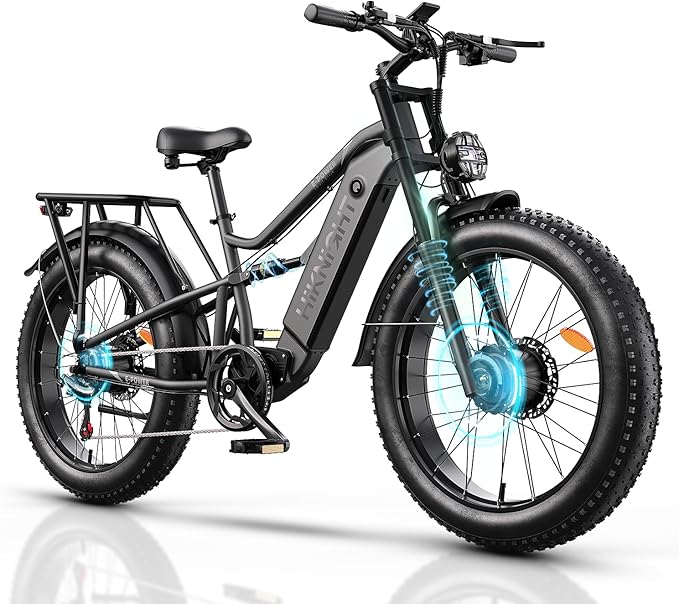
Electric Bike Buyers Guide: Everything You Need to Know
Complete electric bike buying guide. Learn about e-bike types, features, and how to choose the perfect model for your needs.
Considering an electric bike purchase but feeling overwhelmed by options? You're not alone. The e-bike market has exploded with choices across every price point and style. This comprehensive guide demystifies electric bike shopping, helping you make a confident, informed decision.
What Are Electric Bike Basics?
Free: Ultimate eBike Buying Guide
Avoid the 4 most expensive eBike mistakes
Electric bikes augment human pedaling with battery-powered assistance using four core components: a motor (hub or mid-drive), lithium-ion battery (300-700Wh+), controller managing power delivery, and display showing speed and battery levels. Unlike motorcycles, e-bikes require pedaling but make it significantly easier through integrated motor systems.
The Core Components
Free Download
Ultimate eBike Buying Guide
Avoid the 4 most expensive eBike mistakes
Instant download. No spam. Unsubscribe anytime.
Motor: The heart of any e-bike, typically mounted in the rear hub, front hub, or mid-drive position. Each location offers distinct advantages.
Battery: Usually lithium-ion, ranging from 300Wh to 700Wh+ capacity. Higher capacity means longer range but adds weight and cost.
Controller: The brain managing power delivery from battery to motor based on your pedaling and assist level selection.
Display: Shows speed, battery level, distance, and allows you to adjust assist levels.
What Are the Main Types of Electric Bikes?
Electric bikes come in four main categories: commuter e-bikes ($1,500-$3,000) for daily transportation with 30-60 mile range, mountain e-bikes ($3,000-$10,000+) with suspension for off-road trails, folding e-bikes ($1,000-$2,500) for compact storage, and cargo e-bikes ($2,500-$6,000+) with 750W+ motors for hauling kids and groceries.
Commuter E-Bikes
Best For: Daily transportation, errands, practical riding
These versatile bikes dominate the market for good reason. They feature upright geometry, integrated lights, fenders, and racks. Commuter e-bikes prioritize reliability and functionality over flashy features.
Typical Specs:
- 350-750W motor
- 30-60 mile range
- Integrated accessories
- $1,500-$3,000
Top Picks: Rad Power Bikes, Velotric, Aventon
Mountain E-Bikes
Best For: Trail riding, off-road adventures
E-mountain bikes bring pedal-assist to challenging terrain. Full or hardtail suspension, knobby tires, and powerful mid-drive motors characterize this category.
Typical Specs:
- 500-750W+ mid-drive motor
- 20-50 mile range
- High-quality suspension
- $3,000-$10,000+
Top Picks: Specialized Turbo Levo, Trek Powerfly, Himiway
Folding E-Bikes
Best For: Limited storage, multi-modal commuting
Compact and portable, folding e-bikes sacrifice some performance for convenience. Perfect for apartment dwellers or those combining biking with public transit.
Typical Specs:
- 350-500W motor
- 20-40 mile range
- Compact when folded
- $1,000-$2,500
Top Picks: Lectric XP 3.0, Heybike, Brompton Electric
Cargo E-Bikes
Best For: Hauling kids, groceries, equipment
Long-tail or front-loading cargo bikes replace car trips for many families. Powerful motors handle heavy loads with ease.
Typical Specs:
- 750W+ motor
- 30-50 mile range
- Heavy-duty construction
- $2,500-$6,000+
Top Picks: Tern GSD, Yuba Cargo, Rad Power RadWagon
What Do Key E-Bike Specifications Mean?
Motor power ranges from 250W (Europe legal limit) to 750W (US maximum), with 500W being the sweet spot for most riders. Battery capacity measured in watt-hours directly affects range: 400Wh provides 20-35 miles, while 700Wh+ offers 40-70 miles. Hub motors are simpler and cheaper, while mid-drive motors deliver more efficient power and better hill climbing.
Motor Power (Wattage)
250W: Legal limit in Europe, adequate for flat terrain 350W: Minimum for varied terrain in the US 500W: Sweet spot for most riders and conditions 750W: Maximum legal in most US states, excellent hill climbing
Higher wattage doesn't always mean better. Mid-drive motors can outperform more powerful hub motors through efficient gearing.
Battery Capacity
Measured in watt-hours (Wh), battery capacity directly affects range. However, range varies dramatically based on:
- Rider weight
- Terrain hilliness
- Wind conditions
- Assist level used
- Tire pressure
Real-World Range Estimates:
- 400Wh battery: 20-35 miles
- 500Wh battery: 25-45 miles
- 600Wh battery: 30-55 miles
- 700Wh+ battery: 40-70 miles
Hub Motors vs Mid-Drive Motors
Hub Motors (Rear or Front Wheel):
- Simpler, more reliable
- Lower maintenance
- Less expensive
- Direct power feel
- Can overheat on long hills
Mid-Drive Motors (At Cranks):
- More efficient power delivery
- Better hill climbing
- Natural pedaling feel
- Higher maintenance (chain wear)
- More expensive
For commuting and recreational riding, quality hub motors excel. Serious mountain biking demands mid-drive systems.
What Should I Budget for an Electric Bike?
E-bike prices span four tiers: entry-level ($800-$1,500) offers basic functionality for casual riders, mid-range ($1,500-$3,000) provides the best value with quality components for daily use, premium ($3,000-$6,000) includes top-tier motors and long range, and ultra-premium ($6,000+) features cutting-edge technology and lightweight materials for enthusiasts.
Entry Level ($800-$1,500)
What You Get: Basic functionality, generic components, limited range
Entry-level e-bikes get you riding but make compromises. Expect shorter battery life, basic mechanical brakes, and limited warranty support.
Best For: Casual riders testing e-bike interest, very short commutes
Mid-Range ($1,500-$3,000)
What You Get: Quality components, decent range, brand support
This sweet spot offers the best value. Reliable motors, adequate batteries, hydraulic brakes, and proper warranties come standard.
Best For: Daily commuters, regular recreational riders
Premium ($3,000-$6,000)
What You Get: Excellent components, long range, premium features
Premium e-bikes include top-tier motors, large batteries, high-quality drivetrains, and advanced features like integrated GPS or automatic shifting.
Best For: Serious cyclists, long-distance commuters
Ultra-Premium ($6,000+)
What You Get: Cutting-edge technology, maximum range, lightweight materials
Carbon frames, state-of-the-art motors, massive batteries, and boutique components define this category.
Best For: Enthusiasts with specific performance requirements
What Are the Must-Have E-Bike Features?
Essential e-bike features include a removable battery for indoor charging, integrated lights powered by the main battery, a clear display showing speed and battery level, hydraulic disc brakes for superior stopping power, and appropriate gearing (3-7 speeds adequate for most terrain, 8-12 speeds for varied terrain).
Removable Battery
Allows indoor charging and extends battery lifespan through climate control. Essential for apartment dwellers.
Integrated Lights
Built-in lights powered by the main battery eliminate forgotten light anxiety. Front and rear lights should activate automatically.
Display Quality
Clear visibility in direct sunlight matters. Color displays look nice but aren't necessary. Essential readouts: speed, battery level, range estimate, assist level.
Brake Type
Mechanical Disc: Budget-friendly, reliable, easy to maintain Hydraulic Disc: Superior stopping power, better modulation, worth the premium
Avoid rim brakes on e-bikes - the added speed and weight demand disc brakes.
Gearing
Single-Speed: Simplest, lowest maintenance, only for flat areas 3-7 Speeds: Adequate for most terrain with motor assist 8-12 Speeds: Maximum versatility, best for varied terrain
How Do I Choose the Right Size and Fit?
Proper e-bike fit requires selecting frame size based on inseam measurement rather than height alone, using manufacturer sizing charts. When between sizes, choose smaller for sportier handling or larger for stability and comfort. Test ride for at least 15 minutes, trying different assist levels and navigating turns, stops, and hills if possible.
Frame Size Selection
Manufacturers provide sizing charts based on height, but inseam measurement offers better accuracy. When between sizes:
- Choose smaller for sportier handling
- Choose larger for stability and comfort
Test Riding Tips
- Wear normal riding clothes and shoes
- Test ride for at least 15 minutes
- Try different assist levels
- Navigate turns and stops
- Test hill climbing if possible
The right e-bike feels natural immediately. Don't settle for "close enough."
What Are the Legal Requirements for E-Bikes?
In the United States, e-bikes are classified into three categories: Class 1 (pedal assist only, 20 mph max), Class 2 (throttle available, 20 mph max), and Class 3 (pedal assist only, 28 mph max). Local laws vary regarding bike path access, minimum age requirements, helmet mandates, and license requirements depending on class.
Class 1: Pedal assist only, 20 mph max Class 2: Throttle available, 20 mph max Class 3: Pedal assist only, 28 mph max
Check local laws regarding:
- Bike path access (varies by class)
- Minimum age requirements
- Helmet mandates
- License requirements
What Warranty Should I Expect?
Quality e-bike warranties should include frame coverage for 5+ years, motor for 2+ years, battery for 2+ years, and components for 1+ year. Equally important are responsive customer service and available replacement parts, so research brand reputation thoroughly before purchasing.
How Do I Make My Final E-Bike Decision?
Follow this six-step framework: define your primary use case (commuting, recreation, fitness, or cargo), set your budget including accessories, identify must-have features, research specific models through professional reviews and owner forums, test ride top candidates at local dealers, and purchase from reputable dealers while understanding warranty coverage.
-
Define Your Primary Use Case
- Daily commuting
- Weekend recreation
- Fitness riding
- Cargo hauling
-
Set Your Budget Range
- Include accessories (lock, lights, etc.)
- Factor in maintenance costs
-
Identify Must-Have Features
- List non-negotiable requirements
- Distinguish from nice-to-have features
-
Research Specific Models
- Read professional reviews
- Check owner forums
- Compare specifications
-
Test Ride Top Candidates
- Visit local dealers
- Arrange test rides
- Take notes after each ride
-
Purchase and Enjoy
- Buy from reputable dealers
- Understand warranty coverage
- Schedule initial tune-up
What Common E-Bike Buying Mistakes Should I Avoid?
Avoid buying sub-$800 e-bikes that prove expensive through poor reliability, underestimating range needs by not adding 30% buffer to typical riding distance, skipping test rides that reveal fit and feel, and overlooking total cost of essential accessories like quality locks ($75-150), helmets ($50-150), lights ($30-80), fenders ($25-60), and racks ($40-100).
Buying Too Cheap
Sub-$800 e-bikes often prove expensive through poor reliability and non-existent support. Save longer for quality.
Ignoring Range Needs
Nothing ruins e-bike ownership like constant range anxiety. Add 30% buffer to your typical riding distance when selecting battery capacity.
Skipping Test Rides
Photos and specifications don't reveal fit and feel. Always test ride before purchasing.
Overlooking Total Cost
Factor in essential accessories: quality lock ($75-150), helmet ($50-150), lights ($30-80 if not included), fenders ($25-60), rack ($40-100).
Final Thoughts
Electric bikes represent significant investments that pay dividends through years of reliable service. Take time researching, understanding your needs, and selecting quality over gimmicks.
The perfect e-bike matches your lifestyle, budget, and riding style. It should excite you to ride while serving practical transportation needs. With this guide's framework, you're equipped to make a confident, informed decision.
Disclosure: This article contains affiliate links. We may earn a commission if you make a purchase through these links, at no additional cost to you. We only recommend products we believe will benefit our readers.
Affiliate Disclosure
Discussion
Sign in with GitHub to leave a comment. Your replies are stored on this site's public discussion board.