How to Extend E-Bike Battery Life: 12 Proven Tips to Maximize Range
FTC Disclosure: This article contains affiliate links. If you purchase through our links, we may earn a commission at no additional cost to you. This helps support our testing and research. Your e-bike battery is the mo
FTC Disclosure: This article contains affiliate links. If you purchase through our links, we may earn a commission at no additional cost to you. This helps support our testing and research.
Your e-bike battery is the most expensive component to replace, often costing $500-$900. Learning how to extend your e-bike battery life can save you hundreds of dollars and keep you riding longer between charges. The good news? Simple changes to your charging habits, storage practices, and riding style can dramatically increase both daily range and overall battery lifespan.
Free: Ultimate eBike Buying Guide
Avoid the 4 most expensive eBike mistakes
Most e-bike batteries are rated for 500-1,000 charge cycles before capacity drops to 80%. With proper care, you can push this well beyond the manufacturer's estimates. Whether you own a Ride1Up commuter or a Heybike fat tire model, these techniques apply universally to lithium-ion battery systems.
This guide covers everything from optimal charging practices to winter storage strategies that actually work.
Free Download
Ultimate eBike Buying Guide
Avoid the 4 most expensive eBike mistakes
Instant download. No spam. Unsubscribe anytime.
Key Takeaways
- Charging your battery between 20-80% instead of 0-100% can double its lifespan from 500 to 1,000+ cycles
- Storing batteries at 50-60% charge in temperatures between 50-70°F preserves capacity during off-seasons
- Maintaining proper tire pressure (PSI listed on sidewall) can increase range by 10-15% per charge
- Using lower pedal assist levels for flat terrain reduces battery drain by 30-40% compared to full throttle
- Keeping your chain lubricated and drivetrain clean improves efficiency and extends range by up to 8%
- Extreme temperatures below 32°F or above 95°F accelerate battery degradation and reduce immediate range
How Does Charging Affect E-Bike Battery Lifespan?
Charging habits are the single biggest factor in battery longevity, with proper practices potentially doubling your battery's useful life. Lithium-ion batteries degrade faster when charged to 100% or drained to 0% repeatedly. The optimal charging range is 20-80% for daily use.
The 20-80 Rule Explained: Each full charge cycle (0-100%) counts toward your battery's rated lifespan of 500-1,000 cycles. By charging only from 20% to 80%, you create "partial cycles" that cause significantly less chemical stress. This can meaningfully extend total battery lifespan.
When to Charge to 100%: Only charge to full capacity before long rides where you need maximum range. For daily commutes under 20 miles, the 20-80% range provides plenty of capacity while preserving long-term health.
Overnight Charging Risks: While most modern e-bikes have overcharge protection, leaving batteries plugged in for 12+ hours repeatedly can generate excess heat. Heat is lithium-ion's worst enemy, accelerating degradation even with protection circuits.
Best Charging Practices
- Charge at room temperature: 60-75°F is ideal; avoid charging in freezing garages or hot sheds
- Unplug when complete: Don't leave batteries on the charger for days at a time
- Use the original charger: Third-party chargers may lack proper voltage regulation
- Charge after cooling down: Wait 15-30 minutes after a ride before plugging in
- Avoid fast charging daily: If your system supports it, save rapid charging for emergencies
The Velotric line includes smart charging features that automatically stop at optimal levels, making the 20-80 rule easier to follow.
What's the Ideal Storage Method for E-Bike Batteries?
Store e-bike batteries at 50-60% charge in a cool, dry location between 50-70°F to minimize capacity loss during extended periods of non-use. Storing at full charge or in extreme temperatures can permanently reduce capacity by 20% or more in just a few months.
Winter Storage Protocol: If you won't ride for 30+ days, charge the battery to 50-60% and store it indoors. Check monthly and top up to 60% if it drops below 40%. Never store lithium-ion batteries in freezing temperatures below 32°F.
Chemical Reality: Lithium-ion batteries slowly self-discharge even when not in use. At 50% charge, the internal chemistry remains stable. At 100% charge, voltage stress accelerates degradation. At 0% charge, the battery can enter "deep discharge" mode and become unrecoverable.
Temperature Impact Chart:
| Storage Temp | Capacity Loss (per year at 100% charge) | Capacity Loss (per year at 50% charge) |
|---|---|---|
| 0°F | 35% permanent loss | 18% permanent loss |
| 77°F | 20% permanent loss | 4% permanent loss |
| 104°F | 35% permanent loss | 15% permanent loss |
Check current prices: Ride1Up · Heybike · Velotric · Engwe · Yuba · Topeak Mini 20 Pro Multi-Tool · Ergon GP1 Comfort Grips · Rhinowalk Waterproof Pannier Set
Storage Checklist
- Remove battery from the bike to prevent parasitic drain from displays/electronics
- Store in a fireproof container or metal cabinet (lithium-ion fire safety)
- Keep away from direct sunlight and moisture
- Store separately from the charger to avoid accidental connection
- Set calendar reminders for monthly voltage checks
For riders with Engwe folding bikes who store indoors year-round, maintaining 50-60% charge between weekend rides optimizes longevity.
How Does Riding Style Impact Battery Range?
Your riding habits can change e-bike range by 50% or more on identical terrain with the same battery. Aggressive acceleration, constant throttle use, and maximum assist levels drain batteries 2-3 times faster than efficient pedaling with lower assist.
Pedal Assist vs. Throttle: Pedal assist systems (PAS) use 30-60% less power than pure throttle because they amplify your pedaling effort rather than replacing it. On a commuter like the Ride1Up 700 Series, switching from throttle-only to PAS Level 2 can extend range from 25 miles to 45+ miles.
Assist Level Strategy:
- Level 1-2: Flat terrain, tailwinds, casual riding (60-80 miles potential range)
- Level 3: Moderate hills, headwinds, faster speeds (35-50 miles range)
- Level 4-5: Steep climbs, heavy cargo, maximum speed (20-35 miles range)
Acceleration Matters: Rapid starts from stop lights consume exponentially more power than gradual acceleration. Smooth, steady throttle application can improve efficiency by 15-20%.
Range-Extending Riding Techniques
- Anticipate stops: Coast to red lights instead of braking hard, preserving momentum
- Shift gears appropriately: Lower gears reduce motor strain on hills
- Maintain steady speed: Constant 15 mph uses less power than 10-20 mph variations
- Use eco modes: Most e-bikes have efficiency modes that limit power but maximize range
- Pedal consistently: Don't rely solely on the motor; your legs are free energy
Cargo e-bike riders carrying heavy loads with Yuba bikes should especially focus on gradual acceleration and lower assist levels on flat sections.
Why Does Tire Pressure Matter for Battery Life?
Proper tire pressure reduces rolling resistance by up to 15%, directly translating to longer battery range and less motor strain per mile. Under-inflated tires create drag that forces the motor to work harder, consuming significantly more power.
The Numbers: A tire inflated to 30 PSI when it should be at 50 PSI can reduce range by 10-12%. For a battery rated at 40 miles, that's losing 4-5 miles simply from soft tires. Over hundreds of rides, this extra motor strain also accelerates mechanical wear.
Check Weekly: Tires naturally lose 1-2 PSI per week. Use a digital gauge to check pressure before long rides. The recommended PSI is printed on the tire sidewall—typically 30-65 PSI depending on tire width and bike type.
Fat Tire Considerations: Fat tire e-bikes like the Heybike Mars run lower pressures (15-30 PSI) for traction, but the principle remains the same. Stay at the manufacturer's recommended range for your riding conditions.
Tire Maintenance for Efficiency
- Invest in a quality floor pump with a pressure gauge
- Check pressure when tires are cold (before riding)
- Inspect for embedded debris that causes slow leaks
- Replace worn tires before tread disappears completely
- Consider puncture-resistant tires to avoid mid-ride deflation
The Topeak Mini 20 Pro Multi-Tool includes a portable pressure gauge for on-the-go checks during long rides.
How Does Temperature Affect E-Bike Battery Performance?
Extreme temperatures reduce lithium-ion battery capacity by 20-40% temporarily and accelerate long-term degradation when exposure is frequent. Cold weather below 32°F slows chemical reactions inside cells, while heat above 95°F increases internal resistance and stress.
Cold Weather Impact: At 32°F, expect 15-20% range reduction. At 0°F, this can reach 30-40%. The battery isn't damaged—it's temporarily less efficient. Once warmed up through riding, performance partially recovers. However, charging a frozen battery can cause permanent damage.
Hot Weather Strategy: Temperatures above 95°F during charging or riding accelerate capacity loss. Never leave your e-bike in a hot car (interior temps can exceed 140°F). If riding in summer heat, allow the battery to cool before charging.
Thermal Protection Tips:
- Store batteries indoors year-round, not in garages or sheds
- In winter, keep the battery inside until ready to ride
- Use an insulated battery cover for cold-weather commuting
- Avoid direct sunlight when parking during summer rides
- Let batteries reach room temperature before charging after extreme exposure
Temperature-Based Range Expectations
| Outside Temp | Expected Range (vs. 70°F baseline) |
|---|---|
| 0-20°F | 60-70% of normal range |
| 20-40°F | 80-90% of normal range |
| 40-70°F | 100% (optimal performance) |
| 70-85°F | 95-100% of normal range |
| 85-100°F | 85-95% of normal range |
Winter commuters should plan shorter ranges and consider investing in Ergon GP1 Comfort Grips and heated gear rather than overworking the battery to compensate for cold.
Does Regular Maintenance Improve Battery Efficiency?
A well-maintained e-bike requires 15-25% less power to travel the same distance as a neglected one, directly extending battery life and range. Drivetrain friction, brake drag, and worn components all force the motor to compensate with extra power.
Chain Lubrication: A dry, rusty chain creates significant friction. Properly lubricated chains improve efficiency by 5-8%, which translates to 2-3 extra miles on a 40-mile battery. Lube every 100-150 miles or after wet rides.
Brake Adjustment: Dragging brakes (pads barely touching rotors even when not engaged) create constant resistance. This can reduce range by 10-15% and you might not even notice. Spin each wheel freely—it should rotate multiple times without stopping quickly.
Bearing Maintenance: Wheel bearings, bottom brackets, and headsets accumulate grime over time. Well-greased bearings spin freely; neglected ones create drag that the motor must overcome.
Maintenance Schedule for Efficiency
Weekly:
- Check tire pressure
- Wipe down chain and apply lube if dry
- Quick visual inspection for loose bolts
Monthly:
- Clean drivetrain thoroughly (chain, cassette, chainring)
- Check brake pad alignment and rotor straightness
- Inspect all electrical connections for corrosion
- Test battery contacts and clean if dirty
Seasonally:
- Professional tune-up including bearing service
- Deep clean entire bike
- Update firmware if manufacturer releases battery management updates
- Replace worn brake pads before they damage rotors
Keep your Topeak Mini 20 Pro Multi-Tool handy for trailside adjustments that prevent efficiency-killing issues from worsening.
What Are the Signs Your Battery Needs Replacement?
Noticeable capacity loss below 60-70% of original range, failure to hold a charge, or irregular voltage readings indicate battery replacement may be necessary. Most e-bike batteries last 3-5 years with proper care, but these warning signs can appear earlier with neglect.
Capacity Fade Test: If your bike originally achieved 45 miles on a charge but now barely reaches 30 miles with identical riding conditions, you've lost 33% capacity. Under 60% of original capacity means the battery is reaching end-of-life.
Voltage Irregularities: If the battery indicator drops from 80% to 40% suddenly during a ride, individual cells may be failing. Healthy batteries discharge gradually and predictably.
Physical Warning Signs:
- Swollen or bulging battery case (stop using immediately—fire risk)
- Battery becoming hot to the touch during normal charging
- Unusual odors during charging or use
- Visible corrosion on terminals or case damage
- Battery no longer recognized by the bike's system
Error Messages: Many modern e-bikes like Velotric models have diagnostic systems that display battery health codes. Consult your manual if you see persistent warnings.
When to Replace vs. Repair
- Replace: Capacity below 60%, physical damage, age over 5-7 years
- Potentially repair: Single cell failure in a multi-cell pack (specialist required)
- Recalibrate: Sometimes the BMS (battery management system) needs resetting, not replacement
Contact your bike manufacturer first—many offer battery replacement programs with proper disposal of the old unit.
How Much Weight Should You Carry?
Excess cargo weight increases motor strain and can reduce range by 20-30% when loads exceed the bike's recommended capacity. Every additional 10 pounds requires approximately 2-3% more power to maintain the same speed and distance.
Manufacturer Limits: Most e-bikes support 250-300 pounds total weight (rider plus cargo). Cargo models like Yuba bikes handle 400+ pounds but still experience range reduction with maximum loads.
Weight Distribution: Balanced weight (panniers vs. backpack) reduces instability that causes power-wasting corrections. Use a Rhinowalk Waterproof Pannier Set to distribute cargo evenly across both sides of a Topeak Super Tourist DX Rear Rack.
Strategic Packing:
- Remove unnecessary items before rides
- Use lightweight materials for regular cargo (aluminum vs. steel racks)
- Consider battery capacity when planning grocery runs or cargo hauls
- Upgrade to a higher-capacity battery if you regularly carry heavy loads
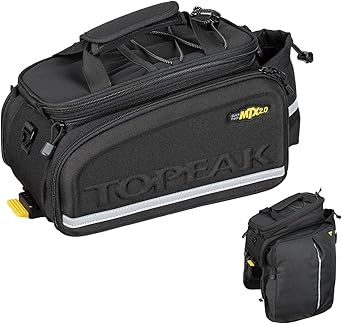
Aerodynamics Matter Too: Bulky cargo creates wind resistance even if it's not heavy. A streamlined Topeak MTX TrunkBag DXP is more efficient than loosely strapped boxes.
Can You Use Your E-Bike in the Rain?
Most e-bikes are water-resistant (IPX4-IPX5 rated) and can handle rain, but prolonged exposure to moisture can damage electrical connections and accelerate component wear. Proper post-ride care prevents water-related battery and motor issues.
IP Rating Guide:
- IPX4: Splash resistant (light rain okay, avoid puddles)
- IPX5: Water jets resistant (moderate rain, shallow puddles)
- IPX6-7: Heavy rain and submersion protection (rare on e-bikes)
Battery Port Protection: The charging port is often the most vulnerable point. Keep the rubber cover securely closed during rides. Water intrusion here can short circuit the battery management system.
Post-Rain Maintenance:
- Wipe down all electrical connections
- Dry the battery contacts before reinserting (if removable)
- Apply dielectric grease to connections to prevent corrosion
- Don't charge immediately—let everything air dry for 30-60 minutes
- Check for water in the display unit and dry if necessary
Long-Term Water Exposure: Frequent wet riding without proper drying can corrode internal components, reduce battery terminal conductivity, and cause intermittent electrical issues. Use fenders and consider a bike cover if parking outside.
Equip your e-bike with a Garmin Varia RTL515 Radar Tail Light for visibility in rain, and always pair wet-weather riding with thorough post-ride cleaning.
How Often Should You Use Your E-Bike Battery?
Using your e-bike battery at least once every 2-3 weeks prevents deep discharge and keeps the battery management system calibrated. Batteries that sit unused for months can develop capacity issues and voltage imbalances.
Calendar Aging: Lithium-ion batteries age even when not in use—a phenomenon called "calendar aging." Regular cycling (discharging and recharging) keeps cell chemistry active and balanced.
The 30-Day Rule: If you won't ride for 30+ days, charge to 50-60% and check monthly. If storing for 60+ days, perform a partial charge/discharge cycle (drain to 40%, recharge to 60%) every other month.
BMS Calibration: The battery management system learns your usage patterns. Completely irregular use (3 months off, then daily riding) confuses the system and can cause inaccurate range predictions.
Off-Season Riding Strategy
- Take short 10-15 minute rides monthly during winter storage
- If weather prevents riding, remove the battery and cycle it indoors on a charger
- Don't let batteries sit at 0% or 100% for extended periods
- Consider rotating between batteries if you own multiple e-bikes
Even budget models like Engwe fat tire bikes benefit from regular use—components stay lubricated and seals remain pliable.
What Accessories Actually Improve Battery Efficiency?
Strategic accessories can improve range by reducing weight, improving aerodynamics, or enhancing riding comfort that allows for more efficient pedaling. However, some accessories add draw on the battery system.
Range-Boosting Accessories:
- Phone mount instead of GPS computer: A Quad Lock Phone Mount uses zero battery power vs. dedicated GPS units that draw from the system
- Lightweight locks: The Kryptonite New York Fahgettaboudit provides maximum security but weighs 4.5 lbs—consider the ABUS Granit X-Plus 540 at 3.2 lbs for daily use
- Comfort upgrades: Ergon GP1 Grips reduce hand fatigue, allowing you to pedal more and rely on the motor less
- Proper helmets: A comfortable Giro Syntax MIPS or POC Omne Air MIPS helmet encourages longer rides with proper form
Battery-Draining Accessories to Avoid:
- USB charging ports constantly drawing power
- Overly powerful lights beyond what you need (use a NiteRider Lumina 1200 or Bontrager Ion Pro RT only when necessary)
- Heavy cargo racks when not hauling loads
Security Without Sacrifice: Invest in a quality lock like Kryptonite Locks and a Tile Pro GPS Tracker for theft prevention without adding excessive weight.
Frequently Asked Questions
How many years does an e-bike battery last?
Most e-bike batteries last 3-5 years or 500-1,000 charge cycles with proper care. Following the 20-80% charging rule, storing at optimal temperatures, and regular use can extend this to 5-7 years. Capacity gradually decreases over time—expect 80% of original capacity at the rated cycle limit.
Should I charge my e-bike battery after every ride?
Only charge after rides that deplete the battery below 20%. For short commutes using minimal power, you can skip charging until the battery reaches 20-30% capacity. Frequent partial charges (60% to 100%) are harder on the battery than using it more fully before recharging to 80%.
Can I leave my e-bike battery on the charger overnight?
Modern e-bikes have overcharge protection, but it's best practice to unplug when charging completes (typically 3-6 hours). Leaving batteries on chargers for multiple days generates unnecessary heat and keeps the battery at 100% charge, both of which accelerate degradation.
What's the best way to store an e-bike battery for winter?
Charge to 50-60%, remove from the bike, and store indoors at 50-70°F. Check monthly and recharge to 60% if it drops below 40%. Never store in freezing temperatures or at full charge. This protocol can preserve up to 96% of capacity through a 6-month off-season.
Does using throttle vs. pedal assist affect battery life?
Throttle-only riding drains batteries 40-60% faster than pedal assist because the motor does all the work. For long-term battery health, the increased number of charge cycles from throttle use means faster degradation. Using pedal assist levels 1-3 for most riding optimizes both range per charge and overall battery longevspan.
Conclusion: Small Changes Make a Big Difference
Extending your e-bike battery life doesn't require expensive upgrades or complicated maintenance routines. The 20-80% charging rule, proper storage at 50-60% capacity, optimal tire pressure, and efficient riding habits can double your battery's useful lifespan while increasing daily range by 30% or more.
Start with the easiest changes: check tire pressure weekly, charge to 80% for daily use, and store indoors at room temperature. These three actions alone provide 70% of the benefit with minimal effort.
Whether you ride a budget-friendly Engwe folder, a powerful Ride1Up commuter, or a cargo-hauling Yuba, these principles work universally across all e-bike platforms. Your battery is an investment—treat it well and it will reward you with years of reliable performance.
Ready to protect your investment? Pair these battery care tips with proper security using Kryptonite Locks and track your bike with a Tile Pro GPS Tracker. The same attention to detail that extends battery life also keeps your entire e-bike running efficiently for the long haul.
Affiliate Disclosure
Discussion
Sign in with GitHub to leave a comment. Your replies are stored on this site's public discussion board.
Continue Reading

Topeak Ratchet Rocket Lite NTX+ Review: The Multitool With Real Torque Control
April 17, 2026

YS YOSE POWER 48V 15Ah Seat-Tube Battery Review: Non-Hailong Frame Option
April 17, 2026

LGECOLFP 48V 15Ah E-Bike Battery Review: +50% Range for $189
April 17, 2026

VEVOR 1000W Electric Bike Conversion Kit Review: DIY E-Bike Under $220
April 17, 2026