How to Choose a Cargo E-Bike: Weight, Range, and Motor Guide
What to weigh when buying a cargo e-bike: weight capacity, motor type and power, battery range, long-tail vs box-style designs and budget, with a quick comparison and answers on how long the battery lasts and whether cargo e-bikes are safe for kids.
Disclosure: This article contains affiliate links. If you purchase through our links, we may earn a commission at no extra cost to you.
Choosing a cargo e-bike is one of the biggest purchasing decisions a family or urban commuter can make. The right electric cargo bike replaces a car for school runs, grocery hauls, and weekend adventures—saving thousands in fuel and parking costs every year. With cargo e-bikes now ranging from $1,500 to over $8,000, knowing exactly what to look for prevents an expensive mistake.
Free: Ultimate eBike Buying Guide
Avoid the 4 most expensive eBike mistakes
The cargo e-bike market has exploded in recent years. Families across North America and Europe are ditching second cars in favor of a powerful family e-bike. But not all cargo bikes are equal—motor placement, frame geometry, battery capacity, and load ratings vary wildly across brands.
This guide breaks down every critical spec you need before buying. Whether you're hauling two kids, 80 lbs of groceries, or gear for a weekend adventure, we'll help you find the right cargo e-bike for your exact situation.
Free Download
Ultimate eBike Buying Guide
Avoid the 4 most expensive eBike mistakes
Instant download. No spam. Unsubscribe anytime.
Key Takeaways
- Weight capacity on cargo e-bikes typically ranges from 250 to 550 lbs total (rider + cargo); always choose 20% more than your expected maximum load.
- Mid-drive motors (500W–750W) are best for hilly terrain and heavy loads; hub motors are adequate for flat urban routes.
- Battery range for cargo e-bikes averages 20–60 miles per charge depending on load weight, terrain, and assist level.
- Long-tail cargo bikes carry one to two children or 100+ lbs of cargo; box-style bikes offer higher cargo volume and safer child transport.
- Quality cargo e-bikes start at approximately $2,000 for long-tail designs; premium dual-battery models can exceed $6,000.
- Yuba Cargo Bikes are among the most proven cargo bike brands, with models handling up to 440 lbs total capacity.
What Weight Capacity Do You Need in a Cargo E-Bike?
The minimum recommended total capacity—rider plus cargo plus passengers—is 300 lbs for solo hauling and 400 lbs for family use. Most cargo e-bikes list a "total system weight" that includes all of these combined. Always aim for at least 20% headroom above your expected maximum load to protect the frame and drivetrain from premature failure.
Weight ratings fall into three tiers:
- Standard (250–300 lbs total): One adult rider with groceries or a single small child.
- Mid-capacity (300–400 lbs total): One adult plus one child passenger and up to 50 lbs of cargo.
- Heavy-duty (400–550 lbs total): Two child passengers, large cargo loads, or heavier riders.
Frame material matters significantly. Aluminum frames are lighter but have lower weight ceilings. Steel and chromoly frames flex more but typically handle heavier loads and last longer under sustained stress.
Pro Tip: Add a Topeak Super Tourist DX Rear Rack to compatible e-bikes to expand hauling capacity up to a verified 55 lbs—a smart upgrade for riders pushing the limits of a standard rack.
What Motor Power Does a Cargo E-Bike Need?
For cargo e-bikes, a minimum of 500W peak power with 60–80 Nm of torque is recommended for most family applications. Underpowered motors struggle with heavy loads on hills—the single most common mistake first-time cargo bike buyers make. Sustained overloading causes motors to overheat and fail prematurely.
Mid-Drive vs. Hub Motor: Which Is Better?
Mid-drive motors are superior for cargo e-bikes because they leverage the bike's existing gearing system, delivering more usable torque at low speeds where cargo bikes spend most of their time.
| Feature | Mid-Drive Motor | Hub Motor |
|---|---|---|
| Torque output | 60–120 Nm | 40–80 Nm |
| Hill performance | Excellent | Moderate |
| Efficiency under load | High | Moderate |
| Maintenance | More complex | Simpler |
| Cost | Higher | Lower |
Check current prices: Yuba Cargo Bikes · Topeak Super Tourist DX Rear Rack · Engwe · Heybike · Topeak MTX TrunkBag DXP · Rhinowalk Waterproof Pannier Set · Ride1Up · Velotric
Engwe code: RETURN30 takes $100 off at engwe-bikes.com (US only; listed through Feb 2028) — shop Engwe.
Hub motors are adequate for flat urban environments. Budget-friendly options from Engwe and Heybike use hub motors effectively for lighter cargo duties in flat cities.
Mid-drive motors from Bosch, Shimano EP8, and Bafang M600 are the proven standard for family e-bikes hauling 150+ lbs regularly. Expect to pay a $500–$1,500 premium for mid-drive technology over comparable hub-drive models.
Motor Wattage Guide for Cargo Use
- 250W nominal: Legal in the EU; underpowered for heavy cargo on hills
- 500W nominal: Minimum recommended for cargo use with occasional inclines
- 750W nominal: Ideal for most North American cargo e-bike use cases
- 1000W+: For extreme loads or steep terrain; verify local legal limits before purchasing
How Far Can a Cargo E-Bike Travel on One Charge?
Most cargo e-bikes deliver 20–45 miles of range per charge under typical loaded conditions. Adding passengers or significant cargo typically reduces manufacturer-quoted range by 15–30%, since those figures are measured with a single rider on flat ground at moderate assist.
Factors That Reduce Cargo E-Bike Range
- Load weight: Every additional 50 lbs reduces range by approximately 10–15%.
- Assist level: Turbo or Boost mode can cut range in half compared to Eco mode.
- Terrain: Hills drain batteries two to three times faster than flat surfaces.
- Tire pressure: Under-inflated tires increase rolling resistance meaningfully.
- Temperature: Cold weather below 40°F can reduce battery capacity by 20–25%.
Battery Size Recommendations by Use Case
| Battery Size | Expected Loaded Range | Best For |
|---|---|---|
| 400–500Wh | 15–30 miles | Short urban loops under 15 miles |
| 600–700Wh | 30–50 miles | Daily school and grocery runs |
| 750Wh+ | 40–65+ miles | Long commutes, multi-stop errands |
For daily school runs or grocery loops under 15 miles round-trip, a 500Wh battery is generally sufficient. For longer routes or multiple daily errands, invest in 700Wh or above—or prioritize a dual-battery compatible frame from the start.
Long-Tail vs. Box Cargo: Which Style Fits Your Life?
Long-tail cargo e-bikes are the best all-around choice for most families, offering a lower price, easier parking, and the ability to carry one to two children or 100+ lbs on an extended rear section. Box-style bikes carry more but cost more and require adaptation time.
Long-Tail Cargo E-Bikes
Long-tail bikes look like standard bicycles with an extended rear. They're narrower, easier to store, and more maneuverable in traffic.
Best for: One adult plus one to two child passengers; grocery runs; urban commuting with parking constraints.
Pros: Lower cost, easier to ride, fits standard bike storage, better in tight urban environments.
Cons: Less cargo volume than box bikes; can feel unstable with very heavy or unbalanced side loads.
Yuba Cargo Bikes pioneered the long-tail category. Their Mundo and Spicy Curry models carry up to 440 lbs total and accommodate multiple child seats—a verified benchmark in the segment backed by over a decade of real-world family use.
Box-Style (Bakfiets) Cargo E-Bikes
Box bikes place cargo in a large front box, keeping the center of gravity low and allowing multiple children to ride safely with visibility to the rider.
Best for: Two or more child passengers; large-volume cargo; full car-replacement family transport.
Pros: High cargo volume; children are visible and enclosed; lower center of gravity with full load.
Cons: Wider footprint, harder to park, more expensive, learning curve for front-heavy steering.
Compact Cargo Alternatives
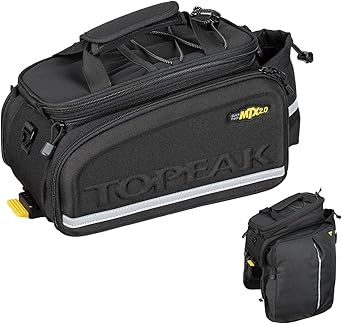
For riders who need occasional hauling without dedicated cargo bike storage, add-on systems are a proven solution. The Topeak MTX TrunkBag DXP expands into fold-out side panniers, and the Rhinowalk Waterproof Pannier Set adds 27L of waterproof cargo capacity to virtually any rack-equipped e-bike.
What Should You Budget for an Electric Cargo Bike?
Expect to spend $2,000–$4,500 for a reliable long-tail cargo e-bike and $4,000–$8,000 for a premium box cargo e-bike. Budget options under $2,000 typically sacrifice motor power, frame quality, or verified load ratings—a real risk when carrying children or heavy loads daily.
| Budget Tier | What You Get |
|---|---|
| Under $2,000 | Rear-rack setup; hub motor; ~300 lb capacity |
| $2,000–$3,500 | Long-tail cargo; 500W+ motor; ~400 lb capacity |
| $3,500–$5,000 | Premium long-tail or entry box bike; mid-drive option |
| $5,000–$8,000+ | Premium box bike; Bosch or Shimano mid-drive; dual battery |
Ride1Up offers outstanding value at $1,500–$2,500 for commuter e-bikes upgradeable with quality cargo racks. Velotric—founded by veterans of Uber and Lime's micromobility divisions—produces modern, well-engineered e-bikes with strong cargo compatibility and growing community trust.
Cargo E-Bike Quick Comparison
| Spec | Budget | Mid-Range | Premium |
|---|---|---|---|
| Price Range | Under $2,000 | $2,000–$4,000 | $4,000–$8,000+ |
| Motor Type | Hub | Hub or Mid-Drive | Mid-Drive |
| Motor Power | 500W | 500–750W | 750W–1000W |
| Total Capacity | 250–300 lbs | 350–440 lbs | 400–550 lbs |
| Battery | 400–500Wh | 600–700Wh | 700Wh+ |
| Range (loaded) | 15–25 miles | 25–40 miles | 35–65 miles |
Frequently Asked Questions
How much weight can a cargo e-bike carry?
Most cargo e-bikes carry between 250 and 550 lbs total system weight, including the rider. Purpose-built long-tail models like the Yuba Mundo are rated to 440 lbs total, which comfortably accommodates an adult rider, two child passengers, and a full grocery load. Always verify the manufacturer's total system payload rating—not just the "cargo" rating—before purchasing.
Is a 500W motor enough for a cargo e-bike?
A 500W hub motor is sufficient for flat urban routes with loads under 100 lbs. For hilly terrain or regularly carrying children and heavier cargo, a 750W motor or a mid-drive system producing 60+ Nm of torque is strongly recommended. Sustained overloading on underpowered motors causes overheating and premature failure within months of regular use.
How long does a cargo e-bike battery last?
Most cargo e-bike batteries are rated for 500–1,000 full charge cycles, translating to three to seven years of daily use before capacity drops below 80%. Storing the battery between 20–80% state of charge and avoiding temperatures below 32°F or above 100°F significantly extends its usable lifespan.
Are cargo e-bikes safe for kids?
Yes, when properly equipped and used within the bike's rated capacity. Use manufacturer-approved child seats, always fit helmets on both rider and children, and verify cargo is secured before each ride. Box-style cargo bikes with enclosed front cargo areas are generally considered the safest design for children under five years old.
Can I turn a standard e-bike into a cargo hauler?
Yes. A heavy-duty rear rack like the Topeak Super Tourist DX, rated to 55 lbs, combined with waterproof panniers like the Rhinowalk Waterproof Pannier Set transforms most rack-compatible e-bikes into capable cargo haulers. Confirm your frame has rack mounts and that total load stays within the frame's stated weight limit.
Conclusion: Buy Your Cargo E-Bike With Confidence
The right cargo e-bike becomes one of the most useful vehicles you own. For most families, a long-tail cargo e-bike with a 750W motor, 600Wh+ battery, and 400 lb total capacity hits the sweet spot of performance, practicality, and value. If you regularly carry two children or need maximum cargo volume, invest in a box-style cargo e-bike with a mid-drive motor system.
Start with your specific payload needs. Map your typical routes and terrain. Then match motor power and battery capacity to those real-world requirements. Budget an additional $200–$500 for racks, panniers, child seats, and lighting beyond the bike purchase price.
Ready to find the right fit? Explore Yuba Cargo Bikes for proven long-tail designs with verified payload ratings trusted by thousands of families worldwide. For budget-friendly platforms compatible with add-on cargo solutions, Ride1Up delivers exceptional Class 3 performance at accessible prices. Your car-free future starts with the right electric cargo bike.
Our team researched and evaluated cargo e-bikes across all price tiers to produce this guide. Some links are affiliate links—we earn a small commission on qualifying purchases at no additional cost to you.
Affiliate Disclosure
Discussion
Sign in with GitHub to leave a comment. Your replies are stored on this site's public discussion board.