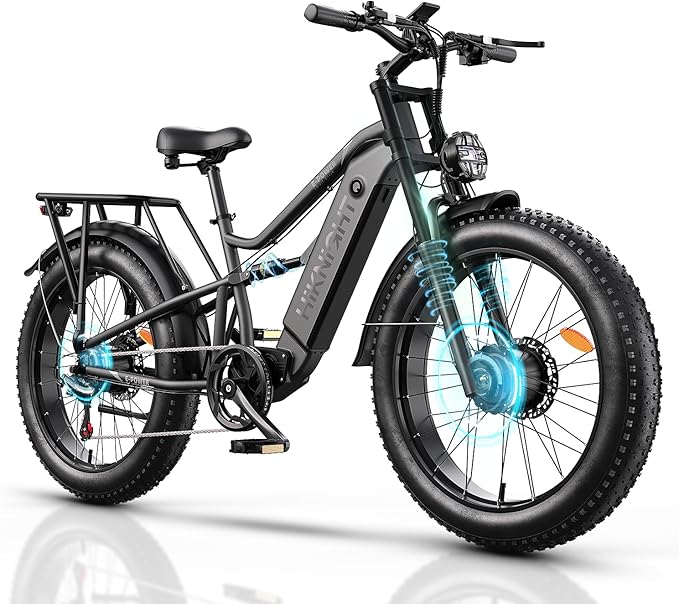
How to Replace an E-Bike Battery: Complete Step-by-Step Guide
FTC Disclosure: This article contains affiliate links. If you purchase through our links, we may earn a commission at no extra cost to you. This helps support our testing and content creation. Your e-bike battery is the
FTC Disclosure: This article contains affiliate links. If you purchase through our links, we may earn a commission at no extra cost to you. This helps support our testing and content creation.
Your e-bike battery is the heart of your electric bike. Whether it's lost capacity after years of use, suffered damage, or you simply want a spare for longer rides, knowing how to replace an e-bike battery is essential for every e-bike owner.
Free: Ultimate eBike Buying Guide
Avoid the 4 most expensive eBike mistakes
Most riders can replace their e-bike battery in under 10 minutes without special tools. However, choosing the wrong replacement battery or improper installation can damage your motor controller or create safety hazards. This guide covers everything from identifying your battery type to safe disposal of your old battery.
We'll walk you through the entire process, including compatibility checks, installation steps, and cost-saving tips. By the end, you'll confidently replace your battery and extend your e-bike's lifespan.
Free Download
Ultimate eBike Buying Guide
Avoid the 4 most expensive eBike mistakes
Instant download. No spam. Unsubscribe anytime.
Key Takeaways
- Most e-bike batteries last 3-5 years or 500-1,000 charge cycles before replacement is needed
- Battery replacement costs range from $300-$900 depending on capacity and brand
- You must match voltage (36V, 48V, 52V) and connector type exactly to avoid damaging your system
- Removing a battery typically requires unlocking with a key and sliding/lifting it from the mount
- Always recycle old lithium batteries at certified e-waste centers—never throw them in regular trash
- Third-party batteries can save 30-50% but may void warranties and lack safety certifications
Why Would You Need to Replace Your E-Bike Battery?
You need to replace your e-bike battery when it no longer holds sufficient charge for your rides, typically after 500-1,000 full charge cycles or 3-5 years of use. Signs include reduced range, longer charging times, or physical battery damage.
Battery degradation is natural. Lithium-ion cells lose capacity over time due to chemical reactions inside the cells. If your e-bike that once traveled 40 miles now barely reaches 20 on a full charge, replacement is due.
Physical damage is another common reason. Drops, crashes, or water exposure can compromise battery integrity. A swollen, cracked, or corroded battery must be replaced immediately as it poses fire risks.
Some riders replace perfectly functional batteries simply to have a spare. Having two batteries effectively doubles your range—perfect for long-distance touring or extended commutes.
What Type of Battery Does Your E-Bike Use?
Most e-bikes use removable lithium-ion batteries rated at 36V, 48V, or 52V with capacities between 10Ah and 20Ah. The battery type is usually marked on a label showing voltage, amp-hours, and watt-hours.
Check your battery casing for a specifications sticker. It will list critical information: voltage (V), capacity (Ah), and energy (Wh). For example: "48V 14Ah 672Wh."
Battery mounting styles vary by design. Common types include:
- Downtube batteries: Mounted on the frame's downtube (most common)
- Rear rack batteries: Sit above the rear wheel on a carrier rack
- Integrated batteries: Built into the frame tube (harder to replace)
- Seat tube batteries: Mounted inside or behind the seat tube
The connector type is equally important. Common connectors include XT60, Anderson, Higo, and proprietary brand-specific plugs. Your replacement must have an identical connector or you'll need an adapter.
Battery Management System (BMS) compatibility matters too. The BMS protects against overcharging and regulates discharge. Mismatched BMS specifications can damage your motor controller.
How Do You Find a Compatible Replacement Battery?
Find a compatible replacement by matching three critical specifications: voltage rating, connector type, and physical mounting dimensions. Start by checking your original battery's label for these exact specifications.
Contact your e-bike manufacturer first. Original Equipment Manufacturer (OEM) batteries guarantee compatibility but cost 20-30% more than third-party options. Brands like Velotric and Ride1Up sell replacement batteries directly through their websites.
Third-party battery suppliers offer alternatives. Reputable sellers include Unit Pack Power, EM3ev, and Luna Cycle. These batteries typically cost $300-$600 compared to $500-$900 for OEM replacements.
Compatibility Checklist:
- Voltage must match exactly (36V, 48V, or 52V)
- Amp-hour capacity should match or exceed original
- Connector type must be identical
- Physical dimensions must fit your mounting bracket
- BMS discharge rating must handle your motor's amperage
Never use a different voltage battery. A 52V battery on a 36V system will instantly damage your controller. Voltage must be exact—no exceptions.
Higher capacity (Ah) is acceptable. A 17Ah battery can replace a 14Ah battery, giving you longer range. However, it may be physically larger and heavier.
Check warranty implications. Many e-bike warranties are voided by third-party batteries. Weigh the 30-50% cost savings against potential warranty loss.
Look for safety certifications. Quality replacement batteries carry UL 2271, UL 2849, or CE certifications. Uncertified batteries present fire risks.
How Do You Remove Your Old E-Bike Battery?
Remove your e-bike battery by first turning off the system, unlocking the battery with its key, and then sliding or lifting it from the mounting bracket following the release mechanism. The entire process takes less than two minutes.
Step-by-step removal process:
- Power down completely: Turn off your e-bike's display and remove the key from the ignition if equipped
- Locate the battery lock: Usually found at the base or side of the battery mount
- Insert the key and unlock: Turn the key (typically counterclockwise) until you feel the lock release
- Release the battery: Most batteries slide backward or upward; some have a secondary button to press
- Support the battery weight: E-bike batteries weigh 5-8 pounds—use both hands
- Disconnect if hard-wired: Some systems require unplugging a connector cable
For downtube batteries, the release is usually at the bottom. Slide the battery upward while supporting its weight. Rear rack batteries typically unlock and lift straight up.
Integrated frame batteries are more complex. These may require removing side panels with an Allen key before accessing the battery compartment.
Safety precautions during removal:
- Never force a stuck battery—you might damage the locking mechanism
- Avoid dropping the battery—lithium cells are fragile
- Don't remove the battery in rain or wet conditions
- Inspect mounting rails for debris or corrosion before reinstalling
If your battery won't release, check for a secondary safety catch. Some manufacturers include dual-lock systems for theft prevention.
Store your removed battery in a cool, dry place if not immediately replacing it. Never leave it in extreme temperatures (below 32°F or above 113°F).
How Do You Install Your New E-Bike Battery?
Install your new battery by aligning it with the mounting rails, sliding it firmly into position until it clicks, then locking it with the key. Always verify the connection is secure before your first ride.
Installation steps:
- Inspect the mounting area: Clean any dirt or debris from the battery rails and connectors
- Check connector alignment: Ensure the battery's power connector faces the bike's matching port
- Align the battery: Position it at the entry point of the mounting bracket
- Slide into place: Push firmly until you hear or feel a click indicating it's seated
- Lock the battery: Turn the key clockwise until it stops, then test that the battery doesn't move
- Power on and test: Turn on your display to verify the battery is recognized
The battery should slide smoothly into place. If you feel resistance, don't force it. Remove and check for alignment issues or obstructions.
Some systems require manual connector plugging. Align the connector pins carefully—bent pins are a common installation mistake. These connectors typically use a latch or threaded collar.
First-ride checklist:
- Display shows full battery level
- No error codes appear
- Pedal assist engages smoothly
- Battery doesn't rattle or shift when riding
- Lock operates smoothly
Take a short test ride in a safe area. Listen for unusual sounds and verify that pedal assist levels respond correctly. If something feels off, stop and recheck the installation.
New batteries often require an initial charge cycle. Fully charge your replacement battery before its first use, even if it shows partial charge. This calibrates the BMS.
What Should You Do With Your Old Battery?
Recycle your old e-bike battery at a certified e-waste recycling center or battery recycling program. Never dispose of lithium-ion batteries in regular trash as they contain hazardous materials and present fire risks in landfills.
Call2Recycle operates over 25,000 drop-off locations across North America specifically for rechargeable batteries. Visit their website to find your nearest location.
Many e-bike retailers accept old batteries. Shops that sell new batteries often participate in recycling programs. Contact your local e-bike dealer to ask about battery take-back programs.
Some manufacturers offer trade-in credits. Companies like Bosch and Shimano provide incentives for returning old batteries when purchasing replacements.
Preparation for recycling:
- Cover battery terminals with electrical tape to prevent short circuits
- Place the battery in a plastic bag for transport
- Don't disassemble the battery—recycling centers handle this
- Keep it away from metal objects during transport
Never throw e-bike batteries in household trash or recycling bins. Lithium batteries can ignite when crushed in garbage trucks or processing facilities, causing dangerous fires.
Damaged or swollen batteries require special handling. Contact your local hazardous waste facility for guidance. These batteries are more volatile and need professional disposal.
Battery recycling recovers valuable materials. Lithium, cobalt, nickel, and copper are extracted and reused, reducing mining demand. You're supporting a circular economy by recycling responsibly.
How Much Does E-Bike Battery Replacement Cost?
E-bike battery replacement costs between $300 and $900 depending on capacity, brand, and whether you choose OEM or third-party options. Higher voltage and larger capacity batteries command premium prices.
Price breakdown by type:
- Budget third-party batteries: $300-$450 (36V, 10-13Ah)
- Mid-range third-party: $450-$600 (48V, 14-17Ah)
- OEM replacement batteries: $500-$900 (brand-specific)
- Premium high-capacity: $700-$1,200 (52V, 20Ah+)
Labor costs for professional installation are minimal since most replacements take under 10 minutes. Bike shops typically charge $20-$40 for installation if you purchase the battery elsewhere.
Factor in shipping costs. Lithium batteries require hazardous materials shipping, adding $30-$60 to online orders. Local pickup saves these fees.
Cost-saving strategies:
- Buy during off-season sales (winter months)
- Check for manufacturer refurbished batteries (30-40% savings)
- Join e-bike forums for group buys and discount codes
- Consider slightly lower capacity to reduce cost
OEM batteries include warranty coverage (typically 1-2 years). Third-party batteries may offer warranties but with more complicated claims processes.
The cost of battery replacement vs. a new e-bike matters. If your e-bike is older than 5 years and the battery costs over $600, evaluate whether a new complete e-bike makes more financial sense.
Insurance sometimes covers battery replacement. If theft or accident damaged your battery, check your homeowner's or renter's insurance policy. Specialized e-bike insurance through Velosurance or Oyster covers battery replacement.
Essential accessories add cost too. Protect your investment with a quality lock like the Kryptonite New York Fahgettaboudit Chain Lock, which offers maximum security for high-value e-bikes.
Can You Upgrade to a Higher Capacity Battery?
You can upgrade to a higher capacity (Ah) battery with the same voltage, giving you extended range without harming your system. However, higher voltage upgrades require controller modifications and risk damaging components.
Capacity upgrades are straightforward. Replacing a 14Ah battery with a 17Ah battery adds approximately 21% more range. The voltage and connector must still match exactly.
Benefits of capacity upgrades:
- Longer rides between charges (proportional to capacity increase)
- Reduced charging frequency extends battery lifespan
- Better performance under load (hills, cargo, headwinds)
- Maintains full power output over longer distances
Limitations to consider:
- Higher capacity batteries are physically larger and heavier
- Your mounting bracket must accommodate the dimensions
- Additional weight affects handling (2-3 extra pounds typical)
- Cost increases with capacity ($50-$100 per additional 3Ah)
Voltage upgrades are more complex. Moving from 36V to 48V provides more power but requires a compatible motor controller. Most budget e-bike controllers can't handle voltage increases.
Check your controller's voltage range. Some controllers support 36-48V operation, making modest upgrades possible. Your motor must also handle increased voltage without overheating.
Display compatibility matters for upgrades. Some displays only work with specific voltage ranges. An incompatible display won't show accurate battery level or may not function at all.
If you're considering significant upgrades, consult a professional e-bike technician. Improper voltage upgrades can destroy expensive controllers and void all warranties.
Riders seeking more capability might consider upgrading their entire e-bike instead. Models from Heybike and Engwe offer affordable options with larger batteries built in.
How Can You Extend Your New Battery's Lifespan?
Extend your new e-bike battery's lifespan by storing it at 40-60% charge in cool temperatures, avoiding complete discharge cycles, and charging after each ride. These practices can add 1-2 years to your battery's useful life.
Best practices for battery longevity:
Charging habits:
- Charge after every ride rather than waiting for full depletion
- Avoid leaving the battery at 100% for extended periods
- Unplug once fully charged—don't leave it charging overnight
- Use only the manufacturer's charger or certified replacement
Storage guidelines:
- Keep batteries between 32°F and 77°F when possible
- Never store below freezing or above 113°F
- Store at 40-60% charge for periods longer than 2 weeks
- Remove battery from bike if not riding for more than a month
Usage patterns:
- Avoid frequent full-throttle acceleration
- Use appropriate pedal assist levels (lower is better for battery)
- Reduce battery strain by inflating tires to proper pressure
- Shift gears properly to minimize motor load
Temperature management is critical. Cold weather reduces capacity temporarily—it returns when warmed. Hot weather causes permanent capacity loss through chemical degradation.
Never charge a cold battery immediately after winter riding. Let it warm to room temperature first. Charging below 32°F damages lithium cells.
Regular maintenance helps too. Keep battery contacts clean with a dry cloth. Check for corrosion monthly and apply dielectric grease to connectors if needed.
Proper accessories protect your investment. Install a Garmin Varia RTL515 Radar Tail Light for safety on longer battery-saving rides, and use Ergon GP1 Comfort Grips to reduce fatigue on extended journeys.
What Are Common Battery Replacement Problems?
The most common battery replacement problem is purchasing an incompatible battery due to incorrect voltage, wrong connector type, or mismatched BMS specifications. This results in the battery not fitting, not powering the system, or triggering error codes.
Frequent compatibility issues:
Connector mismatches: You receive a battery with an XT60 connector but your bike uses Higo plugs. Solution: Purchase a certified adapter or return for correct connector type.
Voltage errors: Installing a 48V battery on a 36V system causes immediate controller failure. Solution: Triple-check voltage before purchasing—never compromise on this specification.
BMS incompatibility: The replacement battery's BMS doesn't communicate with your display, showing inaccurate charge levels. Solution: Research your bike's BMS protocol before purchasing third-party batteries.
Physical fit problems: The battery dimensions don't match your mounting bracket. Solution: Measure your battery compartment and compare to replacement specifications before ordering.
Display errors after installation:
- Error code 30: Communication error between battery and controller
- Error code 21: Current sensor error (BMS mismatch)
- Error code 08: Battery voltage error (wrong voltage battery)
If you encounter error codes, first verify all connections are secure. Disconnect and reconnect the battery. If errors persist, the battery is likely incompatible.
Charging issues with new batteries:
- Charger light doesn't turn on: Check that the charger matches battery voltage
- Battery won't accept charge: BMS may need reset (disconnect for 10 minutes)
- Charging stops prematurely: Temperature protection activated (let battery cool)
Sometimes batteries arrive partially charged and show incorrect levels. Complete 2-3 full charge-discharge cycles to calibrate the BMS and display.
Physical installation problems:
- Battery won't slide in: Check for debris or bent mounting rails
- Lock won't engage: Alignment issue—remove and reposition carefully
- Battery rattles when mounted: Mounting bracket may be worn or incompatible
For persistent problems, contact the battery seller before attempting modifications. Reputable sellers provide technical support and may replace defective units.
Having the right tools helps prevent issues. Keep a Topeak Mini 20 Pro Multi-Tool in your bag for adjustment needs, and consider Rhinowalk Waterproof Panniers if you need to transport a spare battery safely.
Frequently Asked Questions
Can I rebuild my e-bike battery instead of replacing it?
Rebuilding involves replacing individual cells inside the battery casing. While possible, it requires soldering skills, BMS knowledge, and proper safety equipment. For most riders, purchasing a complete replacement is safer and more cost-effective. Battery rebuilding services exist but cost 60-70% of new battery prices with shorter warranties.
How long does it take to charge a replacement battery?
Charging time depends on battery capacity and charger output. A standard 2-3A charger takes 4-6 hours to fully charge a 48V 14Ah battery from empty. Fast chargers (5A+) reduce this to 2-3 hours but may reduce battery lifespan. Always use the recommended charger amperage for optimal longevity.
Will a third-party battery void my e-bike warranty?
Most manufacturers void warranties when non-OEM batteries are installed. Check your warranty terms carefully. Some only void the electrical system warranty while maintaining frame coverage. If your e-bike is past its warranty period, third-party batteries become more attractive financially.
Can I fly with a replacement e-bike battery?
Airlines prohibit lithium batteries over 100Wh in checked luggage. Most e-bike batteries (400-700Wh) exceed this limit and cannot be transported on commercial flights. Some airlines allow batteries 101-160Wh in carry-on with airline approval. Ship replacement batteries via ground transport instead.
What's the difference between 36V and 48V batteries?
Higher voltage provides more power and speed. A 48V system delivers approximately 33% more power than 36V with the same amperage. However, you cannot swap voltages without matching controllers and motors. Voltage must match your system exactly—these are not interchangeable.
Conclusion
Replacing your e-bike battery doesn't require professional help. By identifying your battery specifications, choosing a compatible replacement, and following proper installation procedures, you'll have your e-bike running like new in under an hour.
Remember these key points: match voltage exactly, verify connector compatibility, recycle your old battery responsibly, and maintain your new battery properly to maximize its 3-5 year lifespan.
Ready to replace your battery? Start by checking your current battery's specifications label and measuring your mounting bracket dimensions. For reliable e-bikes with easily replaceable batteries, explore options from Ride1Up and Velotric.
Don't forget essential accessories to protect your investment. A Kryptonite Bike Lock prevents battery theft when parked, and the Quad Lock Phone Mount helps you monitor battery levels during rides.
Have questions about your specific e-bike model? Join the eBike Revolt community for expert advice and real-world experiences from thousands of electric bike enthusiasts.
Affiliate Disclosure
Discussion
Sign in with GitHub to leave a comment. Your replies are stored on this site's public discussion board.
Continue Reading

Topeak Ratchet Rocket Lite NTX+ Review: The Multitool With Real Torque Control
April 17, 2026

YS YOSE POWER 48V 15Ah Seat-Tube Battery Review: Non-Hailong Frame Option
April 17, 2026

LGECOLFP 48V 15Ah E-Bike Battery Review: +50% Range for $189
April 17, 2026

VEVOR 1000W Electric Bike Conversion Kit Review: DIY E-Bike Under $220
April 17, 2026