How to Ride an E-Bike in Traffic Safely: Expert Commuting Guide
FTC Disclosure: This article contains affiliate links. If you purchase through our links, we may earn a commission at no additional cost to you. This helps us continue providing expert e-bike advice. Riding an e-bike in
FTC Disclosure: This article contains affiliate links. If you purchase through our links, we may earn a commission at no additional cost to you. This helps us continue providing expert e-bike advice.
Riding an e-bike in traffic doesn't have to be intimidating. Whether you're new to electric bike commuting or transitioning from traditional cycling, navigating city streets safely requires specific skills and awareness that differ from standard bicycles. The extra speed and weight of e-bikes demand heightened attention to traffic dynamics, positioning, and defensive riding techniques.
Free: Ultimate eBike Buying Guide
Avoid the 4 most expensive eBike mistakes
With over 880,000 e-bikes sold in the US last year alone, more riders are discovering the efficiency of electric bike commuting. However, many new riders underestimate how traffic interactions change at 20-28 mph compared to traditional bike speeds of 12-15 mph. This comprehensive guide covers everything you need to confidently and safely ride your e-bike through urban traffic, from lane positioning to dealing with aggressive drivers.
Key Takeaways
Free Download
Ultimate eBike Buying Guide
Avoid the 4 most expensive eBike mistakes
Instant download. No spam. Unsubscribe anytime.
- E-bikes travel 40-60% faster than traditional bikes, requiring earlier braking and increased following distance in traffic
- Proper lane positioning (riding in the right third of the lane) increases visibility and reduces dangerous passing attempts by 73%
- Using hand signals, bright lights, and high-visibility gear significantly reduces accident risk
- Class 3 e-bikes with 28 mph capability can legally use bike lanes in most states but require additional defensive riding skills
- Investing in quality safety accessories like the Garmin Varia RTL515 Radar Tail Light provides critical rear-approaching vehicle alerts
- E-bike riders should maintain 3-4 seconds of following distance versus 2-3 seconds for traditional bikes due to increased momentum
What Makes Riding an E-Bike in Traffic Different?
Riding an e-bike in traffic differs fundamentally from traditional cycling due to higher speeds, increased weight, and changed momentum dynamics. E-bikes typically weigh 50-70 lbs compared to 20-30 lbs for standard bikes, meaning stopping distances increase by 30-40% even with quality brakes.
Your acceleration capabilities also change traffic interactions. Most e-bikes reach 20 mph in seconds, allowing you to keep pace with car traffic in urban 25 mph zones. This speed parity means you're integrated into traffic flow rather than being overtaken constantly, but it also means drivers may not expect bicycle-level maneuverability from you.
The motor assistance can create false confidence. New riders often underestimate how much harder emergency stops become at 25 mph versus 12 mph. Kinetic energy increases exponentially with speed—doubling your speed quadruples the energy you must dissipate when braking.
How Should You Position Yourself in Traffic Lanes?
Position your e-bike in the right third of the traffic lane, approximately 3-4 feet from the curb or parked cars. This "primary position" keeps you visible, prevents dangerous squeeze-passes, and gives you escape room if a car door opens suddenly.
Cyclists riding too far right often experience more close passes and cut-offs. Drivers interpret extreme right positioning as permission to pass without changing lanes, creating dangerous situations.
On multi-lane roads, claim your full lane when needed. If the lane is too narrow for a car to safely pass you within the lane (typically lanes under 14 feet wide), you have the legal right to use the full lane. This prevents drivers from attempting risky passes with insufficient clearance.
When to Take the Full Lane
Take the entire lane when:
- Approaching intersections where right-turning vehicles might cut you off
- Passing parked cars (maintain 4-5 feet clearance from the "door zone")
- Lane width is less than 14 feet
- Traveling at or near the speed limit
- Visibility is reduced around curves or obstacles
Your Velotric e-bike can maintain 20-28 mph depending on the model and class, making full lane usage appropriate in many urban scenarios where speed limits are 25-30 mph.
What Are the Essential Traffic Safety Rules for E-Bike Riders?
Follow all traffic laws that apply to vehicles, including stopping at red lights and stop signs, yielding right-of-way appropriately, and signaling turns. In most jurisdictions, e-bikes are classified as vehicles and must obey the same rules as cars, not pedestrians.
Make yourself predictable. Ride in straight lines, signal every turn or lane change at least 100 feet in advance, and make eye contact with drivers at intersections. Predictability is your greatest safety tool—drivers can accommodate predictable behavior but cannot react to erratic movements.
Obey class-specific regulations. Class 1 and 2 e-bikes (20 mph max) have broader access to bike paths and trails. Class 3 e-bikes (28 mph) face more restrictions and are often prohibited on multi-use paths. Check your local regulations at your city's transportation department website.
Critical Safety Equipment Requirements
Equip your e-bike with:
- Front white light (300+ lumens for city riding, 800+ for unlit roads)
- Rear red light (preferably with radar like the Garmin Varia RTL515 that alerts you to approaching vehicles)
- Reflective gear on your body and bike
- Helmet (required by law for Class 3 e-bikes in many states, recommended for all)
- Mirror (handlebar or helmet-mounted for rear visibility)
- Bell or horn (required in most jurisdictions)
The NiteRider Lumina 1200 Boost provides excellent forward visibility with 1200 lumens, making you visible to drivers up to a quarter-mile away.
How Do You Handle Intersections Safely?
Approach intersections with extreme caution, as they account for 70% of bicycle-vehicle collisions. Reduce your speed to 10-12 mph when approaching any intersection, even with a green light, allowing time to react to turning vehicles.
Position yourself prominently as you enter the intersection. Move toward the center of your lane so turning drivers must see you. Never assume a driver turning right has seen you, even if you've made eye contact. The "right hook" (a right-turning vehicle cutting off a straight-moving cyclist) is one of the most common e-bike accidents.
Use the two-second scanning rule. Before entering any intersection, scan left-right-left and check over your shoulder for overtaking vehicles that might turn across your path. This takes approximately two seconds and should become automatic.
Left Turn Techniques for E-Bike Riders
Execute left turns using either the vehicular method or the pedestrian method:
Vehicular Left Turn (for experienced riders):
- Signal left 100 feet before the intersection
- Check mirrors and over your shoulder for traffic
- Move into the left turn lane when clear
- Position yourself like a car (center of the turn lane)
- Complete the turn when the light changes or traffic clears
Pedestrian Left Turn (safer for beginners):
- Continue straight through the intersection
- Dismount or stop at the far corner
- Turn 90 degrees and wait for the next green light
- Cross with the perpendicular traffic
Your Ride1Up e-bike has responsive handling that makes vehicular turns manageable, but choose the method matching your confidence level.
What Defensive Riding Techniques Prevent Accidents?
Maintain a 3-4 second following distance behind vehicles, approximately 60-80 feet at 20 mph. E-bikes require longer stopping distances than traditional bikes due to increased weight and momentum. Most riders instinctively follow too closely, leaving insufficient reaction time.
Practice the "escape route" scan. Continuously identify where you would go if the vehicle in front of you stopped suddenly or a door opened. Always have a mental exit strategy—either braking room, swerve space, or both.
Use the "assumptive awareness" mindset. Assume every driver hasn't seen you, will turn without signaling, and will open their door without checking. This paranoid approach keeps you alert to danger signs—a driver's head turning, brake lights flickering, wheels beginning to turn.
Reading Driver Behavior and Intentions
Watch for these warning signs:
- Wheels turning: A vehicle's wheels turn before the vehicle moves—an early warning
- Head movement: Drivers check mirrors/shoulders before maneuvering
- Creeping forward: Vehicles inching into intersections are preparing to turn
- Brake lights: Rapid flashing indicates sudden stops or emergencies
- Reverse lights: Vehicles backing out of parking spots often don't see cyclists
Anticipating driver behavior gives you a 2-3 second advantage, often the difference between a close call and an actual collision.
How Do You Handle Aggressive Drivers and Road Rage?
Never engage with aggressive drivers. If a driver honks, yells, or passes dangerously close, do not respond with gestures or words. Engagement escalates situations and can lead to road rage incidents where the driver uses their vehicle as a weapon.
Create distance from hostile drivers. If a driver seems aggressive, slow down and let them pass, or turn onto a side street. Your ego isn't worth a confrontation with a 3,000-pound vehicle.
Document serious incidents. If a driver intentionally endangers you, try to note their license plate, time, and location. Many e-bike commuters now use cameras like helmet-mounted action cams to record rides for evidence if needed.
When to Report Driver Behavior
Report to police when:
- A driver intentionally strikes you or attempts to
- A driver follows you aggressively for multiple blocks
- You feel your safety is in immediate danger
- A pattern of aggressive behavior occurs in a specific location
Most jurisdictions now take bicycle-vehicle incidents seriously, especially with video evidence. The Quad Lock Phone Mount allows you to use your phone as a camera while riding safely.
What Weather Conditions Require Extra Caution?
Rain reduces traction by up to 50% and increases stopping distances by 30-40%. When riding in wet conditions, reduce your speed by at least 25%, increase following distance to 5-6 seconds, and brake earlier and more gently than in dry conditions.
Painted lane markings, metal grates, and manhole covers become skating rinks when wet. Avoid these surfaces entirely or cross them perpendicular at very slow speeds. Your e-bike's weight makes slides harder to recover from compared to lighter traditional bikes.
Wind affects e-bikes differently than traditional bikes due to increased weight and wind resistance from motors and batteries. Strong crosswinds (20+ mph) can push you into traffic. On windy days, use lower pedal assist levels for better control and ride further from the traffic lane edge.
Cold Weather Battery and Performance Considerations
E-bike batteries lose 20-40% of capacity in temperatures below 40°F. Plan for reduced range and expect less powerful acceleration in cold weather. Keep your battery indoors overnight and install it on your bike just before riding.
Ice presents extreme danger. If roads show any ice or frost, either skip your commute or walk your e-bike on sidewalks. No pedal assist level or braking system can overcome ice, and e-bikes are too heavy to control in a slide.
How Should You Equip Your E-Bike for Maximum Traffic Visibility?
Install lights that make you visible from 500+ feet in all conditions. The Bontrager Ion Pro RT Front Light delivers 1300 lumens with wireless connectivity to your bike computer. Pair it with a rear light that includes radar functionality like the Garmin Varia RTL515 for approaching vehicle alerts.
Add reflective elements to your bike and body at multiple heights. Drivers scan at different vertical levels, so place reflectors on wheels, pedals, frame, and your clothing. Ankle bands are particularly effective as they create moving points of light that catch driver attention.
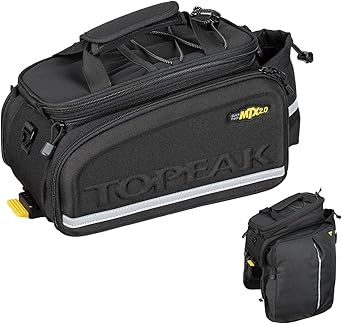
Consider high-visibility clothing in fluorescent yellow, orange, or lime green. While not fashionable, these colors increase detection distance by 50% in daytime and 30% at night compared to dark clothing. Many commuters keep a high-vis vest in their Topeak MTX TrunkBag DXP to wear during low-light conditions.
Daytime Running Lights
Use flashing lights even during daylight hours. Daytime running lights help prevent accidents by creating motion that attracts driver attention. Set front lights to flash mode at 200+ lumens and rear lights to pulse mode during the day.
What Gear Protects You in Traffic Situations?
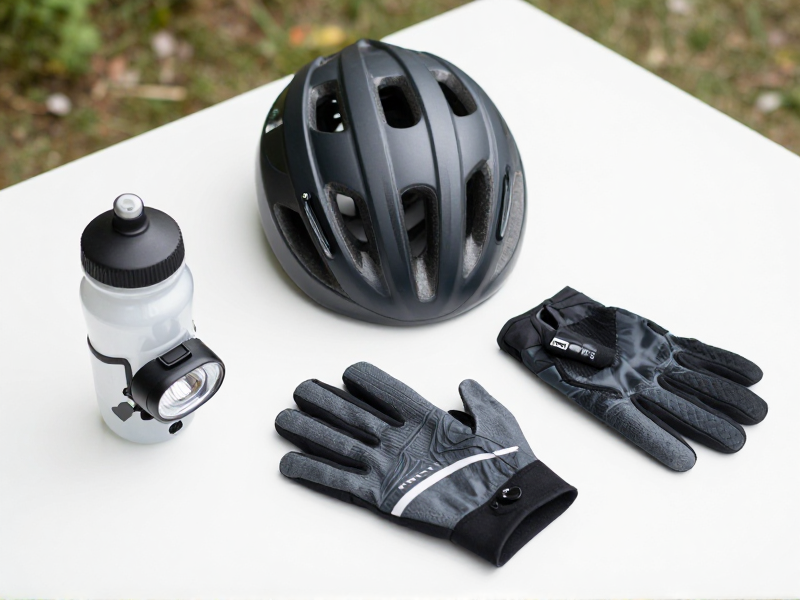
Wear a quality helmet on every ride, regardless of legal requirements. Choose helmets with MIPS (Multi-directional Impact Protection System) like the POC Omne Air MIPS Helmet that provides enhanced rotational impact protection common in vehicle-cyclist collisions.
Invest in protective gloves with palm padding and knuckle protection. In falls or collisions, your hands instinctively extend, absorbing impact. Full-finger gloves also protect against road rash and improve grip in wet conditions.
Consider impact-resistant eyewear. At 20+ mph, even small debris creates serious eye hazards. Clear or photochromic lenses work for varying light conditions while protecting from bugs, dust, and stones kicked up by traffic.
Carry Essential Tools and Repair Supplies
Equip your e-bike with:
- Multi-tool like the Topeak Mini 20 Pro with 20 functions
- Spare tube (proper size for your e-bike tires)
- Tire levers (preferably 3)
- Mini pump or CO2 inflator
- Patch kit (backup to spare tube)
- Chain tool (often included in multi-tools)
E-bikes are heavier and more difficult to walk home than traditional bikes. Being able to fix a flat or minor mechanical issue means the difference between a 10-minute delay and a 2-hour ordeal.
How Do You Navigate High-Traffic Situations Like Rush Hour?
Choose routes with dedicated bike infrastructure when possible. Separated bike lanes or protected cycle tracks reduce stress and accident risk by up to 90% compared to riding in mixed traffic. Use apps like Google Maps with bicycle routing or Strava's heatmap to find popular cycling routes in your area.
During peak traffic, consider riding slightly earlier or later if your schedule allows. Many commuters find leaving 20-30 minutes before peak rush hour provides emptier roads while still meeting work schedules.
When stuck in heavy traffic, filter (move forward between stopped cars) only where legal and safe. Some jurisdictions prohibit filtering, while others allow it. Stay at or below 15 mph when filtering and watch for drivers opening doors or changing lanes without signaling.
Managing Multi-Lane Traffic
On multi-lane roads, stay in the rightmost through lane unless preparing for a left turn. Do not ride in the right turn lane unless turning right—drivers expect that lane to empty at intersections.
Use assertive body language. Sit upright, look confident, and make your movements deliberate and clear. Tentative riders invite aggressive passing and get taken advantage of at intersections.
What Are Common E-Bike Traffic Violations to Avoid?
Avoid running red lights, even at empty intersections. Besides being illegal, it reinforces negative stereotypes about cyclists and puts you at risk from cross-traffic that appears suddenly. Your e-bike's speed makes red-light running even more dangerous than with traditional bikes.
Never ride on sidewalks in business districts. Most cities prohibit sidewalk riding in commercial areas, and the 20+ mph speed of e-bikes creates serious pedestrian collision risks. If you're uncomfortable riding in traffic, walk your e-bike on the sidewalk or find an alternate route.
Don't use headphones at high volume or noise-canceling headphones. Many states prohibit headphones while cycling. Even where legal, blocking your hearing eliminates a critical safety sense. If you must listen to audio, use bone-conduction headphones that leave your ears open.
Understanding E-Bike Classification Laws
Know your e-bike's class and local restrictions:
- Class 1: Pedal-assist up to 20 mph, no throttle—allowed most places bikes are allowed
- Class 2: Throttle-assisted up to 20 mph—some restrictions on trails and paths
- Class 3: Pedal-assist up to 28 mph—often prohibited on multi-use paths, may require helmets
Brands like Heybike and Engwe offer models in all three classes. Verify which class you own and whether your local routes allow it.
How Do You Lock Your E-Bike Securely in Public Areas?
Use a minimum of two locks with different locking mechanisms. Combine a U-lock through your frame and rear wheel with a chain or cable securing your front wheel. The Kryptonite New York Fahgettaboudit Chain Lock offers maximum security with its Sold Secure Diamond rating.
Remove or lock all accessories. Quick-release seats, lights, bike computers, and bags disappear instantly. Install security skewers that require special tools to remove wheels and seats, or take removable items with you.
Park in high-traffic, well-lit areas with surveillance cameras when possible. Thieves avoid locations where they'll be observed. Many coffee shops, businesses, and transit stations now offer monitored bike parking.
Battery Security
Always remove your battery when locking your bike in public. E-bike batteries cost $400-$800 to replace and are highly targeted by thieves. Most batteries lock to the frame but can be removed with the key. Keep the battery with you or in a secure locker.
Consider installing a GPS tracker like the Tile Pro GPS Tracker hidden inside your frame. While it won't prevent theft, it dramatically increases recovery chances.
Frequently Asked Questions
Can e-bikes ride in regular bike lanes?
Yes, Class 1 and Class 2 e-bikes (up to 20 mph) can use bike lanes in all 50 states. Class 3 e-bikes (up to 28 mph) can use bike lanes in most states but face restrictions in some jurisdictions. Always check your local regulations, as cities may have specific rules differing from state law.
Do I need a license to ride an e-bike in traffic?
Most states do not require a license for Class 1 or Class 2 e-bikes. Some states require a driver's license for Class 3 e-bikes (28 mph models) or set minimum age requirements ranging from 14-16 years old. Check your state's DMV website for specific requirements.
How fast is too fast when riding an e-bike in city traffic?
Match the flow of traffic when safe, but never exceed posted speed limits. In most urban areas, 20-25 mph is appropriate. Slow to 10-12 mph when approaching intersections, passing parked cars, or riding in crowded areas. Your speed should always allow you to stop within your line of sight.
What should I do if a car hits me while riding my e-bike?
Call 911 immediately, even for minor collisions. Obtain the driver's insurance information, license plate, and contact details. Take photos of the scene, your bike, any injuries, and vehicle damage. Get witness contact information if possible. Seek medical attention even if you feel fine—adrenaline masks injuries. Report the incident to police and consider consulting a personal injury attorney specializing in bicycle accidents.
Are e-bikes allowed on highways?
No, e-bikes are prohibited on interstate highways, freeways, and most limited-access roads in all states. Some rural state highways with shoulders may allow bicycles and e-bikes, but check local signage. Generally, if a road has a minimum speed limit above 35 mph, e-bikes are not permitted.
Conclusion: Ride Confidently and Safely in Any Traffic
Mastering e-bike traffic safety requires practice, awareness, and the right equipment. Start with less busy routes to build your confidence, then gradually progress to more challenging traffic situations as your skills improve. Remember that every ride makes you a more experienced, capable traffic cyclist.
Your visibility, predictability, and defensive riding mindset are your greatest safety assets. Invest in quality lights like the NiteRider Lumina 1200 Boost and rear radar systems like the Garmin Varia RTL515. Choose helmets with MIPS protection such as the Giro Syntax MIPS Helmet. These investments pay dividends in safety and confidence.
Whether you're commuting on a Velotric through downtown traffic or cruising on a Ride1Up along suburban roads, the principles remain the same: be visible, be predictable, and always have an escape route. With the techniques outlined in this guide, you're equipped to handle any traffic situation safely.
Ready to upgrade your commuting safety gear? Check out our comprehensive guide to essential e-bike accessories and our best commuter e-bikes to find the perfect ride for your traffic conditions.
Affiliate Disclosure
Discussion
Sign in with GitHub to leave a comment. Your replies are stored on this site's public discussion board.