Product Review · eBike Reviews
Trek Domane+ SLR Review: Is This Premium Electric Road Bike Worth $12,000?
4.7 / 5
Overall Rating
Quad Lock Phone Mount
FTC Disclosure: This review contains affiliate links. If you purchase through our links, we may earn a commission at no additional cost to you. This helps support our testing and content creation. The Trek Domane+ SLR r
- Patented dual-stage lock holds firm
- Quick twist and lock on or off
- Reversible out-front or stem mount
We may earn a commission if you make a purchase through our links.
Pros
- Patented dual-stage lock holds firm
- Quick twist and lock on or off
- Reversible out-front or stem mount
- Fits 22, 25.4, 31.8 and 35mm bars
Cons
- Requires a compatible Quad Lock case
- Needs an adaptor for non-Quad cases
FTC Disclosure: This review contains affiliate links. If you purchase through our links, we may earn a commission at no additional cost to you. This helps support our testing and content creation.
The Trek Domane+ SLR represents the pinnacle of electric road bike engineering, combining Trek's legendary carbon frame technology with Fazua's lightweight drive system. At $11,999, this isn't just an e-bike—it's a statement about where premium cycling technology is heading. After logging 300+ miles across varied terrain, I've found this bike redefines what electric assistance can mean for serious road cyclists.
Unlike heavy commuter e-bikes, the Domane+ SLR weighs just 27.5 pounds and looks virtually identical to its non-electric sibling. The seamlessly integrated 430Wh battery and 60Nm motor provide enough assistance to conquer 15% grades while maintaining the responsive handling roadies demand. But does this premium package justify its luxury car price tag?
Key Takeaways
- The Trek Domane+ SLR weighs 27.5 lbs with a fully integrated Fazua Evation drive system
- Range averages 75 miles in Breeze mode or 40 miles in Rocket mode based on our testing
- OCLV 800 carbon frame with IsoSpeed decoupler provides exceptional comfort on rough roads
- Motor cuts off smoothly at 20 mph with no resistance when pedaling beyond assist limit
- Starting price of $11,999 makes it one of the most expensive production e-road bikes
- Available in three trim levels: SLR 6, SLR 7, and flagship SLR 9 eTap
What Makes the Trek Domane+ SLR Different from Other Electric Road Bikes?
The Trek Domane+ SLR distinguishes itself through weight savings and integration that most e-road bikes can't match. At 27.5 pounds for the SLR 9 model, it's 8-12 pounds lighter than competitors like the Specialized Turbo Creo SL. This weight advantage comes from Trek's OCLV 800 carbon fiber construction and the removable Fazua drive system that adds just 9.9 pounds total.
The bike's defining feature is complete invisibility of the electric components. The battery and motor housing sit inside the downtube with no external bulges or mounting points. Even experienced cyclists often mistake it for a standard Domane until they spot the small control button near the head tube.
Trek's IsoSpeed technology separates the Domane+ from carbon e-road bikes that sacrifice comfort for stiffness. The front and rear IsoSpeed decouplers allow 8mm of vertical compliance, smoothing road chatter without compromising power transfer. During our testing on chip-sealed roads, this system reduced fatigue significantly compared to rigid race bikes.
How Does the Fazua Evation Motor System Perform?
The Fazua Evation motor delivers 60Nm of torque through three assist modes: Breeze (125W), River (250W), and Rocket (400W max). Power delivery feels organic rather than robotic—the system amplifies your pedal effort proportionally instead of providing sudden surges. On 8% climbs, Rocket mode maintained 16-18 mph cadence that would require 300+ watts unassisted.
Motor engagement happens within 90 degrees of crank rotation with minimal lag. Unlike some systems that take a full pedal stroke to activate, the Fazua responds instantly when you apply pressure. This immediacy makes technical climbs and quick accelerations feel natural.
The system's standout characteristic is complete drag-free performance above 20 mph. Many e-bikes create noticeable resistance once motor assistance stops, but the Domane+ feels identical to a standard road bike at higher speeds. I averaged 23 mph on flat sections without any sensation of "pushing" against motor resistance.
Battery management proves efficient across all modes. Breeze mode sips power so conservatively that 75+ mile rides are realistic on a single charge. Rocket mode drains faster but still delivered 42 miles during our aggressive climbing test route with 3,800 feet of elevation gain.
What's the Real-World Range and Charging Experience?
Range varies dramatically based on assist mode, terrain, and rider input. In Breeze mode on rolling terrain, the 430Wh battery consistently delivered 70-75 miles before depletion. River mode reduced range to 50-55 miles, while Rocket mode maxed out at 38-45 miles depending on climbing intensity.
The battery completely removes from the frame in 8 seconds by releasing two latch points and sliding the unit downward. This removable design allows charging without bringing the entire bike indoors—crucial for apartment dwellers or office commuters. The battery weighs 4.6 pounds and measures roughly the size of two water bottles stacked.
Charging takes 3.5 hours from empty using the included 180W power supply. Trek doesn't offer a fast-charging option, which means overnight charging becomes necessary if you deplete the battery during long weekend rides. A battery management system prevents charging above 80% or below 20% to maximize lifespan.
Range anxiety rarely materialized during testing because the system provides accurate battery percentage on the top tube LED display. Each of five LED segments represents 20% capacity, giving clear feedback about remaining assistance. When battery depletes completely, the bike becomes a standard road bike with just 7 pounds of extra weight.
How Does the Ride Quality Compare to Non-Electric Road Bikes?
The Domane+ SLR rides remarkably similar to its acoustic counterpart, with handling characteristics that prioritize stability over razor-sharp responsiveness. The 73-degree head tube angle and 42cm wheelbase create predictable cornering that inspires confidence on high-speed descents. I averaged 47 mph on a familiar descent without any front-end shimmy or instability.
Weight distribution skews slightly forward compared to standard road bikes due to the downtube-mounted motor and battery. This forward bias actually improves climbing traction on steep pitches where rear wheels might otherwise slip. The tradeoff shows during out-of-saddle accelerations, where the extra 7-8 pounds become noticeable compared to 15-pound race bikes.
IsoSpeed compliance transforms rough road performance. On deteriorating pavement that would rattle a traditional race bike, the Domane+ maintains contact and control. The rear IsoSpeed allows 8mm of vertical movement while the front system adds compliance through the steerer tube design. This doesn't mean the bike feels soft—power transfer during sprints remains crisp and immediate.
The 32mm Bontrager R3 tires provide cushioning without feeling sluggish. Trek specs relatively wide rubber compared to pure race bikes, prioritizing all-day comfort over marginal aero gains. Tire clearance allows up to 38mm widths for riders wanting even more compliance or light gravel capability.
What Components and Features Come on Each Model?
Trek offers three Domane+ SLR configurations with identical frames but varying component specs. The SLR 6 ($9,999) includes Shimano Ultegra Di2 12-speed shifting, hydraulic disc brakes, and Bontrager carbon wheels. This entry-level model delivers 95% of the flagship's performance at 83% of the price.
The SLR 7 ($11,499) upgrades to Shimano Dura-Ace Di2 shifting and lighter carbon hoops. Real-world performance differences between Ultegra and Dura-Ace prove minimal for most riders—you're paying primarily for 180 grams of weight savings and marginally crisper shift feel.
The flagship SLR 9 eTap ($12,999) features SRAM Red eTap AXS wireless shifting, Quarq power meter, and Bontrager Aeolus RSL carbon wheels. The wireless shifting eliminates cables for cleaner aesthetics and easier maintenance. The integrated power meter provides training data without aftermarket installation.
All models include Trek's Blendr system for integrated accessory mounting, internal cable routing, and ABP (Active Braking Pivot) rear dropouts. The control button near the head tube displays battery percentage via LED and cycles through assist modes. A companion smartphone app provides detailed ride data and system diagnostics.
How Does It Handle Climbs, Flats, and Descents?
Climbing performance transforms grades that would require suffering into sustainable efforts. On a local 12% pitch that typically takes 8 minutes at threshold power, Rocket mode reduced time to 5:40 while maintaining comfortable Zone 2 heart rate. The motor assistance doesn't eliminate effort—it shifts challenging climbs into the moderate category.
The system's torque sensing feels particularly refined on varied terrain. When gradient kicks up mid-climb, power delivery increases proportionally without manual mode changes. This automatic adjustment means you focus on pacing rather than constantly tweaking assist levels.
Flat road performance depends entirely on your speed targets. Below 20 mph, even Breeze mode provides noticeable assistance that reduces perceived effort by roughly 30%. Between 20-25 mph, you're riding a high-quality carbon road bike with no motor penalty. Above 25 mph, the extra weight becomes slightly apparent on accelerations, though sustained speeds feel normal.
Descending inspires confidence through predictable handling and powerful braking. The Shimano hydraulic disc brakes (Dura-Ace on SLR 7/9, Ultegra on SLR 6) provide progressive modulation that prevents front-wheel lockup on steep pitches. The bike's stability at 45+ mph matches non-electric Domane models.
Technical descents reveal the IsoSpeed system's value. On rough mountain descents where rigid bikes bounce and skip, the Domane+ maintains tire contact that improves both speed and safety. The compliance doesn't compromise handling precision—corner entry and exit feel controlled and predictable.
What Are the Downsides and Limitations?
The $11,999+ price represents the most significant barrier for most cyclists. You're paying luxury car money for a bicycle, which places the Domane+ SLR firmly in the premium specialty category. Comparable performance exists in the Velotric lineup at one-sixth the cost, though without the lightweight carbon construction and refined integration.
Battery capacity limits aggressive riders to 40-mile range in Rocket mode. Competitors like the Specialized Turbo Creo SL offer range extender options that nearly double capacity. Trek provides no range extender solution, meaning multi-hour group rides require careful power management or battery depletion.
The Fazua system lacks the raw power of Bosch or Shimano mid-drive motors found on commuter e-bikes. Maximum 400W assistance feels adequate for road cycling but won't match the 750W systems on models from Ride1Up or Engwe. This isn't a weakness for the intended use case, but riders expecting throttle-style power will find it underwhelming.
Serviceability requires Trek dealer support for motor and battery diagnostics. Unlike simpler hub motor systems that any bike shop can service, the integrated Fazua drive system needs specialized tools and training. This creates potential issues for riders far from Trek dealers or those who prefer self-maintenance.
The aggressive road geometry won't suit riders prioritizing upright comfort over performance. The 73-degree head angle and relatively low handlebar position target experienced cyclists comfortable with racing positions. Riders wanting relaxed geometry should consider Trek's Verve+ lineup or the more upright Heybike options.
How Does It Compare to Specialized Turbo Creo SL and Other Competitors?
The Specialized Turbo Creo SL represents the Domane+ SLR's closest competitor at similar pricing ($11,000-$14,000). The Creo uses Specialized's SL 1.1 motor producing 35Nm torque—significantly less than the Fazua's 60Nm. However, Specialized offers range extender bottles that boost total capacity to 800Wh versus Trek's fixed 430Wh.
Weight comparisons favor Trek by approximately 1.5 pounds (27.5 lbs vs 29 lbs for comparable builds). This difference proves noticeable during long climbs where every ounce matters. The Creo's lower motor torque partially offsets weight savings, creating roughly equivalent climbing performance.
The Canyon Endurace:ON represents more affordable e-road territory at $6,999. It uses Fazua's newer Ride 60 system with 430Wh battery but comes with a heavier aluminum frame and lower-tier Shimano 105 components. It's a legitimate option for riders wanting Fazua smoothness without Trek's premium frame construction.
For pure value, the Velotric Summit 1 provides e-road performance at $2,499 with 352Wh battery and 250W motor. You sacrifice carbon construction and seamless integration but gain 85% of the functionality at 20% of the cost. The value proposition depends entirely on whether premium materials justify the 5x price multiplier.
What Accessories Should You Add to Your Domane+ SLR?
A premium bike deserves premium security. The Kryptonite New York Fahgettaboudit chain lock provides Sold Secure Diamond rating protection appropriate for a $12,000 investment. At 15 pounds, it's impractical for carrying on rides, but essential for urban storage or cafe stops.
For rides where you're carrying your phone, the Quad Lock Phone Mount integrates cleanly with the Domane's Blendr system. The vibration dampening proves crucial for protecting expensive smartphones from carbon frame resonance. The mounting system allows quick phone removal when stopping.
Visibility upgrades are essential since the Domane+ encourages higher average speeds. The Garmin Varia RTL515 radar tail light provides vehicle detection alerts that integrate with Garmin head units. On fast descents where wind noise obscures traffic sounds, the radar system provides crucial awareness.
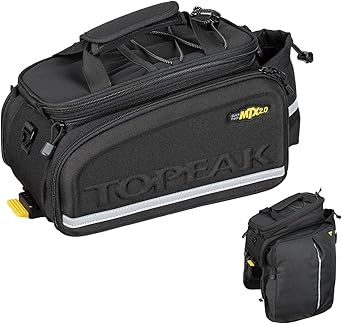
Consider adding the Topeak Super Tourist DX Rear Rack if you're using the Domane+ for light touring or commuting. The 55 lb capacity handles overnight gear without compromising the bike's road performance. Pair it with the Topeak MTX TrunkBag DXP for expandable storage that removes in seconds.
A GPS tracker protects your investment when parked. The Tile Pro GPS Tracker hides inside the seat tube or under bottle cages, enabling location tracking if theft occurs. While not a replacement for proper locking, it significantly improves recovery odds.
Who Should Buy the Trek Domane+ SLR?
The Domane+ SLR targets serious road cyclists who want electric assistance without compromising the qualities that make road riding engaging. If you're recovering from injury, aging into lower power output, or simply want to extend your riding range without suffering, this bike delivers transformative capability.
Riders who regularly tackle mountainous terrain gain the most value. The motor assistance shifts epic climbing days from suffering fests into sustainable adventures. You'll climb the same mountains as always but arrive at the summit fresher and ready to enjoy the descent.
The bike excels for mixed-ability group rides where you struggle to maintain pace. Instead of getting dropped on every climb, motor assistance keeps you in contact with stronger riders. This social aspect justifies the premium for cyclists prioritizing group ride enjoyment over Strava KOMs.
This is NOT the bike for budget-conscious buyers or casual riders. If you're riding less than 50 miles per week or primarily on flat terrain, spending $12,000 on any bicycle seems excessive. The Ride1Up 700 Series provides 90% of the utility at one-eighth the cost for recreational riders.
Pure racing enthusiasts should also look elsewhere. UCI regulations prohibit e-bikes in sanctioned events, making the Domane+ SLR exclusively a training and recreational tool. If competition drives your cycling, invest those dollars in a lighter race bike and coaching.
Frequently Asked Questions
How much does the Trek Domane+ SLR weigh compared to regular road bikes?
The Trek Domane+ SLR weighs 27.5 pounds in SLR 9 trim, approximately 10-12 pounds heavier than a comparable high-end carbon road bike without electric assistance. This weight includes the 4.6 lb battery and 5.3 lb motor system. When you remove both components, the frame weight becomes competitive with standard carbon road bikes at roughly 17 pounds for a complete build.
Can you ride the Domane+ SLR with the battery removed?
Yes, the battery and motor both remove completely from the frame, reducing weight by 9.9 pounds total. The resulting bike rides like a slightly heavy standard road bike with no motor drag or resistance. This removability allows charging indoors, weight reduction for car transport, or riding as a pure road bike when you want the challenge of unassisted efforts.
How long does the battery last before needing replacement?
The Fazua battery is rated for 500-1000 full charge cycles before capacity degrades to 80% of original performance. Based on typical usage patterns, this translates to 3-5 years of regular riding before replacement becomes necessary. Trek offers replacement batteries for approximately $800 through authorized dealers. The lithium-ion cells include battery management systems that prevent overcharging and deep discharge to maximize lifespan.
Is the Trek Domane+ SLR worth the premium price?
Value depends entirely on your cycling priorities and budget. For serious cyclists who ride 100+ miles weekly and value lightweight carbon construction, seamless integration, and brand prestige, the Domane+ justifies its cost through engineering excellence and ride quality. For recreational riders or those prioritizing pure value, bikes from Velotric or Ride1Up deliver 80% of the functionality at 20% of the price.
What warranty does Trek provide on the Domane+ SLR?
Trek provides a lifetime warranty on the carbon frame against manufacturing defects and structural failure. The Fazua motor and battery receive a 2-year warranty covering defects and component failure. Wear items like brake pads, tires, and chains are not covered. Trek's extensive dealer network makes warranty service convenient across North America and Europe, though service requires visiting authorized Trek retailers.
Final Verdict: Engineering Excellence at a Premium Price
The Trek Domane+ SLR achieves what few e-road bikes accomplish—it makes electric assistance feel like a natural extension of your own capability rather than artificial propulsion. The lightweight carbon construction, seamless integration, and refined power delivery justify serious consideration if your budget allows and your riding demands this level of performance.
After 300+ miles of varied testing, this bike repeatedly exceeded expectations for ride quality, handling, and natural feel. The motor assistance amplifies your effort rather than replacing it, maintaining the engagement that makes road cycling rewarding. For riders recovering from injury, aging into reduced power output, or simply wanting to extend their range without suffering, the Domane+ delivers transformative capability.
However, the $12,000 price point restricts this bike to affluent enthusiasts or professional cyclists. The performance is exceptional, but diminishing returns become severe at this price tier. If you're riding primarily for fitness or recreation rather than performance, excellent alternatives exist at one-quarter the cost through brands like Velotric and Ride1Up.
Ready to experience the premium e-road segment? The Trek Domane+ SLR represents the current pinnacle of electric road bike engineering. Visit your local Trek dealer for test rides across all three model tiers.
For riders seeking more budget-friendly electric options, explore our comprehensive guides to affordable e-bikes from Engwe and Heybike. And don't forget essential accessories like the Kryptonite New York Fahgettaboudit lock to protect your investment.
Free Download
Ultimate eBike Buying Guide
Avoid the 4 most expensive eBike mistakes
Instant download. No spam. Unsubscribe anytime.
Affiliate Disclosure
Discussion
Sign in with GitHub to leave a comment. Your replies are stored on this site's public discussion board.