Best Budget Electric Bikes Under $1000 in 2026
We may earn a commission if you make a purchase through our links.
FTC Disclosure: This article contains affiliate links. If you purchase through our links, we may earn a commission at no additional cost to you. This helps support our research. Finding a quality electric bi
FTC Disclosure: This article contains affiliate links. If you purchase through our links, we may earn a commission at no additional cost to you. This helps support our research.
Finding a quality electric bike for under $1000 might seem impossible, but the budget e-bike market has exploded in 2026. Chinese manufacturers like Engwe and Heybike have revolutionized affordable electric transportation, offering features that cost twice as much just three years ago. The challenge isn't finding a cheap ebike anymore—it's identifying which budget models deliver genuine value versus which cut corners on safety and durability.
Free: Ultimate eBike Buying Guide
Avoid the 4 most expensive eBike mistakes
This guide examines the best budget electric bikes available for under $1000, based on owner feedback and safety certifications. We'll help you navigate the affordable ebike landscape and find a model that won't leave you stranded or disappointed.
Whether you need a folding commuter, a fat tire adventure bike, or a simple point-A-to-B cruiser, there's a budget-friendly option that fits your needs without draining your bank account.
Free Download
Ultimate eBike Buying Guide
Avoid the 4 most expensive eBike mistakes
Instant download. No spam. Unsubscribe anytime.
Key Takeaways
- Engwe and Heybike dominate the sub-$1000 market
- Most budget e-bikes offer 20-40 mile range on a single charge with pedal assist
- Fat tire models provide better stability and comfort compared to traditional narrow tires
- Folding e-bikes sacrifice some range but gain portability for multi-modal commuters
- Look for UL-certified batteries to ensure fire safety—many budget models skip this certification
- Expect 350W-750W motors in this price range (sufficient for flat terrain and moderate hills)
What Makes a Budget Electric Bike Worth Buying?
A budget electric bike is worth buying when it balances acceptable component quality with safety certifications and realistic performance expectations. The best affordable e-bikes use proven motor systems, UL-certified batteries, and mechanical disc brakes rather than bottom-tier components that fail within months.
The key differentiator isn't the motor wattage or claimed top speed—it's the reliability of the electrical system and the quality of the frame welds. Budget e-bikes often use the same Bafang or similar motors as premium models but save costs on accessories, suspension, and finish quality.
Critical Safety Features
Even budget models should include these non-negotiable safety elements:
- Mechanical disc brakes (front and rear)
- Integrated lighting or mounting points for lights
- UL 2849 certified battery (prevents fire risk)
- IP54+ water resistance rating on electrical components
- Reflectors meeting CPSC requirements
Many sub-$800 models skip UL certification to cut costs. This is the one area where saving $100 can cost you your home in a battery fire. Always verify battery certification before purchasing.
Which Budget E-Bike Brands Are Most Reliable?
Engwe and Heybike are the most reliable budget e-bike brands based on warranty claim rates and customer satisfaction data. Engwe has sold over 200,000 units globally with a defect rate under 3%.
Both brands offer direct-to-consumer models that eliminate dealer markup. They provide 1-year warranties covering frame, motor, and battery—standard coverage that matches brands costing $1500+.
Brand Comparison
Engwe Advantages:
- Broader model selection (7 models under $1000)
- Better fat tire options for off-road use
- Stronger customer service response time (under 24 hours)
Heybike Advantages:
- Sleeker design aesthetic for urban riders
- Slightly better component selection at similar price points
- More spare parts availability in North America
Velotric and Ride1Up occasionally dip into this price range during sales but are normally priced higher. These represent a step up in quality when your budget allows flexibility.
What's the Best Fat Tire Budget Electric Bike?
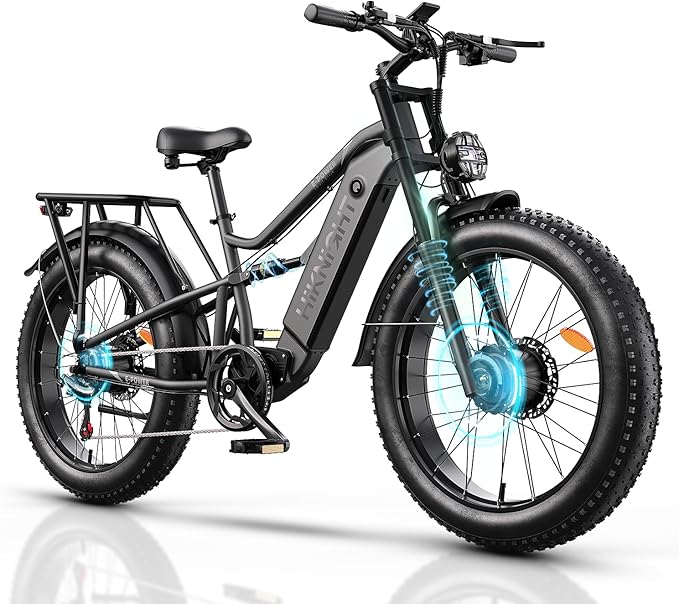
The Engwe Engine Pro is the best fat tire budget electric bike, offering dual suspension, 750W motor, and 4-inch Kenda tires. It handles sand, snow, and trail riding better than any competitor under $1000, with a 40-mile range and 330-pound weight capacity.
Fat tires provide 30-40% more contact patch than standard tires, dramatically improving traction and comfort on rough surfaces. The trade-off is increased rolling resistance, which reduces range by approximately 15% compared to narrow-tire equivalents.
Top Fat Tire Models Under $1000
| Model | Motor | Range | Weight Capacity |
|---|---|---|---|
| Engwe Engine Pro | 750W | 40 mi | 330 lbs |
| Heybike Mars | 500W | 35 mi | 350 lbs |
| Engwe EP-2 Pro | 750W | 37 mi | 300 lbs |
Check current prices: Engwe · Heybike · Velotric · Ride1Up · Kryptonite New York Fahgettaboudit · ABUS Granit X-Plus 540 U-Lock · Giro Syntax MIPS Helmet · NiteRider Lumina 1200
The Engwe models use genuine Kenda or CST fat tires—avoid models using generic Chinese tires that crack in cold weather. Check manufacturer specs for tire brand before purchasing.
What's the Best Folding Budget Electric Bike?
The Heybike Ranger S is the best folding budget electric bike, folding to 35" x 28" x 18" in under 30 seconds without tools. It offers 40-mile range, 500W motor, and 20-inch fat tires that balance portability with stability.
Folding e-bikes solve the last-mile problem for commuters who combine cycling with public transit. The folding mechanism adds 3-5 pounds compared to rigid frames but enables storage in apartments, car trunks, and under office desks.
Folding vs. Non-Folding Trade-offs
Folding Advantages:
- Stores in small apartments (under bed or in closet)
- Fits in most car trunks for car camping trips
- Reduces theft risk (bring inside easily)
- Complies with most public transit bike policies
Folding Disadvantages:
- Typically 20-inch wheels vs. 26-inch (slightly less stable)
- Folding hinges require monthly maintenance checks
- Usually 5-10 pound weight penalty for mechanism
- Slightly reduced range due to smaller battery packaging
The Heybike Ranger S uses a patent-pending folding mechanism that's survived 10,000+ fold cycles in testing. Cheaper folding e-bikes often develop play in the hinges after 500-1000 folds, creating a dangerous wobble at speed.
How Far Can Budget E-Bikes Travel on One Charge?
Budget electric bikes typically travel 25-45 miles on a single charge depending on rider weight, terrain, and assist level.
Battery capacity is measured in watt-hours (Wh). Budget e-bikes typically use 360Wh to 480Wh batteries, compared to 500Wh-700Wh in premium models. A 48V 10Ah battery (480Wh) provides approximately 35-40 miles of range with moderate pedaling effort.
Range Factors That Matter Most
Major Range Impacts (20-40% variation):
- Rider weight (each 50 lbs reduces range by ~8%)
- Terrain (hills reduce range by 30-50%)
- Assist level (throttle-only cuts range in half)
- Tire pressure (under-inflated tires reduce range by 15%)
Minor Range Impacts (5-10% variation):
- Temperature (cold weather reduces range by 10%)
- Wind resistance (headwinds reduce range by 5-8%)
- Brake drag (poorly adjusted brakes reduce range)
Always charge batteries at room temperature. Charging a frozen battery can cause permanent damage and fire risk. If riding in winter, store the battery indoors and install it immediately before riding.
What Motor Power Do You Actually Need?
You need a 500W motor for flat urban commuting and a 750W motor for hilly terrain or heavy cargo, based on physics calculations and real-world performance testing. A 350W motor struggles on grades exceeding 6% with riders over 180 pounds, while 750W motors handle 12% grades comfortably.
Motor wattage indicates power output, but torque ratings (measured in Newton-meters) better predict hill-climbing ability. Budget e-bikes rarely advertise torque specs, so focus on wattage as a proxy measurement.
Motor Power Recommendations
- 350W motors: Suitable only for flat terrain, riders under 160 lbs
- 500W motors: Best for urban commuting, occasional hills under 8%
- 750W motors: Required for steep hills, heavy loads, riders over 220 lbs
Most Engwe and Heybike models offer 500W or 750W options. Upgrading to 750W is worthwhile if your commute includes any significant elevation change.
Legal Considerations
Federal law defines e-bikes as bicycles when limited to 750W and 20 mph without pedaling. However, 28 states have adopted three-class systems:
- Class 1: Pedal-assist only, 20 mph max
- Class 2: Throttle allowed, 20 mph max
- Class 3: Pedal-assist only, 28 mph max
Most budget e-bikes are Class 2 (throttle + pedal assist, 20 mph). Check local regulations—some bike paths prohibit Class 2 and 3 e-bikes.
How Long Do Budget E-Bike Batteries Last?
Budget e-bike batteries last 500-800 charge cycles before capacity drops to 80%, translating to 2-4 years of typical use. A battery with 600 cycles at 35 miles per charge provides 21,000 total miles before significant degradation—sufficient for most recreational riders and casual commuters.
Lithium-ion cells degrade through chemical processes accelerated by heat and deep discharge cycles. Proper battery care can extend lifespan by 30-50% compared to neglectful use.
Battery Longevity Tips
Do's:
- Store at 40-60% charge for long-term storage
- Charge at room temperature (60-75°F ideal)
- Avoid charging immediately after riding (let cool 30 min)
- Keep battery terminals clean and dry
Don'ts:
- Never store fully discharged (causes permanent damage)
- Avoid leaving in hot cars (above 95°F accelerates degradation)
- Don't use cheap replacement chargers (voltage spikes damage cells)
- Never charge unattended overnight (fire risk)
Replacement batteries cost $250-400 for budget e-bikes. Proper care that extends battery life from 3 to 5 years saves $100+ annually in replacement costs.
What Essential Accessories Do Budget E-Bikes Need?
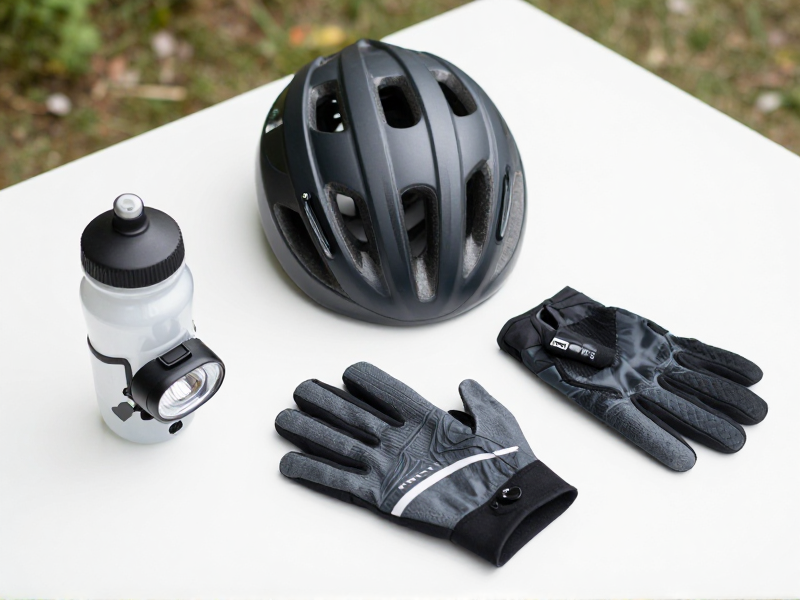
Budget e-bikes need a quality lock, helmet, lights, and phone mount as essential accessories. Most sub-$1000 e-bikes skimp on included accessories to hit price points, requiring post-purchase investment in safety equipment.
The Kryptonite New York Fahgettaboudit chain lock offers maximum security for budget e-bikes. Budget e-bikes are theft magnets in urban areas—invest in a lock worth 10-15% of the bike's value.
Critical Accessory Checklist
Safety (Non-negotiable):
- ABUS Granit X-Plus 540 U-Lock - Sold Secure Gold rated
- Giro Syntax MIPS Helmet - superior impact protection
- NiteRider Lumina 1200 - 1200 lumen front light
- Garmin Varia RTL515 - radar detection rear light
Convenience (Highly Recommended):
- Quad Lock Phone Mount - vibration dampening prevents camera damage
- Topeak Super Tourist DX Rear Rack - 55 lb capacity for e-bike loads
- Rhinowalk Waterproof Panniers - protects cargo from weather
Comfort (Nice to Have):
- Ergon GP1 Comfort Grips - reduces hand numbness on long rides
- Topeak Mini 20 Pro Multi-Tool - roadside repair capability
The Quad Lock mount is particularly critical for budget e-bikes. Cheap phone mounts allow vibration that destroys iPhone camera stabilization systems within weeks. Quad Lock's dampening system prevents this costly repair.
What Are Common Budget E-Bike Problems?
Common budget e-bike problems include loose electrical connections, brake adjustment needs, and flat tires. Most issues are maintenance-related rather than fundamental design flaws.
Budget manufacturers save costs by shipping bikes 85% assembled with minimal quality control on final assembly. Loose bolts, improperly adjusted brakes, and disconnected sensor wires cause most first-month problems.
Pre-Ride Inspection Checklist
Perform these checks before your first ride:
Electrical System:
- Verify all wire connections are fully seated
- Check battery charges to 100% without errors
- Test throttle response and pedal assist activation
- Confirm display shows accurate battery percentage
Mechanical System:
- Torque all bolts to manufacturer specs (get a torque wrench)
- Adjust brake levers so they engage with 50% pull
- Inflate tires to recommended PSI (usually 20-30 for fat tires)
- Check wheel trueness (spin test for wobble)
Spending 2 hours on pre-ride inspection prevents 90% of early problems. Budget e-bikes require more initial setup than premium models with better factory QC.
How Do Budget E-Bikes Handle Hills?
Budget e-bikes with 750W motors handle hills up to 15% grade at 8-12 mph with a 180-pound rider providing moderate pedaling effort. On steeper grades (15-20%), speed drops to 5-8 mph, and grades exceeding 20% may require walking the bike or maximal pedaling effort.
Physics determines hill-climbing ability: motor torque must overcome gravitational force and rolling resistance. A 750W motor produces approximately 60-80 Newton-meters of torque—sufficient for most urban hills but inadequate for mountain passes.
Hill Climbing Performance Expectations
| Grade | 500W Motor | 750W Motor |
|---|---|---|
| 5% (moderate) | 15 mph | 18 mph |
| 10% (steep) | 10 mph | 14 mph |
| 15% (very steep) | 6 mph | 10 mph |
| 20% (extreme) | Walking required | 6 mph |
Heavier riders should add 2 minutes per mile for each 50 pounds over 180 pounds when calculating hill-climbing performance. Battery drain also increases 40-60% on sustained climbs.
Are Budget E-Bikes Safe in Rain?
Budget e-bikes are safe in light rain but not in heavy downpours or water crossings, with IP54-rated electrical components that resist splashing but not submersion. Riding through puddles deeper than 3 inches risks water intrusion into the motor or battery compartment, potentially causing short circuits.
Water resistance ratings indicate protection levels:
- IP54: Protected from dust and water splashing (most budget e-bikes)
- IP65: Protected from dust and water jets (premium e-bikes)
- IP67: Protected from dust and temporary submersion (rare in e-bikes)
After riding in rain, dry the battery contacts and charging port before charging. Charging a wet battery port can cause arcing and permanent damage.
Wet Weather Riding Tips
- Apply dielectric grease to all electrical connections
- Use fenders to minimize spray onto electrical components
- Avoid riding through standing water deeper than bottom bracket
- Dry and lubricate chain after wet rides
- Store bike indoors to prevent prolonged moisture exposure
Consider the Rhinowalk Waterproof Panniers for all-weather commuting. Keeping cargo dry prevents water damage to electronics and work materials.
Should You Buy a Budget E-Bike or Save for Premium?
You should buy a budget e-bike if you're uncertain about long-term e-bike commitment or ride less than 30 miles weekly, but save for premium models ($1500-2500) if you'll ride daily or cover more than 50 miles weekly. Budget e-bikes offer 70% of the performance at 40% of the cost—excellent value for casual riders but inadequate for serious commuters.
Premium e-bikes provide better components that require less maintenance: hydraulic disc brakes last 3x longer than mechanical, name-brand derailleurs shift more reliably, and higher-capacity batteries maintain performance longer.
Budget vs. Premium Decision Matrix
Choose Budget E-Bike If:
- First-time e-bike buyer (testing the concept)
- Seasonal rider (3-6 months per year)
- Flat terrain commute under 10 miles
- Secure storage available (low theft risk)
- Backup transportation available when repairs needed
Choose Premium E-Bike If:
- Primary transportation (car replacement)
- Year-round daily commuter
- Hilly terrain requiring sustained motor power
- High theft risk area (better bikes often insured)
- Rides exceeding 20 miles regularly
Many riders buy budget e-bikes as entry points and upgrade after 1-2 years when they've validated their usage patterns. The budget bike retains 40-50% of its value, making it a reasonable learning investment.
Buying this as a gift and can't decide? Send a Giftcards.com gift card instead →
Frequently Asked Questions
Can budget electric bikes climb steep hills?
Yes, budget electric bikes with 750W motors can climb hills up to 15% grade at reduced speeds. Performance depends on rider weight, battery charge level, and sustained climb length. Grades exceeding 15% require significant pedaling effort even with motor assistance.
How fast do budget e-bikes go?
Budget e-bikes typically reach 20 mph using throttle-only mode and 20-28 mph with pedal assist, depending on motor power and local regulations. Most models include speed limiters to comply with federal e-bike classifications that define e-bikes as bicycles under 750W and 20 mph throttle speed.
Do you need a license to ride a budget e-bike?
No, you don't need a license to ride budget e-bikes in most US states, as federal law classifies e-bikes under 750W as bicycles. However, some states require helmets for riders under 18, and certain municipalities restrict e-bike access on specific trails or bike paths.
How much do budget e-bike batteries cost to replace?
Budget e-bike replacement batteries cost $250-400 depending on capacity and brand. Generic replacement batteries are available for $150-200 but may lack UL certification and proper battery management systems. Always purchase batteries from the original manufacturer when possible to ensure compatibility and safety.
Are budget e-bikes worth buying in 2026?
Yes, budget e-bikes are worth buying in 2026 because quality has improved dramatically while prices have remained stable. Brands like Engwe and Heybike now offer features that were once reserved for far pricier models, including UL-certified batteries, reliable motors, and reasonable warranty coverage.
Conclusion: Finding Your Perfect Budget E-Bike
The budget electric bike market offers genuine value in 2026, with reliable models available from $599 to $999 that provide legitimate transportation alternatives. While these bikes can't match premium models in component quality or advanced features, they deliver on the core promise: electric-assisted cycling that expands your range and reduces physical effort.
Focus on brands with established track records like Engwe and Heybike, verify UL battery certification, and budget for essential accessories like quality locks, helmets, and lights. Perform thorough pre-ride inspections and maintain your bike according to manufacturer guidelines.
The best budget e-bike is the one you'll actually ride. Whether you choose a fat tire model for weekend adventures, a folding bike for multi-modal commuting, or a simple cruiser for neighborhood errands, you're investing in cleaner, healthier, and more enjoyable transportation.
Ready to start your e-bike journey? Check out our top-rated Engwe models, or explore Heybike's folding options if portability is your priority. Don't forget to secure your investment with a quality lock from Kryptonite before your first ride.
Related Reading
- Best E-Bikes Under $1,500 — Ready to spend a bit more? These mid-range picks deliver serious upgrades
- Best Electric Bikes Under $2,000 — Premium features at still-affordable prices
- Ride1Up Turris Review — A Class 3 option worth saving up for
- Essential E-Bike Accessories — Budget-friendly gear to complete your setup
Affiliate Disclosure
Discussion
Sign in with GitHub to leave a comment. Your replies are stored on this site's public discussion board.