Complete Electric Bike Guide 2026: Everything You Need to Know Before Buying
We may earn a commission if you make a purchase through our links.
Everything you need to know before buying an eBike in 2026: how eBikes work, Class 1/2/3 explained, who should buy one, what to look for, price tiers, and top brands.
Electric bikes have crossed from novelty to mainstream transportation. Over 1.1 million eBikes were sold in the US in 2025, outselling electric cars by a wide margin. But with hundreds of models across dozens of brands, first-time buyers face a genuinely overwhelming choice. This guide cuts through the noise.
What Is an eBike and How Does It Work?
Free: Ultimate eBike Buying Guide
Avoid the 4 most expensive eBike mistakes
An electric bike is a bicycle with a motor and battery that assists your pedaling effort. The key word is "assists" — you still pedal; the motor amplifies your power. This is what distinguishes an eBike from a moped or electric motorcycle.
Core components:
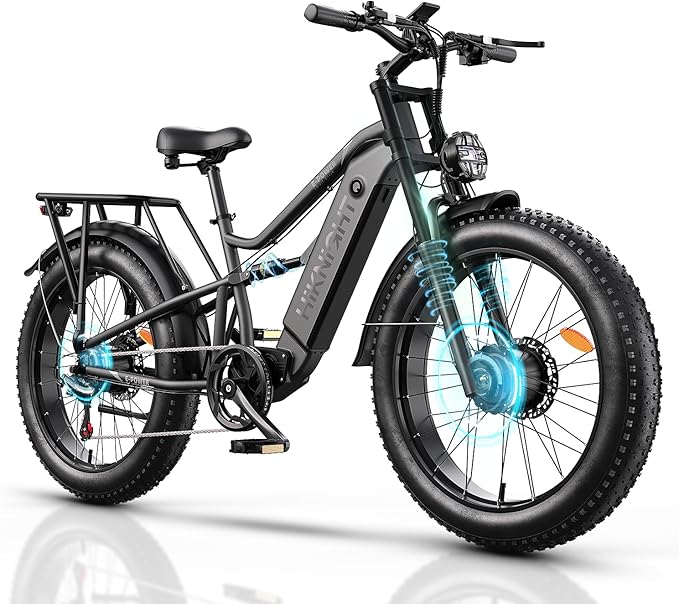
- Motor: Either hub-mounted (in the wheel) or mid-drive (at the crank). Provides pedaling assistance.
- Battery: Lithium-ion pack measured in watt-hours (Wh). Higher Wh = more range.
- Controller: The brain that regulates power delivery based on sensor inputs.
- Pedal Assist Sensor (PAS): Detects when you are pedaling and activates the motor.
- Throttle (on Class 2 bikes): Engages the motor without pedaling, like a motorcycle throttle.
- Display: Shows speed, assist level, battery level, and trip data.
Free Download
Ultimate eBike Buying Guide
Avoid the 4 most expensive eBike mistakes
Instant download. No spam. Unsubscribe anytime.
eBike Classes: The Legal Framework
Federal law (15 U.S.C. § 2085) defines three eBike classes. Most states have adopted this framework:
Class 1: Pedal assist only, motor cuts out at 20 mph. Allowed on almost all bike paths and trails. The most universally accepted class.
Class 2: Pedal assist plus throttle, maximum 20 mph. Some trail systems restrict Class 2 due to the throttle. Generally allowed on roads and bike lanes.
Class 3: Pedal assist only, motor cuts out at 28 mph. Faster and more capable for commuting; often requires registration and helmet in some states. Many trail systems prohibit Class 3.
Who Should Buy an eBike?
Commuters: An eBike eliminates the sweat problem on bike commutes. Arrive at work without needing a shower. With cargo capability, it can replace a car for most urban errands.
Seniors and less-fit riders: The motor levels the playing field. Riders who would not attempt hilly terrain on a regular bike can ride confidently with pedal assist.
Fitness riders: Pedal assist lets you control workout intensity — go easy on the way in, get a genuine workout on the way home. Range extends ride duration.
Mountain bikers: eMTBs open up trails that were previously too strenuous or too long for a day ride. Climb more, ride longer.
Cargo haulers: Cargo eBikes can carry kids, groceries, and gear that would be impossible on a regular bike.
What to Look For When Buying
Motor wattage: 250W motors are fine for flat terrain and light riders. 500W is the sweet spot for most riders — enough power for hills and heavier loads. 750W+ handles steep terrain and heavy cargo. Note that 250W rated motors often have much higher peak output.
Battery capacity (Wh):
- Under 300 Wh: Light use, short commutes (15–25 miles range)
- 400–500 Wh: Most commuter bikes; 30–50 miles range
- 600–750 Wh: Touring and cargo bikes; 50–80 miles range
- 1,000+ Wh: Long-range fat tire and cargo models
Frame type: Step-through frames are easier to mount/dismount (great for commuters and older riders). Diamond frames are more traditional and often stiffer.
Brakes: Hydraulic disc brakes are essential for eBikes. The extra weight and speed make cable-pulled mechanical brakes inadequate. Look for Shimano, Tektro, or Magura hydraulics.
Price Tiers
| Budget | What You Get |
|---|---|
| Under $1,000 | Hub motors, basic displays, entry-level components; fine for casual riding |
| $1,000–$2,000 | Better motors, larger batteries, hydraulic brakes; the sweet spot for most buyers |
| $2,000–$4,000 | Premium components, mid-drives, integrated batteries, longer warranties |
| $4,000+ | Specialized motors (Bosch Performance Line CX, Shimano EP8), premium frames, advanced tech |
Top Brands Overview
Rad Power Bikes: The best-selling eBike brand in the US. Value-focused, wide model range, strong customer community. Best for: budget commuters and utility riders.
Aventon: Strong mid-range competitor. Good performance-to-price ratio. Best for: commuters wanting a premium feel at $1,200–$2,000.
Lectric: Folding eBike specialist. Incredible value at under $1,000. Best for: apartment dwellers and storage-constrained buyers.
Specialized: Premium brand with Turbo line using best-in-class motors. Best for: performance riders with $3,500+ budgets.
Trek: Full range from commuter to mountain. Reliable dealer network for service. Best for: buyers who want local service support.
Giant/Liv: Outstanding build quality, excellent mid-drives. Best for: riders who prioritize ride quality over flashy features.
Affiliate Disclosure
Discussion
Sign in with GitHub to leave a comment. Your replies are stored on this site's public discussion board.