How to Budget for Your First E-Bike: The Real Cost of Ownership
The sticker price is only the start. Here's the honest total cost of a first e-bike — day-one gear, maintenance math, insurance notes — and the smart order to buy it all in.
This article contains affiliate links — if you buy through them, we may earn a commission at no extra cost to you.
The number on the bike listing is not the number. That's the honest first lesson of e-bike ownership, and it's better to learn it from an article than from your bank statement in month three. A first e-bike arrives with day-one equipment you shouldn't skip, consumables that wear on a schedule, and a couple of paperwork questions most buyers never think to ask. None of it is scary — an e-bike remains one of the cheapest ways of getting around ever invented — but budgeting for the whole picture beats budgeting for the sticker.
Free: Ultimate eBike Buying Guide
Avoid the 4 most expensive eBike mistakes
This guide walks through the real total cost of ownership: choosing your bike band, the extras that aren't optional, honest maintenance math, insurance and registration notes, and a sane order to buy everything in. Throughout, we'll talk in percentages and rules of thumb rather than dollar figures — prices move constantly, but the ratios hold true.
Step One: Pick Your Bike Band
Free Download
Ultimate eBike Buying Guide
Avoid the 4 most expensive eBike mistakes
Instant download. No spam. Unsubscribe anytime.
Your bike choice sets the scale for everything that follows, so start by matching the band to the riding you'll actually do every week — not the riding you imagine doing someday.
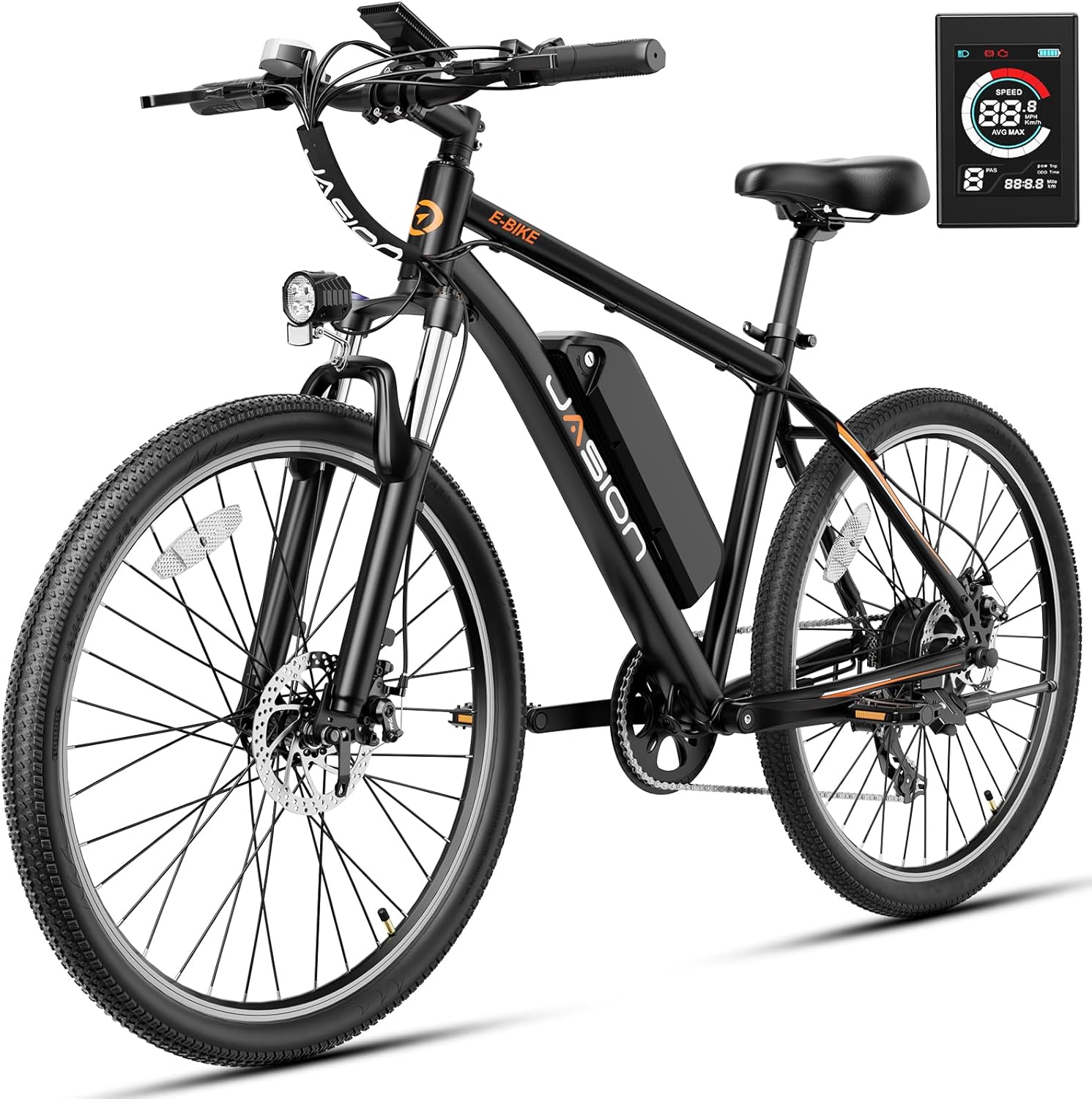
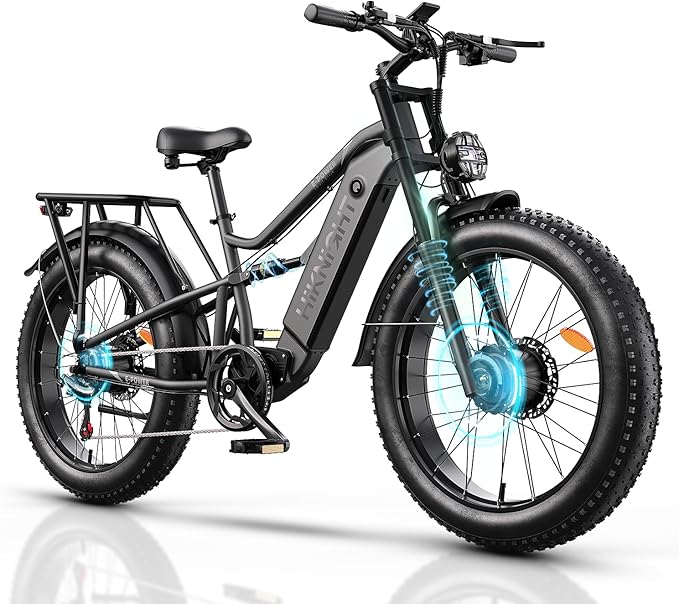
The budget band covers simple, proven entry-level machines. The Jasion EB5 is the archetype: an approachable first e-bike for finding out whether a bike commute sticks, without a painful downside if it doesn't. In the same band, folding fat-tire models like the Engwe EP-2 Pro trade some refinement for versatility — they fold for apartments, car trunks, and RVs, and the wide tires shrug off rough pavement. Budget-band bikes are real e-bikes and real fun; the trade-offs surface as heavier frames, more basic components, and shorter warranties.
The commuter band is where daily-driver polish lives: bigger batteries, better brakes, more comfortable geometry, and manufacturer support you can actually reach. The Velotric Discover 1 is a good example of the type — upright and comfortable, available in a step-through frame, and built to be ridden to work five days a week rather than around the park on Sundays. If the e-bike is going to replace car trips, this band usually earns its premium within the first year of skipped gas stations.
The cargo band exists for one glorious job: hauling kids and serious grocery loads. These are car-replacing machines with bigger frames, bigger batteries, and proportionally bigger budgets — if that's your life, see our dedicated cargo e-bike coverage, because choosing one is a topic of its own.
The principle across all three bands: buy for your five most common trips. A bike matched to your actual week gets ridden constantly; an aspirational bike becomes expensive garage art.
The Extras That Aren't Optional
Here's where first-time budgets go sideways. Plan for roughly 15 to 25 percent of the bike's price in day-one gear, concentrated in three items.
The lock — budget about 10 to 15 percent of the bike's value. That's the long-standing rule of thumb among mechanics and insurers alike, and e-bikes sit firmly at the theft-magnet end of it. Where you park sets your tier: a bike that sleeps inside an office needs less lock than one spending eight hours on a downtown rack. Kryptonite's lineup spans that entire spectrum, from massive hardened U-locks for high-crime blocks to lighter options for low-risk stops, and their top-security models carry anti-theft protection programs worth reading before you buy. Whatever you choose, learn to lock the frame — not just a wheel — to something genuinely immovable.
The helmet — non-negotiable. E-bikes cruise at speeds casual riders rarely sustained before, and your head is the one component with no replacement part. Buy a helmet you genuinely like wearing, because the best helmet is the one that's actually on your head. Thousand built its entire reputation on that insight, making helmets people put on by choice rather than obligation. Two rules to remember: replace any helmet after a crash even if it looks fine, and note that many states require helmets for Class 3 riders and for minors on any class of e-bike.
Lights — front and rear, even if you "never ride at night." Winter sunsets, gray downpours, and parking garages all disagree with that plan. A rechargeable set is a small line item with an outsized safety return, and daytime-flash modes earn their keep in every season.
The Maintenance Reality
E-bikes are heavier than conventional bikes and cover more miles at higher average speeds. Every consumable part feels that.
- Brake pads wear noticeably faster than on a regular bike — more mass and more speed mean more stopping work. Check them monthly and expect to replace them more often than a veteran cyclist would guess.
- Tires and tubes carry more weight and more torque. Keep pressure at spec (underinflation accelerates wear and quietly drains range), carry a spare tube, and treat replacement rubber as a routine cost rather than a surprise.
- The chain stretches faster under motor-assisted torque, especially on mid-drive bikes. A monthly clean-and-lube habit costs nothing and roughly doubles drivetrain life.
- An annual checkup — spokes, bearings, brake service — keeps small issues from compounding into big ones.
A workable rule of thumb: set aside about 10 percent of the bike's purchase price per year for upkeep. Learn three jobs yourself — pads, tubes, and chain care — and you'll cut that meaningfully while becoming a far more self-sufficient rider.
The battery deserves its own line in your long-term thinking. Most modern packs deliver several hundred full charge cycles — typically a few years of regular commuting — before range fades noticeably, and good habits stretch that further: keep it out of extreme heat, avoid storing it full or empty, and use the manufacturer's charger. Eventually a replacement pack becomes a real budget item; owners who start planning for it around year three are never caught off guard.
Insurance and Registration Notes
Two paperwork questions are worth twenty minutes before you buy, not after.
Insurance. Standard homeowners and renters policies vary widely on e-bikes — some treat them like bicycles, many limit or exclude "motorized vehicles," and theft away from home is the most common gap. Call your insurer and ask specifically about e-bikes. If the answer is thin, specialty bicycle insurers now write e-bike policies covering theft, crash damage, and liability, and riders using the bike as a genuine car replacement usually find the decision easy once they've compared it to what the car costs them.
Registration and classes. Most states treat Class 1 (pedal assist to 20 mph), Class 2 (throttle to 20 mph), and Class 3 (assist to 28 mph) e-bikes as bicycles — no registration, license, or plate. But rules vary by state and sometimes by city: Class 3 bikes face age and helmet requirements in many places, some paths exclude Class 2 and 3 entirely, and a bike modified beyond its class limits can legally become a moped with a completely different set of obligations. Check your state's rules before you buy. It's dry reading that prevents expensive misunderstandings.
Phase Your Purchases
You don't need everything at once, and buying in the right order teaches you what you actually need.
With the bike, on day one: helmet, lock, and lights. This trio is not optional and not deferrable — it's the true cost of entry, so fold it into the purchase decision itself. If bike-plus-safety-gear busts the budget, choose a less expensive bike rather than skipping the gear. A budget-band bike with a real lock and a real helmet is a far better buy than a commuter-band bike with neither.
In the first month: fenders if you'll ride in weather, a floor pump with a gauge, a patch kit and spare tube, and a basic multitool. Cheap, boring, and quietly transformative.
When the riding demands it: a rack and panniers once backpack commuting gets old, better tires when the originals wear out, and a second battery only if your actual rides — not your imagined ones — outrun the first. Waiting reveals the difference; most riders discover their real upgrade list is shorter than the one they drafted in week one.
The anti-pattern is buying every accessory before your first ride. Ride first. The bike will tell you what it's missing.
The One-Page Budget
Pulling it all together, in ratios you can apply to any bike band:
- The bike: 100 percent — pick your band honestly
- Day-one gear (helmet, lock, lights): add 15 to 25 percent
- Year-one upkeep: add roughly 10 percent
- Years two and beyond: about 10 percent annually, plus a slowly growing battery-replacement fund
Call it 125 to 135 percent of the bike's price for the first year, then a modest annual run rate after that — still a rounding error next to any car, and unlike the car, the running costs buy you exercise, fresh air, and a parking spot at the front door.
Budget the whole picture, phase the purchases, and never skip the helmet. Do that, and the only surprise your first e-bike delivers is how much you end up riding it.
Affiliate Disclosure
Discussion
Sign in with GitHub to leave a comment. Your replies are stored on this site's public discussion board.